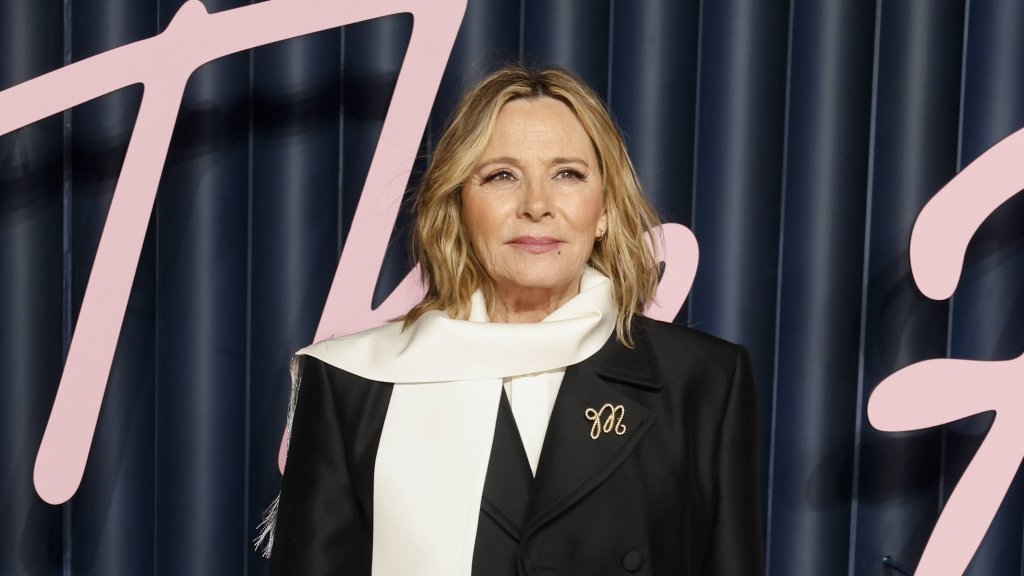
Kim Cattrall turns 70 years young today – and has officially long since left the most famous character of her career behind. Yet she has never quite shaken off Samantha Jones, much to her fans’ delight. The confident PR professional from “Sex and the City” is one of those television characters whose influence extends far beyond their original era. Samantha remains a cult figure, particularly in the gay community. Many gay fans celebrate her uncompromising zest for life, her sexual openness and her refusal to justify her desires or a life lived on her own terms.
The key points at a glance
- Kim Cattrall turns 70: The actress celebrates her milestone birthday today.
- Samantha Jones remains a cult figure: Her role in “Sex and the City” made Cattrall world-famous – and is still particularly adored by gay fans.
- Sexual openness as a strength: Samantha stood for uncompromising sexuality on her own terms, helping to change perceptions of other sex-positive people too.
- Four rejections: Cattrall initially said no to “Sex and the City” four times before accepting the role.
- Rift with Sarah Jessica Parker: The two leading actresses became embroiled in a public dispute.
- Samantha stays behind: Cattrall returned only briefly for “And Just Like That...”, without filming alongside Parker.
A character who changed perceptions of sexuality
Cattrall herself is celebrating her 70th birthday today, US media report. An age Samantha Jones would probably have greeted with an amused glance. The television character was a woman who made no apologies for growing older, even in her mid-forties. She wanted men, sex, professional success and a life on her own terms. For six seasons and two feature films, Cattrall gave her personality, body and voice. Today, the actress leads a markedly different life. But Samantha has endured – as a pop culture figure and a symbol of sexual self-determination. “Sex and the City” ran from 1998 to 2004, telling the story of Carrie, Samantha, Charlotte and Miranda’s lives in New York City. The series spoke unusually openly about female desire, sex, affairs, fear of commitment and the question of what a fulfilling life might look like.
Women were allowed to feel desire without being punished for it. They could want children or not – and still be at the centre of their own stories. Samantha took this attitude to its fullest expression. She made female desire visible, forthright and confident. “Samantha made it sexy to be 40,” Cattrall told the Times in 2025. It was precisely this attitude that also made Samantha a character many gay viewers could identify with. She treated sexuality not as something to be ashamed of, but as part of a self-determined life.
Samantha was sex-positive and saw no need to justify it. That made her relatable to a gay community that had itself long had to fight shame, prejudice and the moral condemnation of sexual self-determination. Samantha was not a conventional ally whose impact relied on grand political messages. Rather, her influence lay in her attitude: she felt desire, she talked about sex, she set boundaries and she decided for herself whom she wanted to be intimate with. In doing so, the character also helped challenge assumptions about people who live their sexuality openly and on their own terms. And then as now, gay men would have been very happy to jump into bed with some of her men too.
Cattrall said no four times
It was by no means certain at first that Kim Cattrall would be the one to play Samantha Jones. Cattrall was already an established actress before “Sex and the City”. Her credits included “Police Academy”, “Big Trouble in Little China”, “Mannequin” and “Star Trek VI”, and she had also made a name for herself on stage. When the offer for “Sex and the City” came, she turned it down four times. Cattrall was 41 at the time and doubted whether she could convincingly portray a sexually confident woman of that age. She later described these initial rejections in People magazine as “self-inflicted ageism” – age discrimination she had imposed on herself.
Accepting Samantha ultimately gave her the role of a lifetime. In 2003, Cattrall won a Golden Globe for it. Two feature films followed the end of the series. In 2010, Cattrall, Sarah Jessica Parker, Kristin Davis and Cynthia Nixon appeared together as a quartet on camera for the last time in “Sex and the City 2”. After that, the relationship between Cattrall and the “Sex and the City” universe began to visibly fall apart.
The dispute with Sarah Jessica Parker
In a 2017 interview with television presenter Piers Morgan, Cattrall spoke openly about her relationship with her former colleagues. Asked when she had last spoken to them, she replied: “It must have been years ago. I can’t remember.” She complained that “nobody just picks up the phone and asks: ‘How are you?’” In a healthy relationship, she said, people would ask after one another or wish each other success. That had not happened. Instead, it felt like a “toxic relationship” – particularly with Sarah Jessica Parker. “The series was the fantasy; this is the reality.”
The conflict seemed all the more striking because the four women had portrayed a close friendship in the series for years. In 2018, Parker said on a US talk show that Cattrall’s comments had left her “deeply hurt”. She continued: “It makes me sad. And it doesn’t match my memories of that time. We shared a great deal on a personal level too.” Only a short time later, the dispute escalated again. In early 2018, Cattrall’s younger brother Chris went missing. The actress publicly appealed for help in finding him. Shortly afterwards, the 55-year-old was found dead.
Parker publicly offered her condolences to her former colleague. Cattrall, however, responded with forceful words on Instagram: “You are not my family. You are not my friend.” She also accused Parker of exploiting the family tragedy for her public image. The already known rift between the two thus became definitively public. In her interview with Piers Morgan, Cattrall used a phrase that neatly describes her subsequent development: “I’ve released Samantha.” This also meant a liberation for Kim Cattrall herself. For all the sexual openness and confidence she brought to Samantha on camera, she apparently also had to work towards that attitude in her own life.
The end of the “good girl”
The end of the series coincided with other changes. Her third marriage, to Mark Levinson, was over; the couple separated in early 2003 and divorced in 2004. Cattrall had lived for several years in Frankfurt am Main in the 1980s with her second husband, architect Andre J. Lyson. As a result, she still speaks a little German today. After her third marriage, Cattrall gradually began to free herself from old expectations. In a conversation last year with Spanish actress Mina El Hammani and singer Bill Kaulitz, she described the process: “Women of my generation grew up wanting to please everyone. Getting rid of that pressure to be a good girl was probably the hardest thing for me. Today, it’s this: judge me for who I am. Not for my gender.” It sounds like something Samantha Jones might say in later life – only without the men, Manhattan and Cosmopolitans.
Cattrall loves a quieter life
Cattrall’s life today has little in common with the glamorous New York of her television character. She produces and acts, works in radio and plays a CIA agent in the BBC series “Central Intelligence”, among other roles. She also worked both in front of and behind the camera on the comedy series “Sensitive Skin”. In her private life, she spends a great deal of time in the natural surroundings of Vancouver Island. She has been with Russell Thomas since 2016. Last year, the couple married secretly in London.
Speaking to Bill Kaulitz about her first meeting with the man who is now her husband, Cattrall said: “It was a magical moment. I imagined what it would be like if I were with him.” These days, she considers the simplicity of everyday life a particular luxury. That includes her husband “Russ bringing the first cup of tea to bed in the morning”. As she gets older, she said, she values stability more and more: “It feels honest and strong.”
Samantha is missed – and endures
When “And Just Like That...”, the sequel to “Sex and the City”, launched in 2021, Kim Cattrall was absent. For many fans, that was a particular shock. It made clear just how important Samantha Jones had been to the original series. While Carrie, Charlotte and Miranda often struggled with their insecurities and limitations, Samantha stood for freedom, sexual confidence and uncompromising self-fulfilment. Her absence left a conspicuous gap. Eventually, Cattrall received a personal call from the HBO bosses. Samantha did indeed reappear in the second season – though not in the way many fans had hoped.
In 2023, Cattrall had raised hopes on celebrity channel “E!” of a return in glamorous “Samantha style”. In the end, it amounted to an edited-together phone call with Carrie. There was no shared filming with Sarah Jessica Parker. That scarcely mattered to the character’s impact. Samantha Jones had long since taken on a life of her own. Gay fans in particular remained loyal to her – precisely because she embodied a woman who did not see sex as something shameful and did not judge other people by their sexual choices.
This made Samantha a character whose significance has endured beyond the series’ actual storyline: as an icon of a sex-positive attitude and an ally to a community that could recognise itself in her matter-of-fact openness. Cattrall herself now seems at ease with this past. In 2025, she told People magazine: “Kim has taken the helm.” At first, that sounds like a final departure from Samantha. In fact, it may be the most assured continuation of the character: Samantha belongs to pop culture – and Kim Cattrall belongs entirely to herself again.