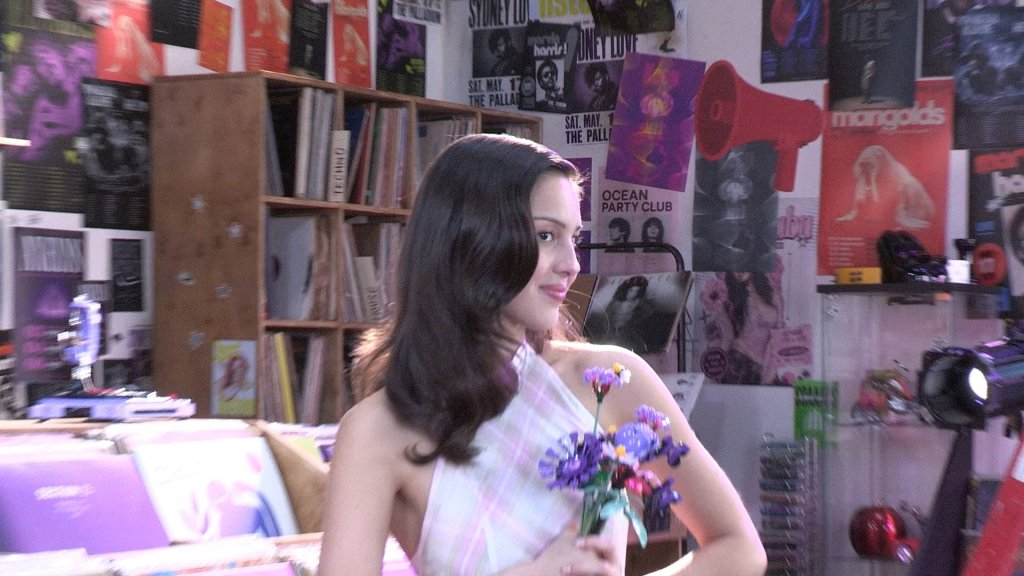
On 30 August 2026, Olivia Rodrigo set a new standard for queer visibility and social responsibility in the music business with "Daisy Chain Fields", a festival she organised in Irvine, California. With donations totalling over 20 million dollars, high-profile alliances and a line-up led entirely by women and trans artists, the US artist demonstrated how pop culture can act as a force for social renewal while also setting benchmarks for diversity and activism from a media-critical perspective.
The key points at a glance
- Olivia Rodrigo and Melinda French Gates jointly donated 20 million dollars to women’s rights organisations.
- The "Daisy Chain Fields" music festival featured only women and trans artists.
- The event explicitly addressed feminist and queer political issues.
- Performances by Sarah McLachlan, Stevie Nicks and Alanis Morissette strengthened the connection to historic women’s festivals.
- Artists such as Chappell Roan and Eli also voiced the overt political message on stage.
Donation total and institutional partnerships bring a shift in social policy
At the heart of the story is the enormous donation total of 20 million dollars, funded through ticket sales, Rodrigo’s personal commitment and a pledge from businesswoman Melinda French Gates. According to the festival organisers, the funds went to established organisations such as Planned Parenthood and the National Women’s Law Center. This pop culture event thus brings together art, activism and the targeted allocation of resources in an institutional alliance unprecedented in recent US festival history.
Intersectionality on the programme: artists and audiences in focus
The commitment to intersectionality became tangible on stage: alongside headliners such as Chappell Roan and Sarah McLachlan, several openly queer and trans musicians, including Eli and Doechii, were in the spotlight. Here, artistic quality, lived experience and political stance intertwine. The fundraising campaign by trans singer Eli in particular illustrates how individual visibility can be linked to collective participation.
A media-critical perspective: pop culture between empowerment and the pressure of expectations
The way Daisy Chain Fields is forcing a change in how the media approach diversity is also evident in the coverage itself, which for the first time treats the political demand for redistribution and alliances among marginalised people not merely as a sideshow, but as the narrative’s core. At the same time, women in pop culture face growing expectations not simply to reflect social sentiment, but to actively organise social experiments and flows of resources themselves. For observers taking a critical view of the media, this raises the question of how sustainable the festival is and how far it can serve as a model for future forms of culture, activism and funding.
The next confirmed "Daisy Chain Fields Festival" is already being planned, as Olivia Rodrigo announced at the end of the festival. The central challenge remains whether this form of deliberate event design and assumption of political responsibility will become a model in the mainstream or remain an isolated case.