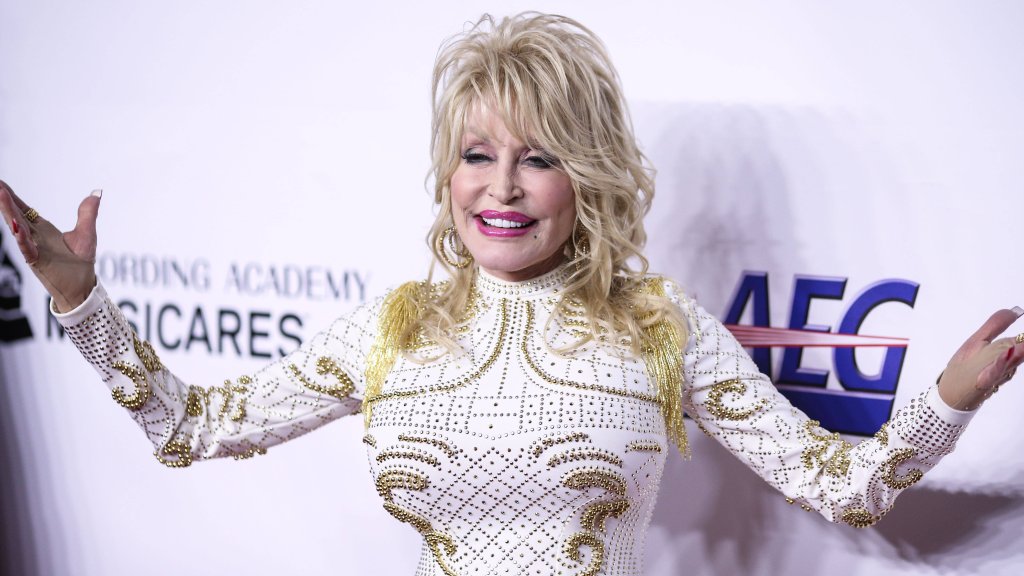
Dolly Parton (✝80) has been honoured posthumously with one of the Americana Music Association’s (AMA) major awards. The country icon received the “Americana Lifetime Achievement Award” at the 25th Americana Honors & Awards. The ceremony took place at the Ryman Auditorium in Nashville, in the US state of Tennessee.
Key points at a glance
- Dolly Parton has been posthumously awarded the “Americana Lifetime Achievement Award”.
- The honour was presented at the 25th Americana Honors & Awards at the Ryman Auditorium in Nashville.
- Parton accepted the award in a video message recorded before her death.
- The singer died on 25 August 2026 at the age of 80. According to her team, she died after a short battle with cancer.
- Her long-time friend Emmylou Harris paid tribute to Parton’s career in a speech.
- Brandi Carlile and the trio I’m With Her sang Parton’s song “Coat of Many Colors” to close the tribute.
- Parton combined country, bluegrass and Americana with widespread international recognition and was also active beyond music.
A recorded acceptance speech
The AMA had announced the award on 6 August. Parton was no longer able to accept it in person. Instead, a video message recorded by the singer before her death was shown. Parton died on 25 August 2026 at the age of 80. According to her team, she had fought a short battle with cancer. The video message was introduced by Parton’s long-time friend, singer Emmylou Harris. In her recorded acceptance speech, Parton addressed the people behind the Americana Music Association directly. “Well, hello, Dolly here. It’s an honour to receive a lifetime achievement award from the Americana Music Association,” Parton said.
In her speech, she recalled her musical roots. Roots music – or what is now called Americana – was the music she had played during her childhood in the Smoky Mountains. “It’s this very music that took me back to East Tennessee in 1997 to write and record my album ‘Hungry Again’,” she explained. The album had “really opened the door for me to a series of bluegrass and acoustic albums” that had changed her subsequent career in many ways. Later generations had also rediscovered this music. “Now new fans have discovered these albums, and new Americana music communities have embraced them enthusiastically,” Parton said. Looking back, she described that period of her career as “a kind of musical renaissance”. At the end of her acceptance speech, she once again addressed those behind the music association: “It really is a great honour, and I want you to know that I will always love you.”
Emmylou Harris recalls her journey
Before the video message, Emmylou Harris spoke about the beginnings of Parton’s career. In 1967, Parton had taken a decisive step towards making her big dream come true, the singer said. That was when Parton became a regular singer and duet partner on Porter Wagoner’s television programme. Their duets were successful both on the programme and in the charts. But Parton had not been content with that role. “But Dolly was nobody’s sidekick. She wanted more and she deserved more, and she set about achieving it – always on her own terms,” Harris said. “And we all know what happened when Dolly set her mind to something.”
Harris then traced Parton’s development from country singer through her success as a pop singer to becoming a globally recognised icon. “She was one of our greatest songwriters of all time, but she shone just as brightly on stage,” Harris explained. Parton had first conquered television screens and later the cinema screen too. Harris also pointed to the numerous projects through which Parton was active beyond music. These include the Dollywood theme park, the Imagination Library literacy initiative and the My People Fund relief fund. Parton’s video message was shown at the end of the event. Harris said the singer had accepted the award with the same warmth and joy she had shared with others throughout her life. Brandi Carlile and the trio I’m With Her brought the tribute to a musical close. Together, they sang Parton’s well-known song “Coat of Many Colors”.
Parton and the LGBTQ+ community
For decades, Parton also held particular significance for many people in the LGBTQ+ community. Her public stance against exclusion, her emphasis on tolerance and her repeated support for people regardless of their sexual orientation or gender identity all contributed to this. Her music and public persona also resonated strongly with parts of the community. Parton herself repeatedly stressed that people should be respected regardless of who they are or whom they love. Her immense popularity and her image as a woman who lived on her own terms also made her a cultural figure with whom many LGBTQ+ people identified. What mattered here was less a formal role within the community than the combination of her public stance, her music and her advocacy for acceptance.