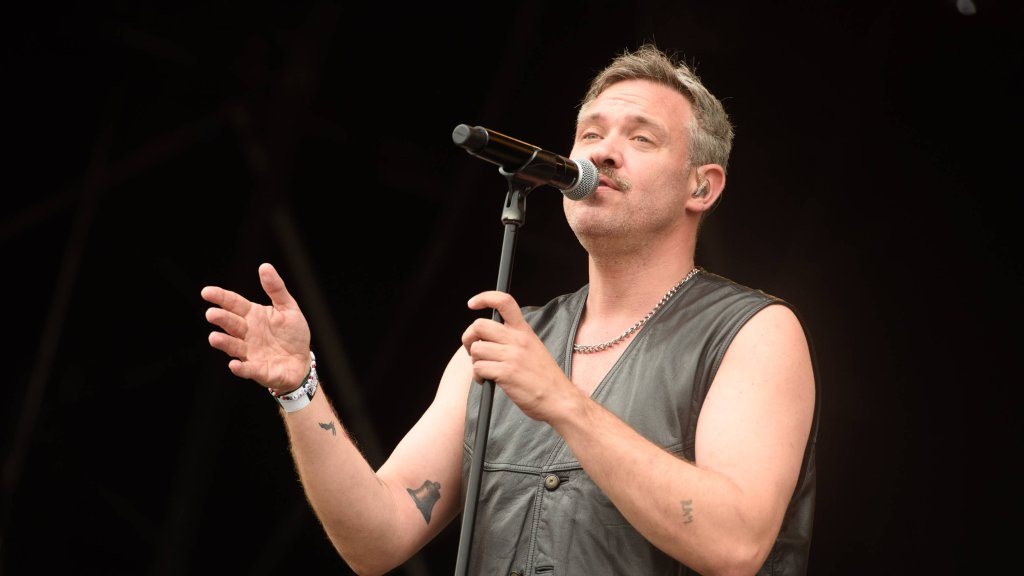
British pop singer Will Young (German) has spoken openly about his mental health, difficulties in romantic relationships and the particular pressures facing gay men. In an extensive interview, the 47-year-old described how deeply past experiences continue to shape him. He also looked back on 25 years in the music business.
Key points at a glance
- 25 years in pop: British singer Will Young is celebrating the anniversary of his breakthrough on “Pop Idol” and his debut single “Evergreen” with a tour.
- Mental health struggles: The 47-year-old describes ongoing emotional difficulties.
- Young criticises social expectations, rigid gender roles and the pressure to conform to particular ideas of masculinity.
- The singer admits that he has long struggled with loving relationships and that emotional intimacy still frightens him at times.
The struggle for self-acceptance
At the very start of the conversation, Young made clear that he continues to experience difficult periods, even after many years of intensive work on his mental health. “I wasn’t sure whether I would make it today. When I woke up this morning, I felt terrible. I had a difficult week last week. I’m doing my best,” the singer said. Young then explored in particular depth why gay men often find it difficult to accept themselves and build loving relationships. In his view, social expectations play a crucial role. Many gay men grow up with ideas that influence their personal development and their relationships.
“Perhaps we can connect better with one another if we recognise that a system of alienation was imposed on us from the outset,” Young explained. He still felt that gay men, too, often shaped their relationships within a patriarchal and heteronormative system. Recognising your own worth independently of social expectations was therefore crucial. “Fundamentally, it’s about learning that you are absolutely worthy of love.” Even within the community, he said, there were numerous unwritten rules about how men should look and behave.
Criticism of rigid gender roles
Young recalled a conversation with his partner, who had told him that for a long time he had not felt like other people or other gay men. “Because gay men dress like this, or you have to look like that,” his partner had said, describing the expectations at the time. Young himself had often encountered the idea that, as a gay man, he had to be particularly extroverted. “You have to be incredibly extroverted, always the life and soul of every party,” he said of that expectation. His own reaction had been: “My God, that’s just not me.”
For Young, a key step towards greater contentment is to stop allowing social categories to define you. “You don’t have to be like anyone else. Just be yourself,” he stressed. However, simply considering yourself independent was not enough. You had to keep critically examining your own behaviour and needs. “Are you really free? Have you actually found access to your true self?” As long as people shaped their behaviour around fitting in somewhere, they could remain governed by external expectations. “Your true self is inviolable,” Young said.
“You’re just you”
As an example, he described his experiences at rugby matches. After he publicly came out as gay, other people had assumed he attended matches solely to look at men’s bodies. “Oh, you’re here to look at the men’s bottoms!” they had told him. That had really annoyed him. After all, he used to play rugby himself and was genuinely interested in the sport. “I can be gay and really like sport, cars and Kylie Minogue at the same time!” Nobody had to fit a particular type or define themselves solely through terms such as “masculine”. “You’re just you,” the singer explained.
Young also spoke with unusual openness about his personal experiences of love and relationships. “I’ve always found it difficult to be in a loving relationship. I didn’t really know how to do it.” Although he was now in a happy relationship, the associated fears had not disappeared completely. “And to be honest, part of me finds it frightening. Absolutely frightening.” Young warned against putting yourself under additional pressure by taking certain developments for granted. In particular, the idea that relationships “should” simply work could be problematic.
A six-pack as a distraction
The singer sees confronting painful experiences as an important but difficult part of personal change. “Who wants to walk right into the fire of pain? It’s simply not in human nature. Very few people are willing to expose themselves to the fire of pain.” Instead, many people tried to suppress uncomfortable feelings through external changes. Young said that he, too, had long believed material possessions or physical changes could make him more content. “Everything will be fine if I just get this car. Or an even more defined six-pack. Or if I feel more comfortable dancing with my top off,” he said, describing his earlier thoughts. Such desires were not necessarily the real problem. They could, however, distract people from addressing deeper emotional distress.
Growing up as a gay man
Over the years, Young has found various ways to deal with distressing thoughts and feelings. These days, he found it particularly helpful to try not to equate physical stress responses and negative thoughts directly with his own personality. “What helps me is not taking the signals from my body and the thoughts in my head personally,” he explained. An acquaintance had recently advised him: “Don’t engage with it in the first place.” The acquaintance had also asked: “Why are you taking it so personally? It’s just an old mechanism.” Young therefore tried to distinguish between his true self and passing thoughts or physical reactions. He made clear that this was not about suppressing or dismissing feelings.
Young did, however, refer explicitly to experiences that could be associated with growing up as a gay man. Anyone who had long associated their identity with feeling unsafe first had to learn to break free of that pattern. “It’s as if you suddenly realise: ‘Oh, I was fine all along.’” He also stressed that he was still working on this himself. Young also attributes his particular sensitivity to power dynamics to his schooldays. He spoke about experiences of abuse at a boarding school and how the power structures there had left a lasting mark on him. “We should learn to communicate with one another and disagree respectfully without entrenching divisions.”
25 years after “Pop Idol”
The British musician also recalled his musical beginnings. Although his sexual orientation had not been explicitly discussed during the talent show, he had suspected that other gay people would recognise it. “Come on, I sang Aretha Franklin! And wore a tank top! I could hardly have made it more obvious.” The visibility of gay people in public life had been particularly important at the time. Nevertheless, he had never lived like Paris Hilton or travelled by private jet. Material offers had not been a decisive factor for him.
Alongside these personal subjects, Young looked back in detail on his musical career. Twenty-five years ago, he won the first series of the British talent show “Pop Idol” and became known for his debut single “Evergreen”. Simon Cowell had told him at the time that the song would always remind him of the moment he won. The same would be true for viewers. “He was right,” Young said. Now, particularly around the 25th anniversary, he was realising how strongly many people associated the music of the early 2000s with personal memories. One fan, for example, had told him that his daughter had been born to the sound of “Evergreen”. Now they both wanted to attend his anniversary tour together. “That feels incredibly old to me! I just can’t get my head around the maths!” Young joked.
Praise for fellow artists
Young also follows the development of younger queer and gay pop stars such as Sam Smith (German), Troye Sivan and Olly Alexander (German) with interest. He was particularly positive about Olly Alexander, with whom he has previously worked as an actor. “He’s a sweetheart and incredibly talented,” Young said. “These people are doing what they want to do. That takes a lot of courage.” Young was particularly impressed by Troye Sivan’s artistic and visual development. His music videos were brilliant, he said. Even when there had been criticism, Sivan had remained true to himself.
Young also stressed that the history of gay visibility in pop music had not begun with his generation. Alongside George Michael and Elton John (German), artists such as Andy Bell (German) and Jimmy Somerville (German) also deserved greater recognition. The Pet Shop Boys were important role models, too. For Young, what connects these generations of artists above all is the opportunity to become visible through music and challenge social expectations. With his “Evergreen 25th Anniversary Tour” in February and March 2027, Will Young now plans to look back on a quarter of a century in the music business.