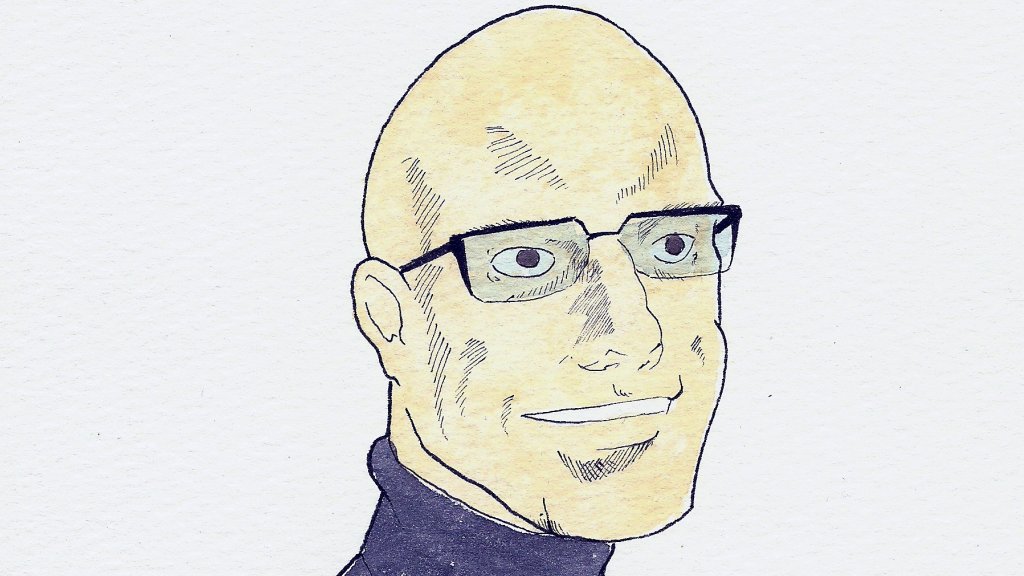
Michel Foucault was born in Poitiers on 15 October 1926. His 100th birthday is an opportunity to look back at his time in Hamburg: the French philosopher lived here in 1959/60, worked on “Madness and Civilisation” and explored gay St. Pauli. It was a brief stay that forms part of the city’s cultural history.
Key points at a glance
- Foucault headed the Institut français Hamburg in 1959/60 and taught at the university.
- He revised his first major work in the Hanseatic city.
- His later research explored the relationship between sexuality, knowledge and power.
- A conference in Hamburg on 5 and 6 November 2026 will commemorate the thinker. Admission is free.
A lecturer with open questions
Heading the French cultural institute also involved a teaching appointment in the university’s Department of Romance Languages and Literatures. Foucault’s subjects there included Rousseau and existentialism. A former student, Romance studies scholar Jürgen Schmidt-Radefeldt, later recalled lectures delivered in French without a script and lively discussions. Sometimes the conversations continued over a glass of wine.
The University of Hamburg describes his daily life as a busy mix of running the institute, academic work and night-time explorations. He was also drawn to the gay scene around the Reeperbahn. This was a time when sexual acts between men were still subject to criminal prosecution in West Germany.
Hamburg left its mark
A commemorative plaque at Heimhuder Straße 55 has honoured Foucault since 12 June 2019. The initiative followed the publication of Rainer Nicolaysen’s research essay “Foucault in Hamburg” in 2016. The historian reconstructed in greater detail the stay of the philosopher who would later become world-famous.
At the unveiling, the city honoured two works from this period: the final revision of “Madness and Civilisation” and Foucault’s work on Kant’s anthropology, including a French translation. His year in Hamburg was thus also a period of intensive work.
Who decides what is normal?
Foucault’s later work still offers starting points for exploring queer questions today. “The Will to Knowledge”, published in 1976 as the first volume of “The History of Sexuality”, examines sexuality in relation to knowledge and power. It considers how desire is discussed and how social institutions regulate this sphere.
The history of sexuality later took Foucault far back into antiquity and early Christianity. He examined how people made their own desire a subject of moral scrutiny. For today’s readers, this offers a perspective on rules that often seem self-evident: ideas about sexuality have a history too.
The history of persecution under Paragraph 175 (German) shows how directly such norms shaped gay men’s lives.
A conference to mark the centenary
On 5 and 6 November 2026, the conference “100 Years of Michel Foucault” will take place at the Hamburg Institute for Social Research, Mittelweg 36. Partners include the Institut français Hamburg and the Deutsche Gesellschaft für französischsprachige Philosophie. Admission is free. Information about the conference is available from the publisher.
Bildnachweis: Porträtzeichnung von Nemomain / Wikimedia Commons, CC BY-SA 3.0. Der Bildausschnitt ist beschnitten und steht ebenfalls unter dieser Lizenz.