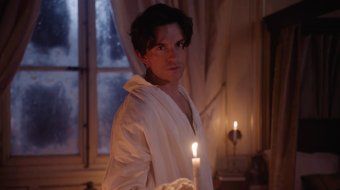
Was Cary Grant (1904-1986) gay or bisexual? (German) The question of the legendary Hollywood actor’s sexual orientation has occupied biographers, film historians and fans for decades, with many believing that the popular US actor was at least bisexual. His close bond with fellow actor Randolph Scott, with whom he lived at various times, has repeatedly prompted speculation about a possible romantic relationship. Now comments by his former wife Dyan Cannon have brought the discussion back into the spotlight.
The key points at a glance
- Former wife speaks out: Dyan Cannon, who was married to Cary Grant from 1965 to 1967, has addressed decades of rumours about his possible homosexuality. She says she noticed no clear signs herself during their relationship.
- Flirting with a ship’s captain: Cannon recalls a crossing to England during which Grant behaved in a noticeably familiar and flirtatious manner towards the captain.
- Alleged relationship with Randolph Scott: Grant lived with his fellow actor on and off over several years. People who knew them at the time later claimed that the two were lovers.
- Actor discusses sexual fluidity: Jason Isaacs, who portrays Grant in the miniseries “Archie”, believes, based on his research, that the Hollywood star may have loved both men and women.
- Daughter does not rule out relationships with men: Jennifer Grant said she had noticed no signs of her father having same-sex relationships. Had there been any, however, she would have had no objection.
An encounter on a sea voyage
Cannon, the fourth wife of the film star, who died in 1986, explained in an interview that she had heard such rumours even before their wedding. During their time together, however, she had noticed no clear signs that Grant had sexual or romantic relationships with men. One encounter on a sea voyage nevertheless stayed with her. “Once, on a passenger ship on the way to England, I saw him behaving in a very familiar and flirtatious way towards the captain. But apart from that, I never noticed anything,” Cannon said.
She said she could not judge whether Grant had had relationships with men before they met. “If he had relationships with men, that was before I knew him – but I never saw any signs of it. Honestly, it would not have mattered to me. What mattered to me was the connection between us, and I have to say that, at the beginning, it was undoubtedly real.”
Five marriages and speculation
Cary Grant was one of the biggest screen stars of classic Hollywood. In numerous films, he portrayed charming, self-assured men wooing their female co-stars. His best-known roles include appearances alongside Katharine Hepburn in “Bringing Up Baby” and Ingrid Bergman in “Notorious”. In his private life, too, Grant married several times. The actor entered into five marriages in total. Nevertheless, rumours about possible relationships with men circulated during his lifetime. In later years, these were fuelled in part by comments from people close to the actor. Golden Girl Betty White (German) is also said to have inadvertently helped revive such speculation.
The subject is closely linked to social conditions during Hollywood’s Golden Age. Several well-known actors of that era, including Rock Hudson, Montgomery Clift and Ramon Novarro, were gay but could not live openly. Many details of their private lives only became public through later accounts by relatives, friends and associates. Against this historical backdrop, Grant’s relationship with Randolph Scott continues to be discussed today.
Dyan Cannon remembers
Dyan Cannon and Cary Grant married in 1965. Their daughter Jennifer, Grant’s only child, was born the following year. By 1967, the couple had divorced. Cannon made a name for herself as an actress and received three Oscar nominations during her career. Her well-known films include the relationship comedy “Bob & Carol & Ted & Alice”, the fantasy comedy “Heaven Can Wait” and the thrillers “Deathtrap” and “The Last of Sheila”. In 2011, she published her memoir, “Dear Cary: My Life With Cary Grant”. The book later became an important source for the British ITV miniseries “Archie”, in which Jason Isaacs portrays the Hollywood legend.
In connection with the series’ release, Cannon and Isaacs addressed the rumours about Grant’s sexuality. The actress also recalled the early days of their relationship. She said the period when they were getting to know each other had been characterised by a “genuine” and “trusting” connection. After the wedding, however, the relationship had “changed radically”. Cannon attributed their later difficulties in part to Grant’s troubled childhood and his fear of abandonment. She stressed that their marriage had been founded on sincere feelings at the beginning. Whether her then-husband had previously loved men as well had not been a deciding factor for her.
Grant was “sexually fluid”
Jason Isaacs, who delved deeply into Grant’s life story to prepare for his role in “Archie”, offered a different assessment. The actor said he had conducted numerous conversations and examined extensive biographical material. On that basis, he considers it possible that Grant had relationships with both men and women. “As far as I know, he had many relationships, but the label ‘gay’ does not really describe who he was,” Isaacs said. He added: “Today, you might call him ‘fluid’. If you believe what many people have researched in detail, then he definitely had relationships with men. A very long relationship with the actor Randolph Scott. But he was also in love with women. He was in love with Dyan.”
Randolph Scott and Cary Grant
Randolph Scott’s name also comes up particularly frequently in other discussions of the subject. The two actors met in 1932 while filming “Hot Saturday”. In the years that followed, they lived together at various times in a house in Malibu. The press dubbed the property “Bachelor Hall”, essentially a bachelors’ residence. Photographs from that period show the two men in their shared home. Some of the best-known pictures were taken by photographer Jerome Zerbe. Their close friendship and periods of living together prompted speculation about whether Grant and Scott were also romantically involved. Those suspicions were later fuelled by statements from several people who knew them at the time.
Both Zerbe and the actor and later fashion critic Richard Blackwell claimed to have had sexual encounters with both men. In his autobiography, Blackwell went further, explicitly describing Grant and Scott as lovers. “They were deeply and madly in love with each other. Their devotion to one another was complete,” he wrote. His account is among the best-known statements about the two actors’ alleged relationship. Whether the men actually had a romantic partnership, however, has not been established beyond doubt. Grant did not publicly confirm such a relationship.
His daughter would have wished it for him
His daughter Jennifer Grant was also asked about her father. In her memoir, “Good Stuff: A Reminiscence of My Father, Cary Grant”, she had initially rejected speculation that her father might have been gay. Later, she expressed a more nuanced view. In an interview with the British newspaper “The Guardian”, she explained that she herself had noticed no signs of her father having same-sex relationships. She added: “I think I would have noticed – not that it would have bothered me … Perhaps he had an affair with a man earlier in his life]. I will never know, but if he did, wonderful. I hope he enjoyed it.”
Hollywood and homosexuality
The discussion about Cary Grant can hardly be separated from the social conditions of his time. During the classic Hollywood era, film stars were under considerable pressure to bring their private lives into line with the expectations of film studios and audiences. Homosexuality was a strong social taboo. Coming out publicly could have serious professional consequences for actors. Many gay artists therefore did not live openly or kept same-sex relationships hidden from the public. Among the best-known examples are Rock Hudson, Montgomery Clift and Ramon Novarro. The mystery surrounding Cary Grant’s private life thus remains forever.