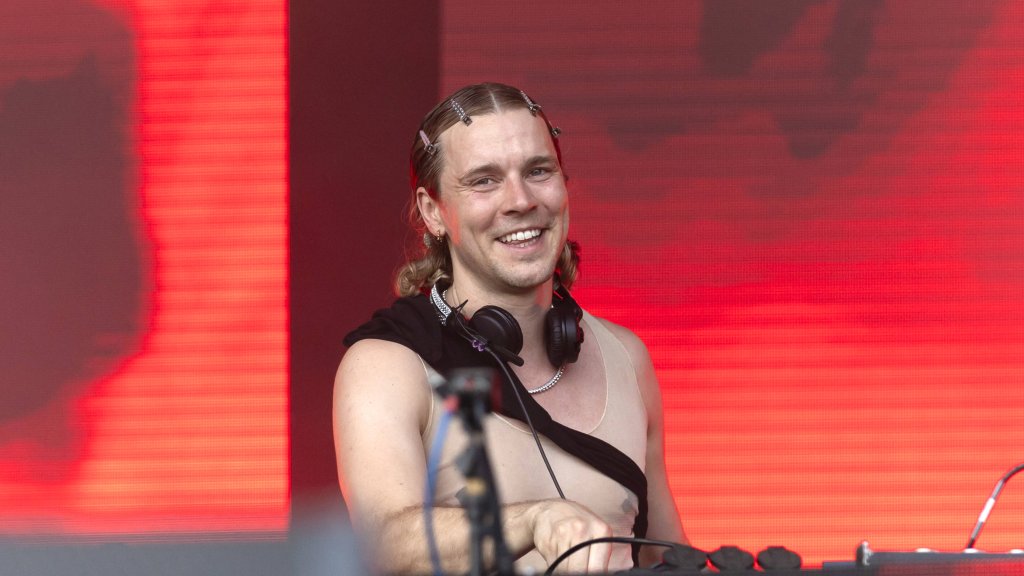
Internationally successful non-binary, pansexual DJ and music producer Felix Jaehn (32) (German) has rediscovered the joy of performing in public after an extended break for health reasons. In a Tagesspiegel interview, Jaehn, also known as Fee, spoke about depression, panic attacks and the pressures of the music industry. The conversation also covered their non-binary identity and navigating sexual orientation.
The key points at a glance
- Comeback after a stay in hospital: DJ Felix Jaehn, also known as Fee, cancelled all performances in 2024 because of depression and received treatment in a psychiatric hospital. Jaehn is now performing regularly again.
- Panic attacks were to remain secret: Jaehn reports that a former manager advised keeping their mental health problems from the record label.
- Heavy workload: Up to 100 shows a year in around 40 countries, constant travel and a lack of time to recover contributed to Jaehn feeling overwhelmed.
- A new understanding of their health: Jaehn says an ADHD diagnosis, along with insights into high sensitivity and difficulties filtering sensory input, is helping them manage everyday life better.
- Greater artistic freedom: Following earlier conflicts with management and the record label, Jaehn also wants to release more personal and melancholic music in future.
- Openness about queer identity: Jaehn identifies as non-binary and uses all pronouns. Fee now describes their sexual orientation as pansexual, queer or gay, among other terms.
Returning to the stage
In 2024, Jaehn cancelled all planned shows and admitted themself to a psychiatric hospital because of depression. Fee now says they feel stable again. Jaehn said they initially gave around five performances last summer to find out whether a return was possible at all. This year, there had already been around 15. The experiences had been largely positive. Performing was enjoyable again, Jaehn explained. What had once been a teenage dream had, for a time, become a nightmare under professional and personal pressure. Today, however, Fee can enjoy the big festival stages again.
Keeping panic attacks secret
Jaehn was particularly critical of how mental health problems had previously been handled in their professional circle. At the start of their career, Fee had tried to hide panic attacks and keep working despite the symptoms. On stage, this had usually worked without anyone on the outside noticing. “My manager at the time advised me to keep my panic attacks secret, because otherwise the record label might lose confidence in the project and stop investing in me,” Jaehn reported. Fee illustrated the lengths to which this secrecy went with an incident at a business dinner with 13 people. During the restaurant visit, Jaehn had suddenly been unable to breathe and had to run outside. The manager had explained the situation to those present by saying: “The artist is too warm. Let's go to the air-conditioned office.”
100 performances in 40 countries
For years, Jaehn's working life was defined by an exceptionally heavy workload. At times, the schedule included up to 100 shows a year in around 40 countries. There was also music production, interviews and other professional commitments. Sometimes Jaehn flew to the USA and back for a single weekend. They had effectively worked seven days a week, leaving barely any time for a private life. Eventually, the strain had become impossible to manage. However, Jaehn does not see success as the sole cause of their mental illness. Grappling with gender identity, sexuality and the expectations of those around them had also played a part. International success had probably intensified these pressures.
ADHD diagnosis shifts the focus
Jaehn says they found out they had ADHD around two years ago. This was accompanied by insights into high sensitivity and difficulty filtering sensory input. As a result, noisy environments in particular placed a considerable strain on them. Fee experienced visual and auditory stimuli especially intensely. Just an hour in a noisy restaurant could leave them feeling severely exhausted. Conversations and background noise were difficult to tune out. These were challenging circumstances for work as a DJ involving large crowds, loud music and frequent travel. At the same time, Jaehn also sees creative advantages in their neurodiversity. “I think more freely, connect things in new ways, and when I hear a song I can already see the matching visual, while melodies shoot into my head seemingly out of nowhere.” Fee is not currently taking medication. Instead, the understanding of their own needs and limits gained in therapy is helping. This has increased their confidence that they can continue their career in a way that is better for their health.
Criticism of the music industry
Alongside the strains on their health, Jaehn also describes restrictions imposed by the music industry. Although Fee is primarily known for successful dance-pop productions, they also create much more melancholic music. When Jaehn wanted to release such songs in the past, management and the record label had advised against it. In their view, the tracks had not fitted the existing artist project. Fee now no longer wants to be talked out of such decisions. Jaehn says they are working on restructuring their professional team and gaining greater artistic freedom. New musical directions are also a possibility. Recently, Fee had been writing songs again, some of them in German, recording their own voice and writing poetry.
Loss of privacy
Fame was not originally Jaehn's goal. Their enthusiasm for music developed while they were still at school, when Fee was responsible for choosing the music at birthday parties. The decisive experience had been discovering that the right sequence of songs could get people dancing. Later, Jaehn mainly wanted to make a living from music. International fame had come unexpectedly. It also brought unpleasant experiences. People had followed Fee all the way home. Social media also increased the pressure to maintain a constant public presence. One role model for handling fame had been singer Herbert Grönemeyer, with whom Jaehn released a song in 2016. On a promotional trip together, Fee had observed how naturally the singer responded to people who recognised him.
Coming out as queer
Jaehn also grappled with their sexual orientation and gender identity during their career. Fee initially came out publicly as bisexual. Today, Jaehn would be more likely to describe their orientation as pansexual, queer or gay, although the terms they use for themself sometimes change. They had first come out privately to a brother at around the age of 18. The situation had been more difficult in their professional circle. For example, Jaehn had made an effort not to look at attractive men backstage, so as not to allow anyone to draw conclusions about their sexual orientation. Added to this were expectations surrounding the public image of a young, successful DJ. People had often simply assumed that Fee had relationships with women.
In 2024, Jaehn also made their non-binary gender identity public. “I became successful at 19, was suddenly in the public eye and didn't yet know who I was myself. I went through that process in public,” Fee explained. Jaehn had only discovered the term non-binary for themself within the past four years. That was another reason why it was important to speak about it publicly and make such terms accessible to other people. Jaehn has tried various approaches to pronouns. Initially, the neopronoun “Dey” had been preferred, followed later by using only their name. In everyday life, however, this had proved difficult. Fee now accepts all pronouns.
Berlin remains important
Alongside the Baltic coast, Berlin continues to play a major role in Jaehn's life. Fee had tried several times to settle permanently in the capital. During the first five or six attempts, however, the big city had proved overwhelming. Jaehn grew up in a small village and initially spent a year at a music college in London after leaving school. In 2013, Fee enrolled at Humboldt-Universität in Berlin to study business administration. However, they dropped out before the first examination period. The decision to move to Berlin had been driven primarily by its music scene. Jaehn still returns to the capital regularly. The reasons included Berlin's importance to the German music industry, the city's openness and its queer community. Most of their friends also lived there. Following their health crisis, Jaehn now wants to continue their career under different conditions: with less pressure, greater self-determination and more room for personal and artistic development.