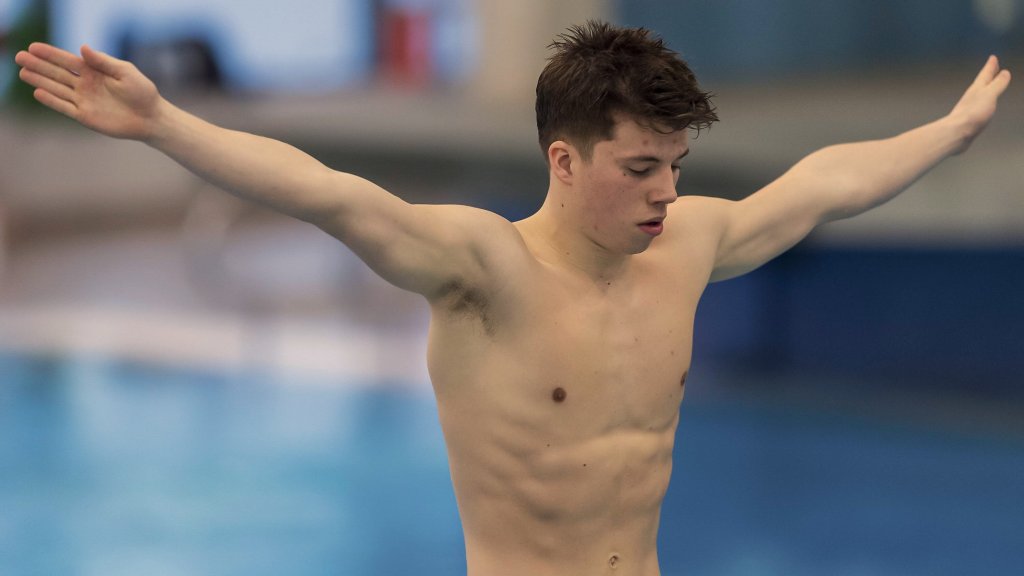
Former British Olympic diver Freddie Woodward has once again spoken publicly and at length about his years of porn addiction. He first disclosed it in late August this year. In a newly released podcast interview, the 31-year-old describes how he overcame his problematic behaviour and the roles played by shame, self-esteem and personal relationships.
The key points at a glance
- New podcast interview: Former British Olympic diver Freddie Woodward (31) has spoken at length about his past porn addiction.
- Personal insights: The podcast “Men’s Sexual Mastery” covers topics including his relationship, his sex life and dealing with shame and compulsive behaviour.
- Woodward now works as a coach, supporting men who want to overcome their problematic pornography use.
- Intimate images made public: Private images of the athlete appeared online in 2017. The experience shook him and prompted him to examine his behaviour in depth.
- A struggle lasting years: By his own account, Woodward needed another six years to stop using pornography. He has now been living without pornography for around two years.
Shame and willpower are not enough
In the new episode of the podcast “Men’s Sexual Mastery”, Woodward also discusses changes in his sex life and how he told his then partner about his problems. According to the episode description, his former girlfriend is now his wife. The former elite athlete now also works as a coach, supporting men who want to change their pornography use. Woodward had already shared his experiences with the American news channel CNN in early September. He described how his problematic use developed during his teenage years and how profoundly it affected his life. At the time, the subject also sparked considerable discussion in the gay community.
In the new podcast, Woodward explores why, despite his sporting discipline, he was unable to stop using pornography for so long. In his account, willpower and shame alone were not enough. Instead, he had to fundamentally change his attitude towards himself and his behaviour. The conversation also covers how he raised his problems within his relationship at the time and the changes this brought about in his private life. Woodward now regards overcoming his porn addiction as one of his most significant personal achievements. In the podcast, he even ranks it above competing at the Olympic Games. He now wants to use his experiences to help other men who are distressed by their pornography use and find it difficult to talk about.
First problems during his school years
By his own account, Woodward had already encountered pornographic content as a teenager. During his school years, he had to balance lessons, studying and intensive diving training. He increasingly noticed that thoughts of pornography were distracting him from the tasks he needed to do. “Every time I sat down to study for anything, pornography was constantly there, as if it were saying: ‘I’m here, I’m here, I’m here.’ That was the first time I noticed it was a problem, because I could clearly see that I was no longer as productive.” At first, he underestimated the effects. Only gradually did he realise that his behaviour was affecting numerous areas of his life. “It affected my confidence, my concentration, my maturity, my emotional control and my patience. I keep wondering whether it also affected any aspect of my strength.”
Problems went unrecognised for years
Woodward was already researching porn addiction as a teenager. He came across an article describing more than ten hours of daily use as a sign of addiction. Since he spent nowhere near that much time using pornography himself, he initially believed he was not affected. He now sees that as a misjudgement, as his behaviour became increasingly risky. He began exchanging intimate photos with other people. The associated thrill became another part of his problematic behaviour. “Looking back now, it was actually a kind of addictive behaviour. You’re not honest with yourself, and you justify things in strange ways to somehow get what you want. But it was never enough.” Woodward describes a cycle of desire, justification and a sense of dissatisfaction despite repeated experiences.

Intimate images made public
The year 2017 was particularly traumatic for the diver. Private intimate images of him appeared online. The images showed him completely naked and with an erection. Their publication hit him hard. He was “really, really, really devastated”, the former diver now says. Alongside the public exposure, he was particularly troubled by the realisation of how carelessly he had previously handled personal images. “Of course, it was incredibly embarrassing, and I didn’t know how to deal with it. But it was also like holding a mirror up to myself: what I had been, what I had done, my actions and how reckless I had been.” However, the experience did not enable him to stop using pornography immediately. By his own account, it took another six years before he managed to stop.
The pressures of elite sport
Woodward suspects that his career as an elite athlete may also have contributed to his difficulties. The Briton competed at the 2016 Olympic Games in Rio de Janeiro, finishing 19th in the three-metre springboard event. He had previously won a bronze medal at the 2014 Commonwealth Games. His intensive daily training schedule strongly shaped his youth. He had little opportunity to lead an ordinary life like other young people. “You don’t lead a normal life as a young person!” He now takes a particularly critical view of the mindset in elite sport.
“I think that this high-performance mindset is a kind of trap. You tie your entire self-worth to what you can achieve as an athlete. So if you don’t achieve anything good, that means you have fundamentally failed as a person.” Those who derive their self-worth exclusively from sporting success can find defeats particularly difficult to process. In Woodward’s view, this can create a need to manage distressing feelings in other ways. “I think those expectations, that shame and that blame can turn pornography into a crutch that seems increasingly tempting.”
A new path in life
Woodward ended his competitive career in 2018. He subsequently worked as a diving performer on cruise ships. He has since developed another line of work: as a coach, he focuses on problematic pornography use and supports men who want to change their behaviour. In his latest interview on “Men’s Sexual Mastery”, he therefore also focuses on the changes since he stopped and his approach to sexuality and relationships today. By his own account, Woodward has not used pornography for around two years. He now also uses his story to draw attention to problematic patterns of behaviour that can develop gradually. From a clinical perspective, it is important to distinguish between pornography use and compulsive behaviour with significant negative consequences. So-called porn addiction (German) is not a distinct, universally recognised medical diagnosis. However, problematic pornography use can be associated with compulsive sexual behaviour disorder.