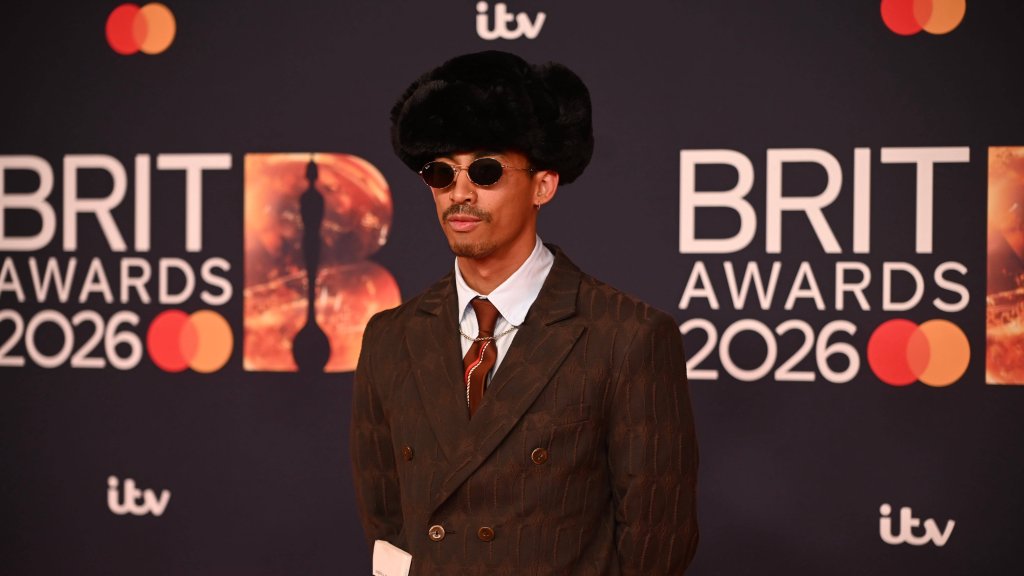
British rapper Jordan Stephens (34) has spoken openly about homophobic remarks he made during his school years. Although the Rizzle Kicks musician grew up in an environment shaped by queer people, he used the word “gay” as an insult as a teenager. Today, the 34-year-old regrets this behaviour and hopes his public support for LGBTQ+ people can go some way towards making amends.
The key points at a glance
- Shaped by queer people from an early age: British musician Jordan Stephens grew up around many LGBTQ+ people. His gay godfather David McAlmont was a particularly important influence.
- Homophobic language at school: Although Stephens was open to different ways of life even as a child, he later used the word “gay” as an insult.
- Regret over past mistakes: Now 34, he hopes his attitude as an adult can go some way towards making amends for his behaviour at the time.
- An experience in a gay club: Unwanted physical advances during a visit in London helped him better understand what women can experience on a night out.
- Recognition as an ally: Stephens received the “Ally Award” in 2026 for his support for the LGBTQ+ community.
Fitting in at any cost
As a teenager, Stephens attended Blatchington Mill School in Hove, southern England. There, he says, he adopted his classmates’ habit of using the word “gay” in a derogatory way. Looking back, he finds his behaviour at the time shameful. “It was definitely just the desire to fit in,” he explained. He said he had adapted to the language used around him, even though it did not actually reflect his personal beliefs. “I hope that my attitude as an adult makes up for some of that in some way,” Stephens said. Today, he finds it particularly contradictory that he did not himself hold the prejudices his choice of words expressed at the time. “But the irony is that I wasn’t actually like that myself,” he explained. He had also adapted his language to match others when making remarks about skin colour. “It’s just conformity. Sad, when you think about it.”
A gay godfather as a role model
Stephens believes it was primarily thanks to his mother, Emma Boulting, that he encountered different sexual orientations and ways of life at an early age. The musician was born into a working-class family in the London district of Neasden on 25 January 1992. From the age of ten, he grew up in Brighton. His mother surrounded him with people of different backgrounds, genders and ways of life. Today, Stephens describes these encounters as “gifts”. “My empathy, my curiosity and my admiration for the queer community definitely stem from the people my mother surrounded me with as a child,” he said.
His godfather, British musician David McAlmont, played a particularly important role. Stephens had previously described him as “an incredible gay Black man with a beautiful voice”. The rapper still remembers visits to McAlmont, who was then living with his now-deceased so-called “boyfriend” Bill. One unusual collection in particular has stayed in his memory. “He had this crazy collection of Barbie dolls. And even then, as a boy, I didn’t find that strange at all,” Stephens recalled.
Role expectations in the music business
Stephens says that during his childhood he met people “of all shapes, sizes, skin colours, genders and preferences”. Their sexual orientation or gender identity was not a defining factor for him. “That aspect of their identity wasn’t at the forefront of their personality,” the musician explained. What mattered more were the personal encounters and the influence these people had on his development. A memory of his godfather McAlmont illustrates how Stephens had developed an awareness of discrimination even as a child.
The singer had experienced difficulties in his music career at times because he was being pushed to sing about heterosexual relationships. “I remember a time when he was having problems with his music career because he was being encouraged to sing about a heterosexual relationship,” Stephens said. Even then, he had felt this expectation was unfair. “I remember thinking, even as a child, ‘That doesn’t seem fair to me.’ You know, I remember feeling a sense of injustice on his behalf.” Stephens attributes his subsequent use of homophobic language to the social pressure he experienced as a teenager.
Touching in a gay club
Stephens had another formative experience during a visit to a gay club in London’s Soho district. The heterosexual musician was there to celebrate a friend’s birthday. During the evening, he experienced unwanted physical advances. Rather than reacting aggressively or defensively, he said, the situation made him reflect. Above all, it made him more aware of what women can experience on a night out when heterosexual men touch them without asking. “It actually upset me deeply because, ironically, I left the club with a better understanding of what women might experience in a club,” Stephens explained. The encounter also made him realise that physical closeness in queer spaces could have different meanings. Not every touch between men had to be sexually motivated.
Connections with the community
Stephens describes himself as someone who is generally comfortable with physical closeness to other people. “I’m a very tactile person,” he said. His experiences in the LGBTQ+ community had shown him that friendly touching between men was often more natural there than in many predominantly heterosexual environments. “Because I feel that in the gay community, in the queer community, it’s much more common for men to touch each other, and not always in a sexual sense.” Stephens says he feels comfortable in queer spaces and moves through them without apprehension.
This occasionally leads other men to assume he is gay. For the musician, that is not a problem. Even when he has to explain that he is heterosexual, he does not find such assumptions insulting. The musician’s openness to different ways of life and his public advocacy were recognised in 2026 with the British “Ally Award”. He sums up his hope that his support for the LGBTQ+ community today can make up for some of his past mistakes in one sentence: “I hope that my attitude as an adult makes up for some of that in some way.”