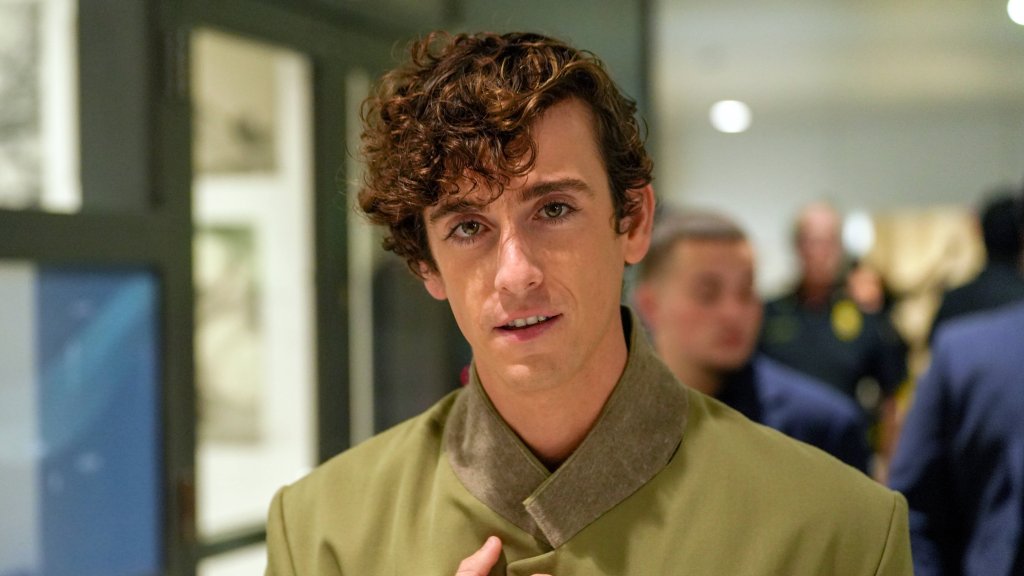
Spanish folk-pop musician Guitarricadelafuente (29) has spoken about coming out, his friendship with Troye Sivan and his experiences as a gay actor. The artist, whose real name is Álvaro Lafuente Calvo, has taken on his first film role in the Spanish war drama “La bola negra”. He said the story of a young man who has to suppress his homosexuality also prompted him to question his own ideas about masculinity.
Key points at a glance
- New film role: Spanish folk-pop musician Guitarricadelafuente plays Sebastián, a gay man who has to hide his feelings during the Spanish Civil War, in the war drama “La bola negra”.
- An unusual coming-out story: His mother found out about his boyfriend through an interview during the coronavirus lockdown. He said he had never felt a formal coming-out conversation was necessary.
- Friendship with Troye Sivan: The Australian pop star's openness about physicality, vulnerability and homosexuality has had a strong influence on him.
- Questioning masculine ideals: Guitarricadelafuente stresses that tenderness, fear and vulnerability do not make a man any less masculine.
- Music and acting: His experiences on “La bola negra” are already influencing work on his third album.
Tenderness and desire
“Showing your body, being tender, being afraid, desiring someone — none of that makes you any less of a man,” the musician explained in a recent interview. The stage name Guitarricadelafuente combines his surname with the Aragonese word “guitarrica”, meaning a small guitar. His folk-pop has earned him an increasingly international reputation in recent years. His musical projects include two collaborations with Australian pop star Troye Sivan. Now he is also attracting attention as an actor. There is already speculation about his possible Oscar prospects for his performance in “La bola negra”.
A special first film role
In “La bola negra”, Guitarricadelafuente plays young Sebastián, who lives in a village and tries to hide his feelings during the Spanish Civil War. The character is shaped by violence, social expectations and a rigid understanding of masculinity. The musician explained that, when deciding to take the role, he had not initially thought about playing a gay character as an openly gay man. “I saw Sebastián as a human being,” he said. “His desire is, of course, a fundamental part of his personality. But the same is true of his fear, his family, the war, his background and his need to survive.”
He said it was only after filming that he became more aware of the historical significance of his role. “I can live openly as a gay man, make an album like ‘Spanish Leather’, sing about desire, show my body, have a boyfriend and then play someone who could barely put a name to what he felt without putting himself in danger.” Only a few generations separate these different realities. “Playing him made me think a great deal about how the freedom I have today is something that other people before me simply did not have.”
Coming out in passing
According to the musician, his own experiences of being gay differ markedly from those of his character. “I never really had a dramatic coming-out moment. I never felt I was hiding. But for a long time, I also didn't feel the need to make a public statement about who I am.” He shared a personal anecdote about how his mother found out he was gay. During the coronavirus lockdown, he gave an interview. Asked what he was doing at the time, he casually replied: “I'm here with my boyfriend.” Looking back, he says: “That's how my mother found out. And that was absolutely fine. I had never sat my parents down for a conversation beforehand, because I never felt I had to.”
The musician stressed, however, that not all gay people have similar experiences. “I'm aware that not everyone has this experience, especially in smaller or more conservative places. And I don't want to pretend it's like that everywhere.” In his view, there is no universally applicable way to come out. “You do it when and how it feels right for you. For me, what mattered was being able to live as a gay man as a matter of course.”
Embracing physicality
Troye Sivan played an important role in his personal and artistic development. “Troye is definitely someone who has influenced me. Even before we became friends, he was a role model for me. I really admired how free he seemed, how comfortable he felt in his body and how he could show vulnerability while still seeming very strong.” He said getting to know Sivan personally had changed something in him. “Getting to know him opened something up in me at exactly the right moment.” When preparing for “La bola negra”, however, he focused more on his own feelings rather than asking friends for advice on his performance. The character of Sebastián required deeply personal reflection. “Of course, everything you experience and everyone you love still feeds into your work in some way. I think that simply happens without you really noticing.”
A celebration of gay desire
Guitarricadelafuente sees a strong contrast between Sebastián and his album “Spanish Leather”, released in 2025. While Sebastián has to suppress his sexuality, the album openly explores homoeroticism, physical desire, sensuality and personal freedom. “‘Spanish Leather’ was about surrendering to my desire and allowing myself to be seen,” the musician explained. He said he had shown more of his body, spoken more directly about his private life and experimented with sensuality. “‘Full Time Papi’ is basically about feeling comfortable in your own skin and giving yourself permission to feel desire.”
For Sebastián, by contrast, the situation is fundamentally different. The young man carries his longings within him but can barely express them. “He is surrounded by war and an extremely rigid idea of what a man should be. He is constantly fighting something inside him that he doesn't really know how to release.” It was precisely this contradiction that immediately connected him to the character. “Sebastián and I can sometimes have the same feelings. But what we can do with those feelings is completely different.”
Traditional masculinity
Exploring Sebastián also prompted Guitarricadelafuente to reflect on society's expectations of men. In his character's world, masculinity is associated above all with strength, usefulness and the suppression of fear. “He is at war, surrounded by violence, and masculinity means being strong and useful, not showing fear and certainly not showing desire for another man.” Although social conditions have since changed fundamentally, he said some of these ideas have survived to this day. “I think I've become aware of how many ideas about masculinity we still carry around with us without noticing.”
He said he himself had learnt in recent years that vulnerability was not incompatible with masculinity. “I've learnt in recent years that vulnerability doesn't make me any less masculine. Sebastián is trapped in an idea of what a man should be. That leaves him almost no room even to exist.” The role had therefore also prompted him to question ideas he had unconsciously absorbed.
Common ground with his character
Despite the historical differences between his own life and that of his film character, Guitarricadelafuente recognises many similarities. Sebastián is a young man from a village who initially cannot make sense of his feelings. He said he had explored similar questions while working on “Spanish Leather”. “Someone leaves a small place, discovers the world, discovers his own feelings and tries to find a place for them.” That was why the character had felt familiar to him from the outset. “Our lives and the times we live in are different. But on an emotional level, there were things about him that I recognised immediately: his desire, his vulnerability and even the way he observes the world.” According to the musician, working on “La bola negra” is also influencing his further musical development. His forthcoming third album is still taking shape, so he does not yet want to give a definitive description of its musical direction.
“I'm still discovering that myself. So I don't want to explain an album that doesn't fully exist yet.” What is certain, however, is that his approach to songwriting has changed. During filming, he spent months exploring his character's feelings, the history of the Spanish Civil War, the poet Federico García Lorca and the music of that era. Images of desire, death and unspoken feelings also shaped his work. In this context, he wrote the song “La Nieve” with musician and producer Raül Refree. “I think acting has also taken me out of myself to some extent.” Until now, he said, his songs had mostly grown out of personal experiences. Through Sebastián, he had learnt to recognise his own feelings in other people's life stories too. “Sebastián showed me that I can immerse myself in someone else's story and still find something of myself in it. I think that experience will stay with me.”