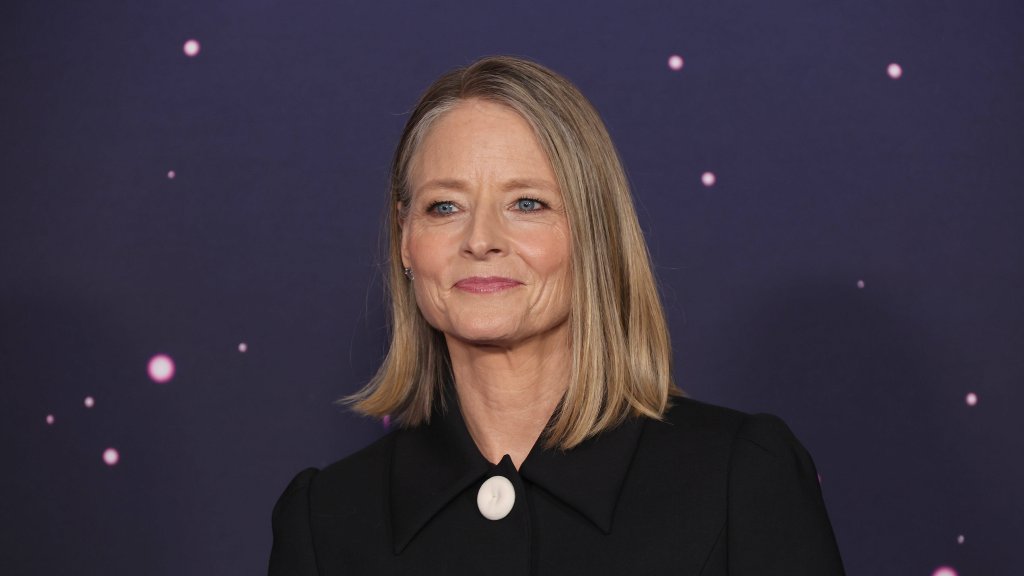
She was a child star, became a two-time Oscar winner and went on to become one of Hollywood’s best-known lesbian actresses: Jodie Foster (German) celebrates her 64th birthday this Thursday. She has spent more than six decades in front of the camera, shaped numerous film characters and, at the same time, maintained a private life that she rarely discussed publicly for many years.
The key points at a glance
- 64th birthday: Jodie Foster was born in Los Angeles on 19 November 1962. The actress and director has been one of Hollywood’s most respected figures for decades.
- Two Oscars: Foster won Best Actress for both “The Accused” (1988) and “The Silence of the Lambs” (1991).
- Significance for LGBTQ+ people: After decades of considerable discretion, Foster spoke publicly at the 2013 Golden Globes about her long-term relationship with a woman. Today, she speaks clearly about the importance of freedom, love and visibility.
- Private life: Foster has two sons and has been married to photographer and director Alexandra Hedison since 2014.
- Continuing success: She received another Oscar nomination in 2024 for “Nyad”. Her leading role in “True Detective: Night Country” earned her an Emmy.
A piece of Hollywood history
Foster’s career is closely intertwined with the history of American cinema. She has worked with directors such as Martin Scorsese, Jonathan Demme, Robert Zemeckis and David Fincher, taken on challenging roles and also established herself behind the camera as a director. Her characters are often women seeking their own path in extraordinary circumstances. For many LGBTQ+ people, Foster also holds particular significance. Her journey towards greater openness about her lesbian identity was not straightforward. It is precisely the tension between the right to privacy and the public visibility of gay and lesbian people that makes her story an important chapter in Hollywood history.
From child star to Oscar winner
Jodie Foster was born Alicia Christian Foster in Los Angeles on 19 November 1962. She was already working in advertising as a toddler, with television appearances following later. From an early age, she took on film roles that went far beyond the usual repertoire of American child stars. Her international breakthrough came in 1976 with Martin Scorsese’s “Taxi Driver”. Alongside Robert De Niro, she played Iris, a twelve-year-old girl who is sexually exploited in New York. The dark film about violence, loneliness and social alienation became a classic of American cinema.
Foster’s performance earned her a first Oscar nomination for Best Supporting Actress. She was just 14 at the time. That same year, she also appeared in the musical gangster comedy “Bugsy Malone” and the Disney comedy “Freaky Friday”. Unlike many former child stars, Foster successfully continued her career into adulthood. First, however, she chose to pursue a university education. She studied literature at the prestigious Yale University, graduating in 1985. She made this choice at a time when she was already internationally famous.
First Oscar for “The Accused”
The legal drama “The Accused” gave Foster her decisive breakthrough as an adult actress in 1988. She played Sarah Tobias, a young woman fighting for justice after being gang-raped. The film examines sexual violence, social prejudice and the responsibility of people who encourage or fail to prevent an act of violence. Foster’s intense performance earned her the Oscar for Best Actress in 1989. The award confirmed her standing as one of the most important actresses of her generation. Three years later came her second Oscar, for a role that remains inseparable from her name.
“The Silence of the Lambs”
In 1991, Foster took on the role of young FBI trainee Clarice Starling in Jonathan Demme’s psychological thriller “The Silence of the Lambs”. In order to find a serial killer, she seeks contact with the imprisoned psychiatrist and cannibal Hannibal Lecter, played by Anthony Hopkins. The interplay between the two actors became one of the most famous confrontations in film history. Foster portrayed Clarice as an intelligent, tenacious and vulnerable woman who has to assert herself within a male-dominated institution.
At the 1992 Oscars, the film won the five main awards, including Best Picture, Best Director, Best Actor and Best Actress. It was Foster’s second Oscar, before she had even celebrated her 30th birthday. Clarice Starling is still regarded as one of her defining roles. The character defied many of the patterns common to female characters in Hollywood at the time: she was neither merely a male hero’s companion nor reduced to a love story, but stood at the centre of the action as an investigator.
From “Nell” to “Panic Room”
After her two Oscar wins, Foster remained committed to challenging and unusual film material. In “Nell” (1994), she played a young woman who has grown up largely isolated from society and developed a language of her own. The role earned her another Oscar nomination. In the science-fiction drama “Contact” (1997), she portrayed scientist Ellie Arroway, who searches for extraterrestrial life. Based on a novel by Carl Sagan, the film combines scientific questions with reflections on faith, knowledge and humanity’s place in the universe.
In David Fincher’s thriller “Panic Room” (2002), Foster played a mother who retreats with her daughter to a specially secured room to escape burglars. Subsequent films included “Flightplan” (2005), “Inside Man” (2006), “The Brave One” (2007) and Roman Polanski’s social satire “Carnage” (2011). Foster also worked on her own projects as a director. Her directing credits include “Little Man Tate” (1991), “Home for the Holidays” (1995), “The Beaver” (2011) and the financial thriller “Money Monster” (2016). She also directed episodes of television series including “Orange Is the New Black”, “House of Cards” and “Black Mirror”.
Lesbian life under scrutiny
While Foster had been in the professional spotlight since childhood, she consistently protected her private life for many years. In particular, she long declined to answer questions about her sexual orientation publicly. This discretion prompted debate. On the one hand, many lesbian women saw Foster as an important figure with whom they could identify. On the other, some voices within the LGBTQ+ community would have liked such a prominent actress to come out publicly sooner.
Yet Foster’s approach to her privacy cannot be separated from the circumstances of her career. She became famous as a child and experienced decades of intense media and public scrutiny of her personal life. An extensive interview with the British newspaper “The Guardian” in January 2024 again made clear how distressing Foster had found the years of questions about her sexuality. At the same time, it showed that she can now speak much more openly about her life and experiences. Her story illustrates a fundamental conflict that was long significant for many prominent LGBTQ+ people: the need not to have to hide their sexual orientation, without also being obliged to explain their private lives publicly.
A personal turning point
A particularly important moment in Foster’s public life came on 13 January 2013. At the Golden Globes ceremony, she received the Cecil B. DeMille Award for lifetime achievement. In her acceptance speech, she spoke more openly than ever before about her long-term relationship with a woman and about her family. Foster did not use the platform for a conventional coming-out speech. Instead, she addressed her desire for privacy and made clear that she did not have to wait until that evening to define her personal life publicly. Her speech combined humour with deeply personal words about the people who had been by her side for many years.
Particularly moving was her tribute to Cydney Bernard, with whom she had lived for many years and raised their two sons. Foster described Bernard as “one of the deepest loves of my life” and honoured her as her former partner, close confidante and fellow mother of their children. She also spoke about her sons Charlie and Kit, explaining how proud she was of her modern family. For Foster, the evening was therefore not only a recognition of her professional achievements, but also a public acknowledgement of the family she had built. The speech was seen internationally as an important moment of lesbian visibility. At the same time, it prompted debate about what the public can expect of gay and lesbian celebrities and how much privacy they should be afforded.
Marriage to Alexandra Hedison
Jodie Foster was in a relationship with Cydney Bernard from 1993 to 2008. The two met during the filming of “Sommersby”. Together, they raised two sons: Charles, known as Charlie, was born in 1998, and his younger brother Kit in 2001. Even after their romantic relationship ended, Bernard remained an important part of Foster’s family life. The actress explicitly honoured this bond in her 2013 Golden Globes speech. Foster has been married to photographer, director and actress Alexandra Hedison (German) since 2014. The couple began their relationship in 2013 and married privately in April the following year.
Hedison is an artist in her own right and her acting credits include the lesbian television series “The L Word”. She later focused more on photography and directing. Both women keep much of their everyday life together out of the public eye. However, they regularly appear together at important professional occasions. Hedison has accompanied her wife to awards ceremonies and film festivals. When Foster won an Emmy for “True Detective: Night Country” in 2024 (German), she kissed Hedison in front of the television cameras. In her acceptance speech, she described her wife as “the love of my life”.
Significance for the LGBTQ+ community
Foster’s significance for LGBTQ+ people does not stem solely from her sexual orientation. She is also one of the few openly lesbian actresses to have remained among Hollywood’s most successful and influential figures for decades. In 2024, she was also included in the prestigious “Out100” list. It honours people who have made a particular mark for LGBTQ+ people through their work and public presence. In this context, Foster voiced her explicit support for the community: “I look at this moment in our history with so much hope. Freedom is at stake, and, as always, our LGBTQ+ community is leading the way. Long live love! There is no fight more deserving of our open arms.”
The 2023 biographical sports drama “Nyad” also demonstrated how closely Foster’s artistic work has become connected with portrayals of lesbian lives. The film tells the story of American long-distance swimmer Diana Nyad, who, at the age of 64, completed the swim from Cuba to Florida without a protective shark cage. Annette Bening plays the swimmer, while Foster portrays her long-time friend and coach Bonnie Stoll. Both women are lesbians. At the heart of the film, however, is not a love story but an exceptionally close friendship shaped by trust, mutual support and shared challenges. Foster’s performance earned her another Oscar nomination in 2024, this time for Best Supporting Actress. It was her fifth Oscar nomination. Her performance also received considerable acclaim within the LGBTQ+ community.
Still successful at 64
Jodie Foster has not confined her career to the major successes of the 1980s and 1990s. She continues to work as an actress, director and producer, taking on roles that bring different stages of women’s lives to the screen. In 2025, she played the lead role in the French-language psychological thriller “A Private Life” (German). In it, she portrays a psychiatrist dealing with the death of a patient. On her 64th birthday, the actress can look back on two Oscars, numerous Golden Globes, an Emmy and an honorary Palme d’Or from Cannes – and we hope there will be many more exciting films and awards to come.