The planned queer new adaptation of Bret Easton Ellis's novel “American Psycho” by gay Italian director Luca Guadagnino (55) (German) will not be going ahead for now. The filmmaker revealed this in a conversation with Anthony D’Alessandro on “Crew Call”, the podcast from US industry publication Deadline. The director of “Call Me by Your Name” is therefore no longer involved in the project.
Key points at a glance
- Luca Guadagnino is no longer involved in the queer new adaptation of “American Psycho”.
- The project was first announced in October 2024.
- Several high-profile actors are said to have turned down the lead role.
- Numerous other film projects announced by the Italian director have also yet to materialise.
- His new film “Artificial”, about the corporate crisis at OpenAI, does not yet have a German cinema release date.
Project called off
“Scott Z. Burns wrote a fantastic screenplay,” Guadagnino said. “Unfortunately, the project will not be happening at this point in time.” Why production had stalled remained unexplained. It is also unclear whether the new adaptation has been abandoned altogether or could be made at a later date under a different director. Plans for another adaptation of Bret Easton Ellis's novel first emerged in October 2024. According to Deadline, Guadagnino was then in final negotiations with film studio Lionsgate. Frenesy Films was set to be the production company. Sam Pressman, whose father Edward R. Pressman had produced the original film in 2000, was due to be involved as an executive producer through his company Pressman Film.
Big names for the lead role
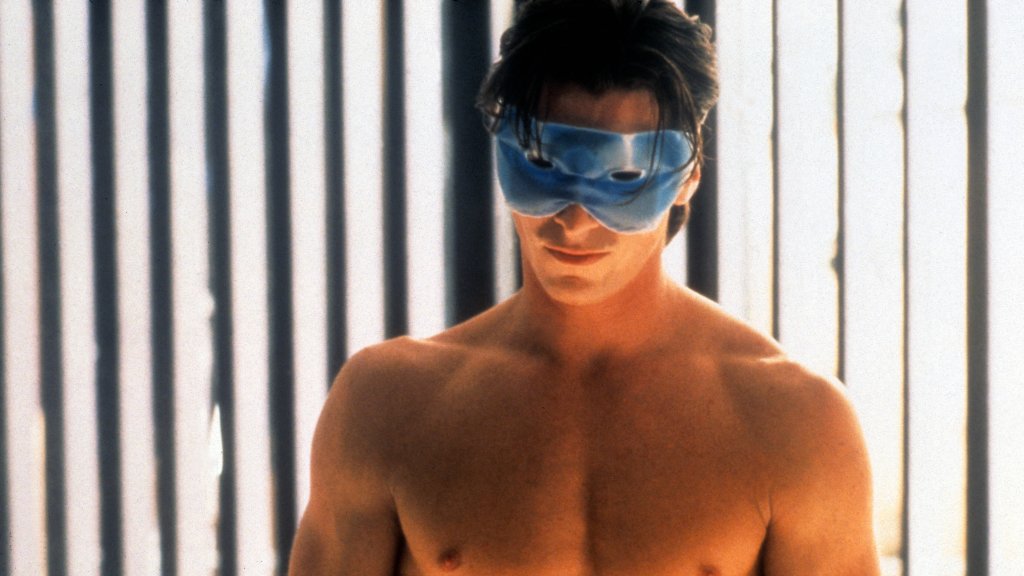
There had been widespread speculation about the casting of lead character Patrick Bateman, played by Christian Bale in the previous adaptation. Austin Butler, Patrick Schwarzenegger and Drew Starkey, known for Guadagnino's film “Queer” (German), were among those tipped as possible candidates. Actor Cooper Koch (German), known for the Netflix series “Monster”, had himself expressed interest in the role. Timothée Chalamet, Justin Bieber, Barry Keoghan and Jacob Elordi were also the subject of speculation. The novel's author, Ellis, commented on the state of the production in February 2026. According to him, several high-profile actors had “turned down the role”. Screenwriter Burns had subsequently produced a revised version of the script. Ellis had also announced that the new adaptation would be “completely” different from director Mary Harron's adaptation, released in 2000.
A banker's double life
“American Psycho” centres on the young, attractive and wealthy Patrick Bateman, who lives in Manhattan and works on Wall Street. Together with his colleagues Timothy Price, David Van Patten and Craig McDermott, he moves in New York high society. Exclusive gyms, fashionable venues and cocaine are as much a part of his everyday life as conversations about restaurants, attractive waitresses and male elegance. His fiancée Evelyn Richards, who is also young, attractive and wealthy, sees him as the “boy next door”. Behind the façade of the successful businessman, however, lies another personality. After dark, Bateman becomes a cold-blooded, methodical and ruthless torturer and murderer.
Numerous film projects
For Guadagnino, “American Psycho” is not the first announced project that is not going ahead as planned. The Italian was originally also due to work on a series adaptation of another Bret Easton Ellis novel. “The Shards” was initially intended for US broadcaster HBO, but was ultimately made by Ryan Murphy for FX. Back in 2020, Guadagnino confirmed that he intended to direct a remake of the gangster film “Scarface”. That project never materialised, nor did the planned DC Comics adaptation “Sgt. Rock”, starring Daniel Craig. A biopic of actress Audrey Hepburn starring Rooney Mara and the miniseries “Brideshead Revisited” also failed to get off the ground. Other projects yet to materialise include a biographical film about the well-known Hollywood gigolo Scotty Bowers and a new adaptation of “Lord of the Flies”. Despite recurring speculation, a sequel to the successful romantic drama “Call Me by Your Name” has also failed to emerge in almost ten years.
Other announcements included a thriller based on Hannah Kent's novel “Burial Rites” starring Jennifer Lawrence, another thriller starring Benedict Cumberbatch and Jake Gyllenhaal, and a “Swan Lake” film project starring Felicity Jones. Planned adaptations of James Ellroy's “The Big Nowhere” and Robert Goolrick's “A Reliable Wife” have likewise yet to materialise. Meanwhile, the future of the announced film “Leading Men”, which is intended to explore the love affair between US writer Tennessee Williams and Frank Merlo, remains uncertain. Whether Guadagnino's planned adaptation of Thomas Mann's “Buddenbrooks” will go ahead is also still unclear. It likewise remains uncertain whether “Camere Separate” will be made. The adaptation of the cult novel of the same name by Italian writer Pier Vittorio Tondelli has already lost one intended cast member, British actor Josh O’Connor.
Power struggle at OpenAI
While several of the director's projects are on ice, “Artificial”, a new film by Guadagnino, is already approaching its cinema release. The production, on which the Italian also serves as a producer, received positive reviews in the US press following its premiere at the New York Film Festival. The film examines power structures in Silicon Valley and traces the corporate crisis at ChatGPT developer OpenAI. It centres on Sam Altman's dismissal and subsequent reinstatement as the company's chief executive.
The cast includes Andrew Garfield, Monica Barbaro, Juri Borissow, Ike Barinholtz, Cooper Koch, Chris O’Dowd, Jason Schwartzman, Mark Rylance, Cooper Hoffman and Billie Lourd. Amazon withdrew from the film project after investing US$50 billion in OpenAI. US film distributor NEON subsequently secured the production. “Artificial” opens in US cinemas in December, followed by selected European countries such as Italy in early 2027. There is no release date for Germany yet. Whether the film will also feature at the 2027 Oscars remains to be seen.