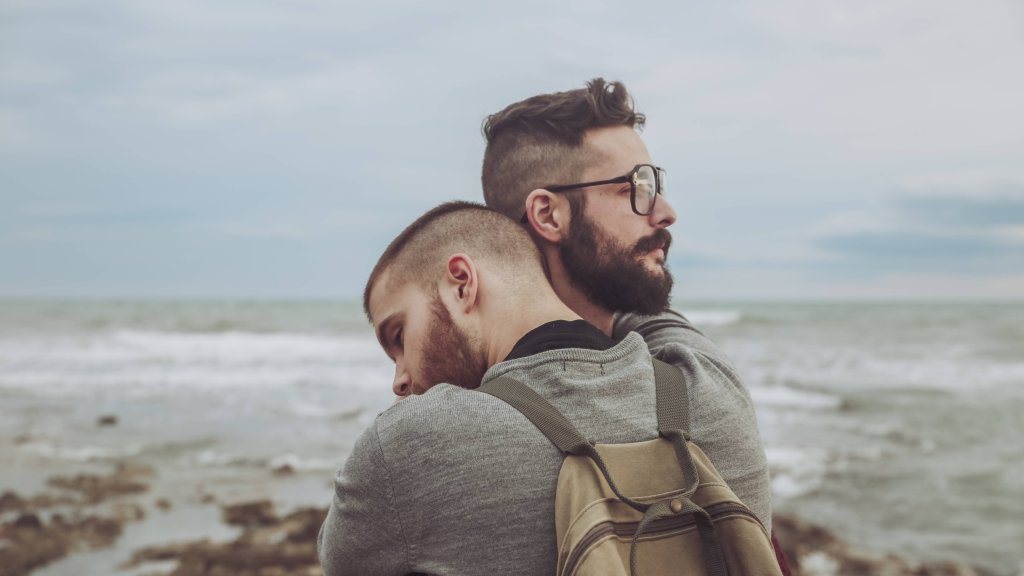
Holidays change everyday life: appointments fall away, new impressions take their place and couples spend more deliberate time together. Research published in 2024 shows that shared activities that are new and stimulating, in particular, may be associated with greater passion, physical closeness and relationship satisfaction after a trip. Surveys also find that single people report being more willing to flirt – though it is worth taking a closer look at how old the figures are and where they come from.
The key points at a glance
- A 2024 study examined the relationship between couples’ holidays and relationship quality.
- New, interesting activities experienced together were particularly important.
- The research covered two samples of 238 and 204 people respectively.
- Same-sex couples were not analysed separately, so the findings can only be applied directly to all queer relationships to a limited extent.
- The often-quoted figure of 35 per cent of single people being more willing to flirt comes from a 2010 ElitePartner survey.
A change of scenery alone does not make the difference
The paper, published in the journal “Annals of Tourism Research Empirical Insights”, examined how travelling together relates to passion, intimacy and satisfaction in relationships. It was based on the so-called self-expansion model: people often find their relationship more enriching when they discover new things, overcome challenges or try unfamiliar activities together.
This does not automatically make every holiday a relationship booster. Those who simply move their usual daily routine to a different location may benefit less than couples who consciously share new experiences. These might include a hike, a cookery class, an outing without a fixed plan or even a conversation for which everyday life has never offered enough peace and quiet.
Two studies – but no specific analysis of queer couples
The researchers worked with two groups: 238 people took part in the first study and 204 in the second. Among other things, they recorded how new, exciting or challenging participants perceived their shared holiday experiences to be, and how respondents subsequently rated closeness, passion and satisfaction in their relationship.
One limitation is important for queer readers: the research examined mixed-gender couples. The researchers did not collect data on partners’ gender in a way that allowed same-sex relationships to be analysed separately. The mechanisms described may also be plausible for queer couples, but this study did not establish that scientifically.
Why single people find it easier to flirt on holiday
Single people, too, often experience travel as a release from everyday life. New places offer conversation starters, daily schedules are more flexible and encounters feel less burdened by expectations. This greater willingness to connect is therefore readily explained in psychological terms – but robust, up-to-date figures are rarer than some headlines might suggest.
The often-cited claim that 35 per cent of single people flirt more openly on holiday than at home comes from a 2010 ElitePartner survey of 4,884 single people. It is therefore not a current research finding. A more recent survey by Parship and INNOFACT in 2023, involving 676 members, found that 48 per cent felt more inclined to flirt in summer. Forty-six per cent could imagine having a no-strings-attached holiday flirtation.
Greater closeness comes through attentiveness
Couples and single people have one thing in common above all: travel interrupts routines. New impressions heighten awareness, and time-limited situations can encourage people to approach others more openly. But this means neither that every holiday automatically becomes more romantic nor that a trip solves relationship problems.
For couples, the potential benefit lies less in the setting than in the shared experience. Discussing expectations, allowing each other space and embracing new experiences create better conditions for closeness. Single people, meanwhile, can enjoy the relaxed atmosphere without confusing a holiday flirtation with the promise of a lasting relationship.
What the research tells us
The sound conclusion is more restrained than the buzzword “geosexual” might suggest: places and situations can influence behaviour, but they do not constitute a new sexual orientation. Above all, the research shows how strongly novelty, shared attention and a break from routines can shape the experience of closeness.