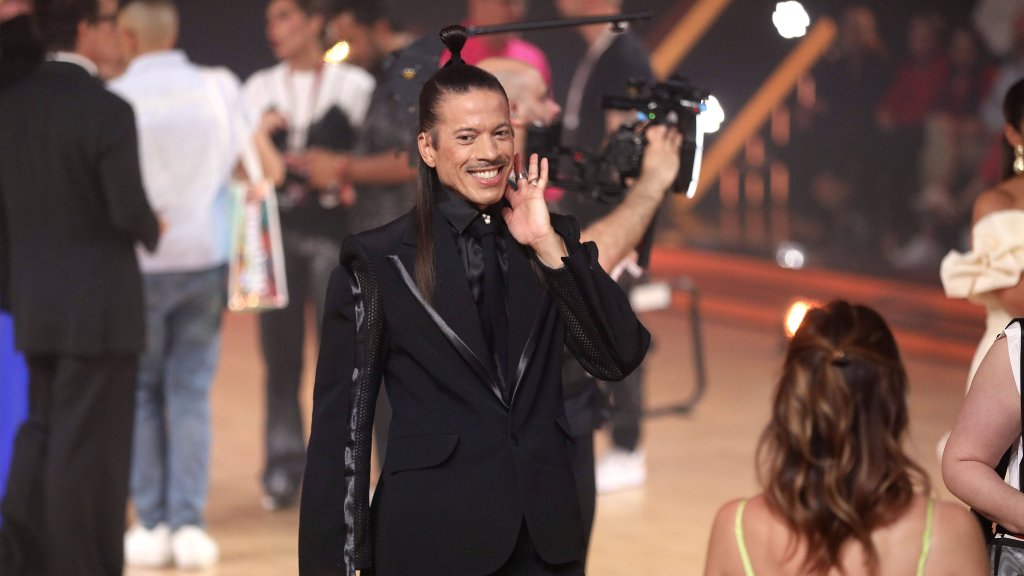
For Jorge González, growing up in Cuba meant constantly worrying about getting into trouble because of his homosexuality. The choreographer and television judge, now 59, spoke on the Austrian talk show “Hinter den Schlagzeilen” about his youth, social conditions at the time and how his family dealt with his sexual orientation.
The key points at a glance
- A difficult childhood: Jorge González (59) grew up in Cuba, where he says homosexuality was banned at the time and carried significant risks.
- Fear for his relatives: The choreographer had to keep his sexual orientation secret to protect himself and his family from possible repression.
- His father’s approach to parenting: His father tried to change supposedly feminine behaviour through sports such as baseball and boxing.
- Support from his grandmother: She encouraged González to accept himself and became an important confidante.
- Coming out later: His parents only learnt that he was gay in the 1990s and, according to him, responded with understanding.
A ban on homosexuality
Speaking to presenter Patrick Budgen, González explained that he had realised he was gay while still a child. In his home country, however, he had been unable to express his feelings openly. The political and social conditions at the time had not only put a strain on him personally but also meant potential consequences for his relatives. “Everyone knows that Cuba is a socialist, communist country. When I lived there, homosexuality was banned. That was really sad as a child, because I discovered very early on that I was gay. It was also a bigger problem for the whole family.” As he recalled, the families of gay people were also affected by state and social repression. Relatives had, for example, faced difficulties finding a job. González therefore learnt early on to be cautious about his sexual orientation. “I had to protect not only myself but also my family.”
Feminine behaviour
There were also situations within the family that González remembers to this day. One particularly formative experience, he said, involved his father, who caught him wearing his grandmother’s high heels one day. His father’s response was unequivocal. “My father looked at me and said that men don’t play with things like that.” His father then tried to steer him more towards traditional masculine roles. This included sporting activities in particular, which his father felt were more suitable for a boy.
“He took me to play baseball, boxing and all that sort of thing.” Looking back, however, González does not see his father’s behaviour solely as rejection. Rather, he believes his father wanted to protect him from potential difficulties given the conditions in Cuba at the time. Nevertheless, González himself knew early on that he could not spend his future in his home country indefinitely. He resolved to leave Cuba one day.
His grandmother as a confidante
While his father tried to influence his behaviour, González found understanding and support from his grandmother. According to him, she played a crucial role in how he dealt with his homosexuality and society’s expectations. The choreographer still describes his grandmother as an “icon”. He said he had been able to talk openly with her about different aspects of life. What mattered most was that she made him feel he did not have to be ashamed of who he was. “My grandma had lots of conversations with me about different subjects. She told me, you’re good just as you are.” This support helped him develop a positive sense of self despite the difficult circumstances. At the same time, he remained aware that it would be easier to live life on his own terms outside Cuba.
Coming out later
González had also spoken about coming out in an interview with the newspaper Bild. According to that account, his parents only learnt that their son was gay in the 1990s. Contrary to what his experiences of society during childhood might initially suggest, he said the conversation within the family had taken place without any major conflict. “I told my parents, and they completely accepted it.” His sexual orientation had changed nothing about his relationship with his parents and other family members. González stressed that his family continued to value him just as much as before. “I remained their son and brother. Our relationship didn’t change.” Dealing with people outside his immediate family, however, had been more difficult. He had not always encountered the same openness there. “It was a little more difficult with the people around us.”