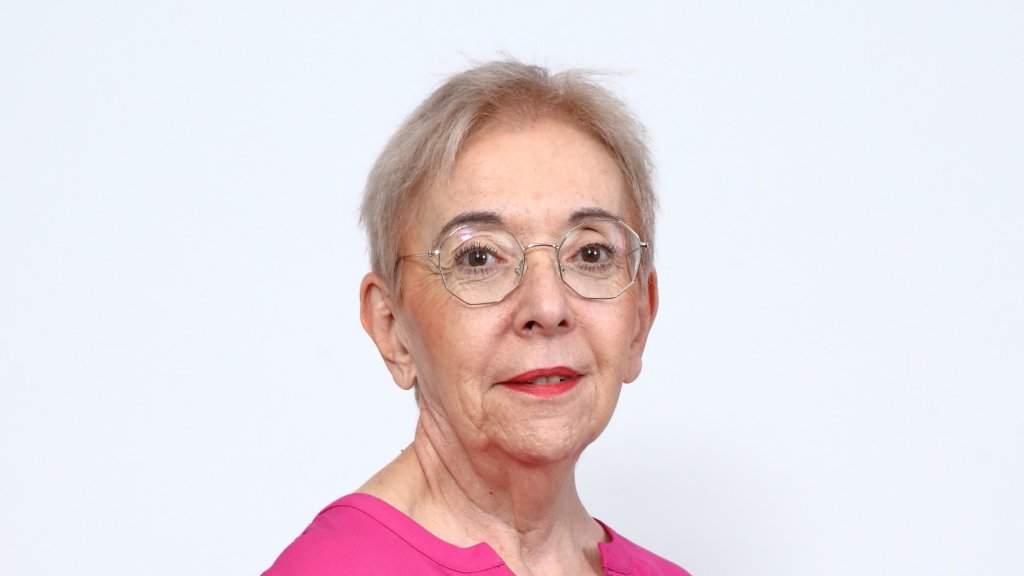
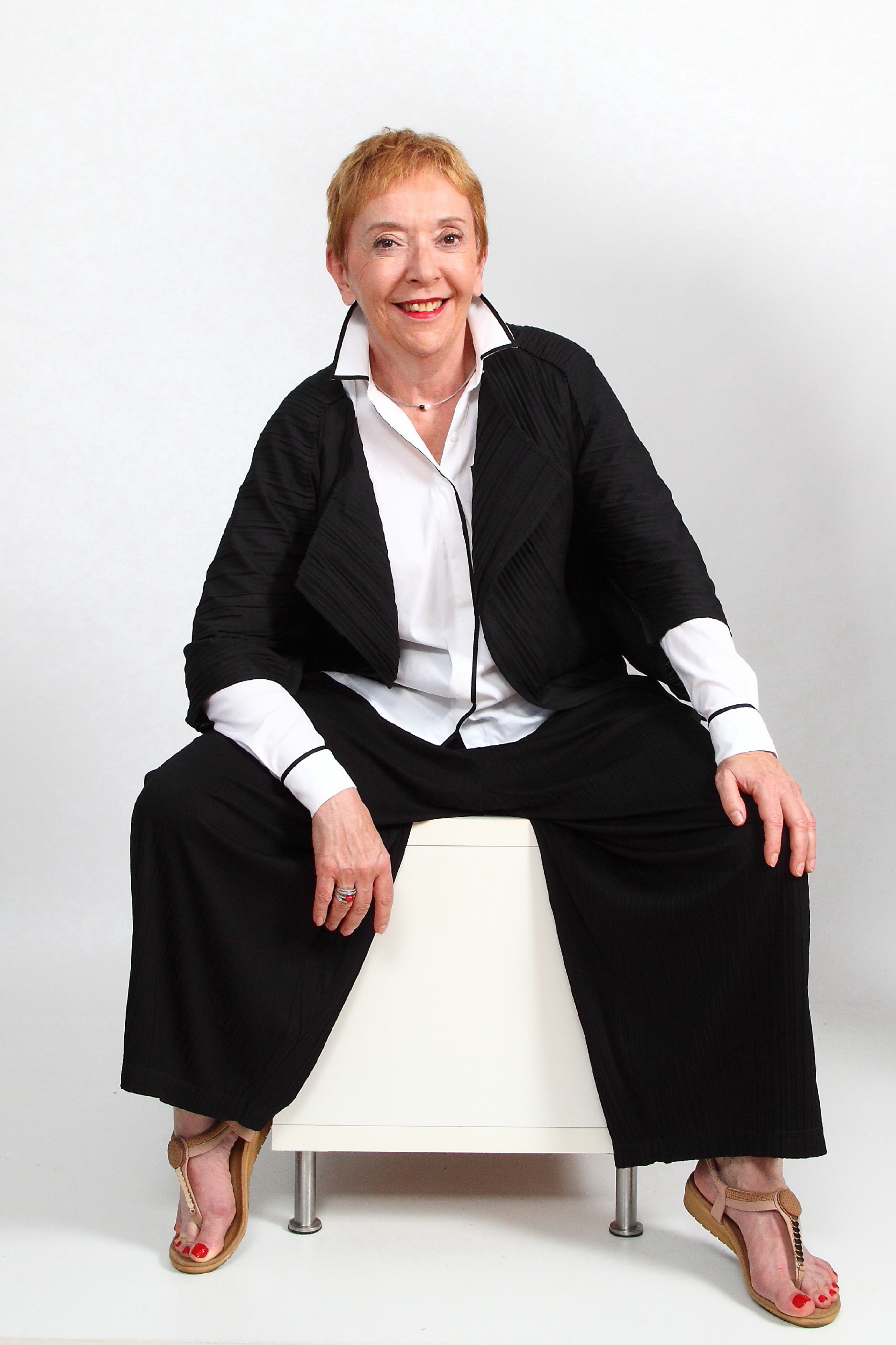
Dr Lale Akgün was born in Istanbul on 17 September 1953 and came to Germany with her parents in 1962, shortly before her ninth birthday. A qualified psychologist, she served as a member of the Bundestag in Berlin from 2002 to 2009, focusing primarily on migration and integration in the Committee on Internal Affairs and on European matters in the Committee on European Union Affairs. She wrote a biographical novel, took to the stage at Pride events for political question-and-answer sessions, received a “Woman of the Year” award from the queer community and is now the “expert on Turkish and Islamic issues”. The media regularly ask her to comment on these subjects.
Ms Akgün, how long has it been since you were last in Turkey?
About 10 years, since the attempted coup against Erdogan; from afar, I see Turkey becoming a little less democratic every day. Incidentally, I know a great many Turkish democrats who no longer travel to Turkey.
Your biographical novel “Leberkäseland” was even adapted for the screen. Are you glad you came to Germany back then rather than today – as an asylum seeker, so to speak?
Everyone should be grateful if they do not have to come to Germany as an asylum seeker. It takes a combination of circumstances for someone to leave their homeland for Europe as an asylum seeker, taking the most perilous routes. Germany has a great need for skilled workers, just as it did in the past. There is a big difference between coming as a recruited skilled worker and coming as an asylum seeker. But of course, the route to asylum should be open to everyone who faces political persecution. That is what being a democratic and open-minded country means.
Are you glad you are no longer part of that political circus?
I would not see it that way. Especially in these difficult times, politics needs loud democratic voices. At the moment, I find many MPs too quiet and too focused on party discipline, rather than speaking their minds openly and constructively. I think the public is desperate for people to raise their voices.
As Boris Pistorius is doing at the moment.
I, I thought it was wonderful. Just as I have now become a big fan of Jürgen Klopp.
What remains of your political work?
I am still politically active, including within my party. I apply my knowledge and experience as a psychotherapist to much of what I do. And of course, as someone with life experience, I am in demand, so I can express my opinion on many things. I also write articles for the media and am invited to give talks to share my views. It never stops.
Could giving an interview in Germany expressing your political views on Turkey harm you?
Certainly not in Germany; only 7% of all countries qualify as liberal democracies, and we are one of them. And in our country, despite all the dire warnings, people are still allowed to express their opinions. But because of many of the things I have said, I no longer want to travel to Turkey.
What troubles you about your home country?
I have lived in Germany for decades, but I have a deeper insight into events in Turkey because I engage with the country politically and follow all the developments. There was a coup in 1970 and a military coup in 1980. Sometimes democracy moved forwards, sometimes backwards. But I can say one thing: Turkey has never been as undemocratic and as repressive as it is today.
Around 87 million people live in Turkey and around 83 million in Germany. In Turkey, 430,000 people are in prison; in Germany, just under 60,000 people are imprisoned following final convictions. Not all are political dissidents, but human rights organisations estimate that tens of thousands are. Then there is the poor economic situation. When people in Turkey claim that Germany is Sodom and Gomorrah and that there is too much crime, I see that as propaganda against the so-called West, which they want to portray as the enemy. In Turkey, a liberal-minded person's life is never safe.
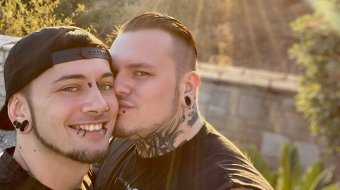
Recently, there has been another attack on people's fundamental rights: queer people are being discredited in the name of “protecting families”.
It is a very old game: minorities are declared enemies and political agendas are pursued at their expense. Queer people in particular can be used to stir up strong emotions among the population, especially among those who still live within patriarchal systems. It is easy to rail against queer people and portray them as the enemy, much easier than setting out the problems of unemployment, inflation, rising rents and poor quality of life. Many minorities in Turkey have already been accused of being enemies of democracy.
Does the Koran actually say anything about same-sex love?
At a Pride event in Istanbul almost 20 years ago, I encountered an Egyptian imam who was able to explain homosexuality to me through the Koran: in a workshop, he explained how often homosexuality appears in the Koran and that it is, of course, permitted.
Why are neither the press nor politicians nor the global community responding to what is happening?
Erdogan's regime is being spared criticism. There are several reasons: economic cooperation, the NATO partnership or the refugee agreement. Nobody wants to upset Erdogan, for fear that he might open the borders. So they try to keep this dictator happy. The latest example: North Rhine-Westphalia's Minister-President Hendrik Wüst sits with Erdogan and is visibly delighted to have been received. I ask Hendrik Wüst quite openly: what has he gained from it, apart from alienating all democratic forces from and within Turkey?
If those at the top are not responding, how can ordinary people help?
I would like us to try together to support the queer community in Turkey. Surely the sentence “Human dignity shall be inviolable” applies to everyone. What about the human dignity of gay men in Turkey? It is being trampled underfoot.
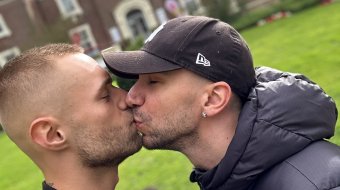
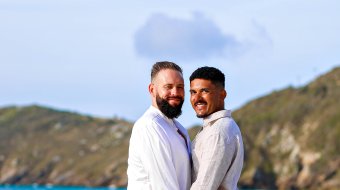
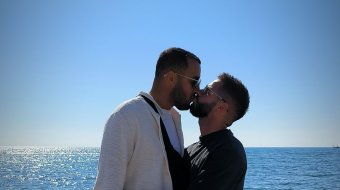
Anyone who thinks that two weeks all-inclusive on the Turkish Riviera is the ultimate holiday should consider that cheap holidays are not a human right. But as a sign of solidarity, I would find it wonderful if gay German men travelled to Turkey, for example to Antalya, Alanya or Istanbul, to meet gay Turkish men. Because every gay German man who reaches out to a gay Turkish man sends a message.
But really, I expect more from institutions than from individuals.
You are not queer yourself, but you have an enormous number of queer friends.
I choose my friends on the basis of mutual liking, shared ways of thinking and a kindred spirit. And in Cologne, where many gay men live, that is hardly surprising. Whether gay or straight, they are my friends, and that is what really matters. I have never felt any prejudice towards queer people, and I also have good connections with trans people.
There is a film, “Zennet Dancer”, based on the true story of a young gay Turkish man who was killed by his family in an honour killing.
I know the film, and I also know his boyfriend, who lives in Germany. This is precisely that patriarchal, archaic mindset: a man's honour cannot bear a woman leaving him. A father's honour can tolerate neither a gay son nor a daughter who is sexually liberated. Just a few days ago, a friend told me that in May alone, 273 women in Turkey were killed by their husbands or ex-husbands!
Patriarchy is older than Islam, older than Christianity or Judaism. These are archaic traditions in which men hold power over women – and over gay men. And I firmly believe that the stronger the ideal of masculinity, the greater the fear of gay men.
In Germany, too, parents are already overreacting to SCHLAU, which really only aims to provide educational work in schools.
At the moment, we have a problem in Germany: much of what is liberal and open-minded is now denounced as woke. Whether in Russia, Turkey, Iran or even parts of the USA, tolerance towards minorities is declining. And gay men are a particular focus because they are not only different, but also challenge patriarchy's concept of masculinity. That is very dangerous for patriarchs because it calls their power into question. I wish feminists and gay men would join forces against men with patriarchal mindsets.
Do you believe that we in Germany will soon be stripped of our rights too?
We are seeing a new right on the rise. The right and difference have never got along. The right wants a society shaped by its ideology and lures young men with the image of a real man. This new right-wing way of thinking has also helped the AfD gain power in eastern Germany. What did AfD politician Maximilian Krah say during the 2024 European election campaign? “Real men are right-wing!” We can see that the combination of right-wing politics and patriarchal slogans works. The proportion of AfD voters among young men under 30 is almost twice as high as among women of the same age. This is how pluralism and diversity are supposed to disappear from society. Of course, they do not disappear – they are simply no longer visible.
Persecuting gay organisations in Turkey with the aim of banning them and terrifying their members does not mean there is a single gay man fewer. They have to go underground, hide and pretend to be someone they are not. Quite honestly, my heart bleeds when I see gay men desperately trying, alongside human rights activists, to resist these injustices, only to be beaten down by the police.
We must be careful not to head in that direction; Germany has not reached that point yet. Every so often, you see attempts here to restrict diversity, because diversity often frightens people. The AfD always struggles most to gain ground where diversity is taken for granted.
Anyone in Germany today who remains silent in our (still) liberal atmosphere for fear of some form of repression shares responsibility if that repression comes. When, if not now, should we speak out?