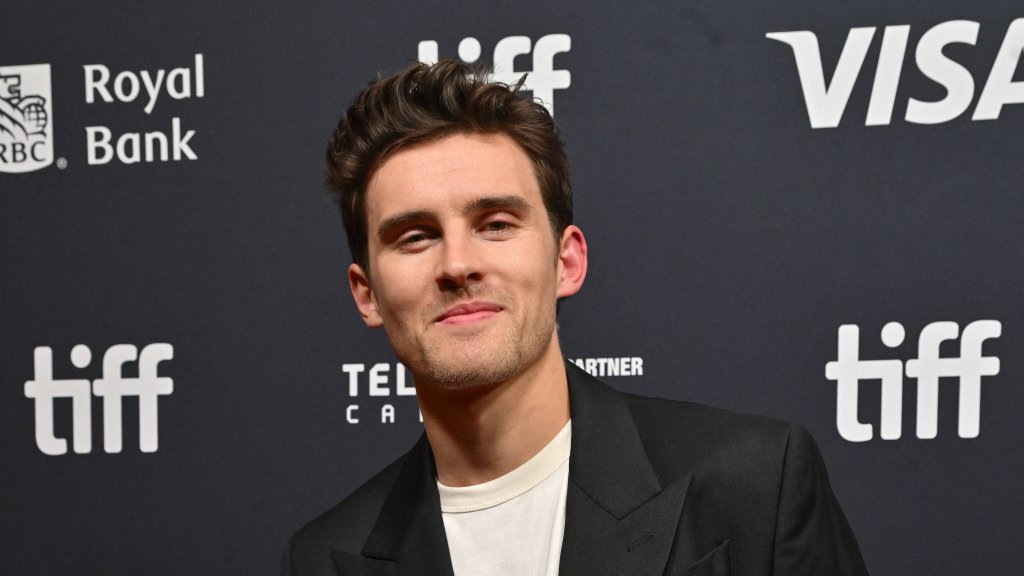
Michael Johnston (30) achieved his international breakthrough last year with the horror thriller “Obsession”. Despite a comparatively modest budget of just $750,000, the film became a worldwide box-office success and has already grossed more than US$370 million. For the gay US actor, the surprise hit also meant a leap into Hollywood’s front rank.
Key points at a glance
- Michael Johnston achieved his international breakthrough with the horror film “Obsession”.
- The film grossed more than $370 million worldwide on a budget of $750,000.
- The openly gay actor wants to use his new influence specifically to champion queer stories.
- Johnston stresses that authentic storytelling matters more to him than a character’s sexual orientation.
- His experiences as a young gay man in the conservative US “Bible Belt” inform his future projects.
Queer stories after blockbuster success
The openly gay actor played the manipulative antihero Bear Bailey in “Obsession”. His longing for love is fulfilled with the help of supernatural powers, but increasingly develops into a dangerous obsession. The nuanced portrayal helped the film reach an audience of millions worldwide. Johnston’s success is also considered remarkable because, despite growing visibility in the film industry, openly gay actors still relatively rarely become international blockbuster stars – Jonathan Bailey is one of the few exceptions (German).
With this latest career step, Johnston has now joined that comparatively small group – a position he says he wants to use purposefully. His acting career had already begun to gather pace between 2015 and 2017. Johnston played Corey Bryant in the MTV series “Teen Wolf”, gaining a large fan base. At the time, however, he had not yet fully explored his own sexual orientation, which also influenced his view of the characters he played, as he recently told the US press. It was only years later, he said, that he became aware of the impact his roles had on other people. Speaking on the podcast “I've Never Said This Before”, Johnston said: “I received thousands of messages from people thanking me and telling me how much it had helped them. Some were even able to come out to their parents because of it.” He said this feedback had profoundly changed his understanding of his responsibility as an openly gay artist.
Coming out brought new openness
In 2023, Johnston made his relationship and sexuality public, sharing a photo on social media with his then partner, filmmaker Anthony Sellitti. With this step, he also visibly embraced his role within the community. He says the success of “Obsession” has also given him new freedom in choosing future projects.
Johnston told Pride Today: “I’m honoured that these doors are opening for me and that I actually have a choice about what I do next. It’s a dream come true.” He said he wanted to use this new independence purposefully. Johnston announced that he would put “really intentional queer roles” and “really meaningful” stories at the centre of his work in future. He also did not rule out writing scripts for such projects himself.
Authenticity rather than pigeonholing
According to the actor, a character’s sexual orientation is not his primary focus. Rather, it is about portraying believable characters and telling credible stories. “For me, it doesn’t matter what a character’s sexuality is. It’s simply another part of who they are – just as it is for me,” Johnston said. At the same time, he stressed that queer stories must continue to be told with intention and made accessible to a broad cinema audience.
He says his personal background plays an important role in this. Johnston grew up in the US state of North Carolina, in the so-called “Bible Belt”, a region where conservative Christian values strongly shape social life. Speaking about these experiences, he said: “In the Bible Belt, it can be difficult for a gay person. It’s a very particular kind of experience.” With his future film projects, Johnston therefore wants to tell more stories from precisely these walks of life and bring visibility to perspectives that, in his view, have long received too little attention in mainstream cinema.