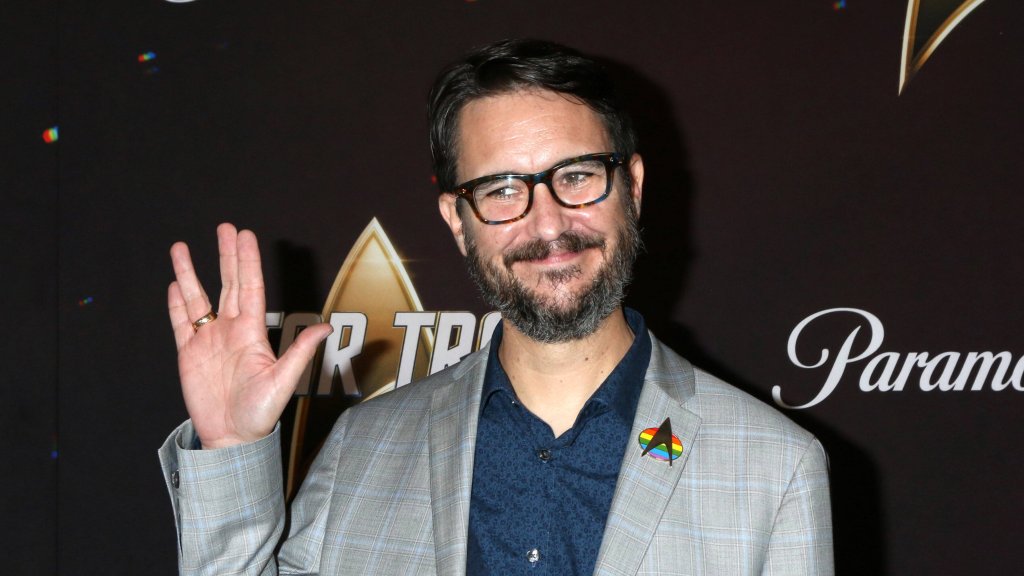
Wil Wheaton became known to an audience of millions as Wesley Crusher in “Star Trek: The Next Generation”. Before that, he had already enjoyed major success with the cult film “Stand by Me”. Today, the US actor is increasingly using his fame to advocate for LGBTQ+ rights. As a heterosexual man, the 54-year-old feels it is important to take a clear stand.
The key points at a glance
- Wil Wheaton, known for “Stand by Me” and “Star Trek: The Next Generation”, publicly advocates for LGBTQ+ rights.
- Gay men still approach him about his role in “Stark Trek”.
- Wheaton says he wants to use his social privileges to reach people who might not listen to those directly affected.
- Wheaton has retired from acting. He says his experiences as a child actor took a profound toll on him.
- Today, he primarily works as an audiobook narrator, author, podcaster and gaming personality.
- He says he was excluded from the official celebrations of “Star Trek”’s 60th anniversary, which hurt him. At the same time, he stresses the franchise’s progressive tradition.
Delighted by his gay fans
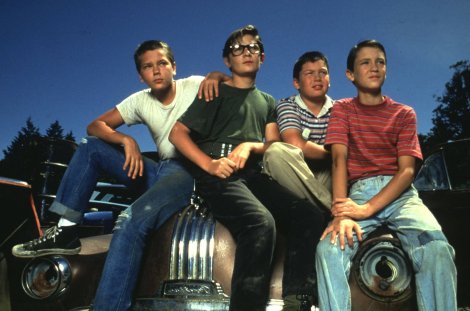
Wheaton’s career began early. Forty years ago, at the age of 13, he made his breakthrough as Gordie in Rob Reiner’s “Stand by Me”. A year later, he joined “Star Trek: The Next Generation” as the highly gifted Wesley Crusher. Wheaton says he still regularly meets gay men who tell him he was their first crush. “The great thing is that I still meet hot daddies today; and I’m thinking, ‘Damn hot daddies, dude!’ I just think, ‘Goddamn, I could climb those abs!’ And they say, ‘You were my first crush!’ And I say, ‘First of all, how can you still be so hot? You’re my age!’ And secondly, I just think, ‘That’s fucking awesome. I love that,’” says Wheaton. He sums up his attitude towards same-sex love succinctly: “Love is love! We say it all the fucking time. Why is that complicated? It’s not, man, come on!”
Advocating for LGBTQ+ people
Wheaton has demonstrated his commitment to LGBTQ+ people for years, most recently in June 2026, when he attended Pride in New York City. He attributes his activism to his own privileges, but also to his experiences as an outsider. “The only way I could belong to an even more protected class of citizens in America would be if I were an openly self-proclaimed Christian nationalist. I’m white. I’m male. I’m upper-middle class. I’m reasonably famous. I have all sorts of privileges. And yet I’ve been excluded my whole life,” says Wheaton.
He says that experience ran through different areas of his life. “I was excluded by my parents. I was excluded by people in my neighbourhood. I was excluded on set,” he says. His colleagues on “Star Trek” were an exception. As a result, when Wheaton now sees other people being excluded or attacked, he feels obliged to intervene. “And when I see other people experiencing that, I can’t help it. I have to put myself between those people and the people who are hurting them. I’m standing up for my younger self in a way that nobody ever, ever did for me.”
Wheaton is aware that his fame and his social position can help him be heard. He therefore makes a promise to the LGBTQ+ community: “Sometimes people who won’t listen to you will listen to me, even when we’re saying the same thing. And if I can use that privilege to reach that person and make a difference, then that’s one fewer person fucking harassing you for existing.”
Acting left its mark
Wheaton says he has now retired from on-camera acting. Nevertheless, he returned to streaming service HBO once more this summer for “Stuart Fails to Save the Universe”, a science-fiction comedy spin-off of “The Big Bang Theory”, playing a version of himself from another universe. The series also has an accompanying video podcast, which Wheaton co-hosts with Felicia Day. He also recently appeared on a DC Comics podcast alongside his former “Star Trek: The Next Generation” colleagues Jonathan Frakes and Brent Spiner. Frakes spoke about “the pain” Wheaton had experienced during his time on “Star Trek”.
Wheaton himself says his experiences as a child actor still make it difficult for him to return to a set. “The part of me that is so deeply traumatised by that whole childhood acting thing says, ‘Don’t take me there. I don’t want to go anywhere near it,’” he explains. Essentially, Wheaton considers his time as an on-camera actor over. “I’ve retired from on-camera acting. I haven’t had an audition in 20 years, maybe even longer. The entertainment industry isn’t buying what I’m selling, and that’s okay.”
Allegations against his parents
Back in 2021, Wheaton publicly stated that, by his account, he had been pushed into show business as a child. “My mother made me do it,” he told Yahoo at the time. Wheaton was already appearing in commercials at the age of seven. He said that during his childhood he had experienced “incredible emotional abuse from my father and a lot of manipulation and exploitation by my mother”. Those experiences had weighed on him particularly during the filming of “Stand by Me”. He recognised much of himself in his character, Gordie. “Gordie’s experiences very much reflected my experiences,” said Wheaton. “We’re both invisible in our homes. We both have a brother who is the golden child. We’re both the scapegoats of the family.”
A calling as a storyteller
Wheaton now sees his calling primarily in telling stories. “The artist that I am, the artist that Rob Reiner awakened, the artist that Rob Reiner showed me I really have inside me,” Wheaton says, now finds expression “in narrating audiobooks and writing little things, little essays and such. But every now and then someone says, ‘Would you come and act in this thing?’” One such request also led to his appearance in “Stuart Fails to Save the Universe”.
Above all, however, Wheaton continues to work as an audiobook narrator. His projects include Andy Weir’s “The Martian”, Stephen King’s “The Body”, the literary basis for “Stand by Me”, and Ernest Cline’s “Ready Player One”. For the past year, he has also been producing the weekly podcast “It’s Storytime With Wil Wheaton”, which features works by new and emerging authors. Wheaton says he does not make any money from the project. “I love telling stories. I can use everything I learnt as an actor when I didn’t want to be an actor, and I can use it to literally give my voice to other creative people. It feels so good. It’s so much fun.”
Games as a lifeline
Another constant in Wheaton’s life is gaming. He became widely known in the gaming community through the web series “TableTop”, which was part of Felicia Day’s Geek-&-Sundry network. His connection to games goes back to his childhood. “When I was a little boy, my great-aunt Val was the only loving, positive and caring adult in my life,” he recalls. “And she played with me. She taught me card games. She taught me bingo. She taught me how to use my imagination.” When he was twelve, his aunt introduced him to Dungeons & Dragons. Through the game, Wheaton found friends. “I was definitely an at-risk child. As a teenager, I was very lonely, and my parents were as bad as ever. My father was as abusive and neglectful as he could possibly be. The thing that saved my life was tabletop games.” He says he eventually also found people he felt he belonged with among other gamers and his colleagues on “Star Trek”.
Disappointment over “Star Trek”
His relationship with “Star Trek” nevertheless remains complicated. The franchise celebrated its 60th anniversary in early September. Wheaton says he was not invited to the official celebrations. “Nobody from the official ‘Star Trek’ side contacted me about any involvement, and that hurt my feelings, especially given the role I had in the franchise. I just think it reflects how little care Paramount is currently showing ‘Star Trek’.” Wheaton also expressed concern that Paramount might change the franchise for ideological reasons. The company is led by David Ellison, a friend of US President Donald Trump.
For Wheaton, the political and social outlook of “Star Trek” is an essential part of its identity. “‘Star Trek’ is so progressive, and it has always been progressive,” he says. At the same time, Wheaton acknowledges that the franchise took a long time to give same-sex couples proper visibility. He sees “Star Trek: Discovery” as a turning point in that respect. What matters, he says, is that people can see themselves in the future being portrayed. He has experienced that personally, too. “They feel comforted in the same way that I feel seen and comforted when I see a super-smart kid nobody listens to,” says Wheaton. “It’s like, ‘Oh man, that’s me! I can be in the future too!’ That’s exactly what ‘Star Trek’ does.”