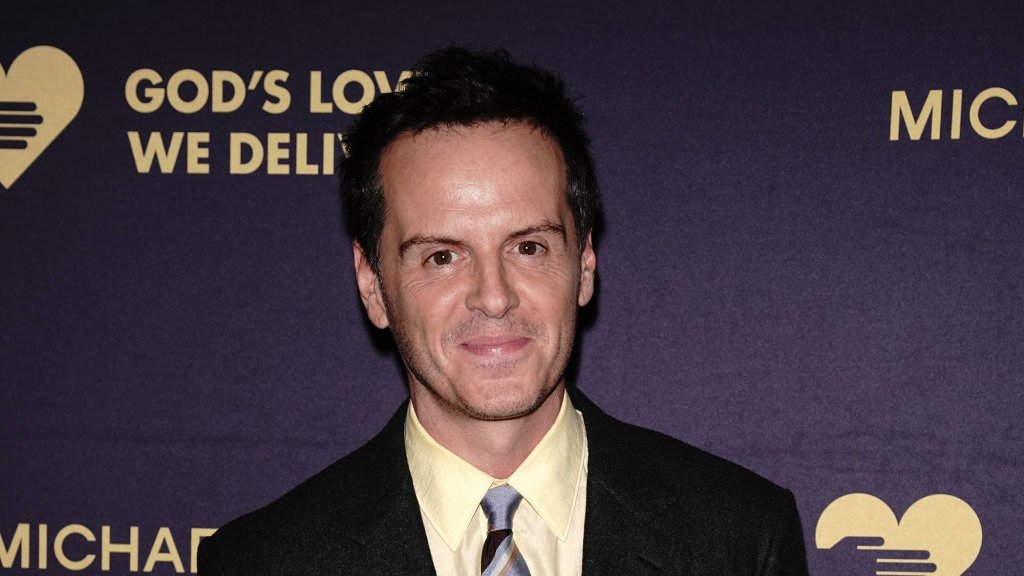
He played one of the best-known villains in television history, became an audience favourite as an attractive priest and moved countless viewers with a gay love story: Irish actor Andrew Scott celebrates his 50th birthday today.
The key facts at a glance
- A milestone birthday: Irish actor Andrew Scott was born in Dublin on 21 October 1976 and celebrates his 50th birthday today.
- International breakthrough: He became famous worldwide as James Moriarty in ‘Sherlock’. He later delighted audiences as the priest in ‘Fleabag’ and as Tom Ripley in the Netflix series ‘Ripley’.
- Openly gay since 2013: Scott spoke publicly about being gay and about why he had previously been advised to keep his sexual orientation secret.
- Significant gay film roles: In ‘Pride’ and ‘All of Us Strangers’, he portrayed gay men whose stories go far beyond questions of sexual orientation.
- A role model for the community: Scott champions visibility for gay people but refuses to be defined solely by his sexuality.
From Dublin to ‘Sherlock’
Scott is one of the versatile actors of his generation. He is equally at home on stage, in major film productions and in internationally successful television series. His career has an additional significance for the LGBTQ+ community: for years, the openly gay actor has shown that gay performers can convincingly portray both gay protagonists and entirely different characters. Scott regards his sexual orientation as a natural part of his life, not as the defining feature of his professional identity.
Andrew Scott was born in Dublin on 21 October 1976. He developed an interest in acting at an early age. He began studying drama at Trinity College Dublin but dropped out and subsequently worked at the renowned Abbey Theatre. His first film appearances came while he was still a teenager. In 1998, he appeared in Steven Spielberg’s war drama ‘Saving Private Ryan’. This was followed by productions including the miniseries ‘Band of Brothers’ and other British and Irish projects. His international breakthrough came in 2010 with the BBC series ‘Sherlock’. Alongside Benedict Cumberbatch, Scott played the highly intelligent, unpredictable criminal James Moriarty. His portrayal of Sherlock Holmes’s adversary earned him honours including a BAFTA Television Award for Best Supporting Actor.
In 2019, Scott reached an even wider audience through the second series of the British comedy ‘Fleabag’. As the priest with whom the lead character, played by Phoebe Waller-Bridge, falls in love, he developed an unusual combination of humour, vulnerability and erotic tension. The character became internationally known by the nickname ‘Hot Priest’.
Not keeping his sexuality secret
Scott publicly came out as gay in a 2013 interview with the British newspaper ‘The Independent’. One of the issues prompting the interview was the debate over a Russian law against so-called homosexual propaganda. The actor explained at the time that, for him, being gay was neither something negative nor a particular achievement. ‘Thankfully, people these days no longer see being gay as a character flaw. But nor is it a virtue like kindness or a talent like playing the banjo. It is simply a fact,’ he said. His sexual orientation was part of his personality, but he did not want to gain any professional advantage from it.
This attitude is also noteworthy in the light of his own experiences in the film industry. In a 2023 interview with the British edition of ‘GQ’, Scott reported that people in the entertainment industry had previously advised him not to come out publicly. ‘People in the industry whom I really admired and who only wanted the best for me encouraged me to keep it to myself,’ he recalled. He understood why he had been given that advice. At the same time, he was glad that he had eventually ignored it.
Gay people, miners and strangers
Scott played one of his most important roles for the gay community back in 2014, in the British film ‘Pride’. Based on true events, the drama tells the story of gay and lesbian activists who raise money for striking workers during the British miners’ strike of 1984 and 1985. Scott plays Gethin, a gay man involved in the solidarity movement. The film connects the history of gay liberation with the struggle for social justice. ‘Pride’ shows how people from different social groups can come together despite initial prejudices. For Scott, it was an opportunity to play a gay character whose life is also shaped by friendship, political convictions and solidarity.
Scott also took on a particularly personal role in the 2023 drama ‘All of Us Strangers’. Directed by Andrew Haigh, he plays Adam, a lonely screenwriter living in a London tower block. There he meets his neighbour Harry, played by Paul Mescal. A romantic relationship develops between the men. At the same time, Adam returns to his childhood home. There he encounters his parents, even though they died decades earlier. The film combines a gay love story with questions of grief, family acceptance, loneliness and missed opportunities.
Scott told the trade magazine ‘Screen International’ that the script had affected him deeply. He had found great tenderness in it and had been able to identify with many of the experiences. It was particularly important to him that the relationship between Adam and Harry was not told solely through sexuality. For him, making tenderness between two men visible was something particularly radical. He also described working on the film as a personal reckoning with his past. In one interview, he explained that he had had to bring a great deal of his own pain to the role. His performance earned him honours including a Golden Globe nomination for Best Actor.
Looking back at his youth
Scott’s own experiences lend additional weight to his remarks. When he was growing up in Ireland, homosexuality was still a criminal offence. Consensual sexual acts between men were not decriminalised there until 1993. Scott was 16 at the time. In an interview with ‘GQ’, he later reported that these social conditions had shaped his youth. He had been afraid of his own sexuality and had tried to suppress that part of his personality. This also concerned experiences denied to many young gay people of his generation: the chance to fall in love without fear and to experience their first relationships openly. Speaking about ‘All of Us Strangers’, Scott explained that coming out was not primarily about sex, but about identity and the desire to be accepted by those close to you.
In 2024, Scott was particularly emphatic in rejecting the idea that being gay must be associated above all with difficulties and suffering. In an interview with the US trade magazine ‘Variety’, he criticised the way conversations about his being gay were often steered towards negative experiences. He himself, however, felt great joy and personal freedom. ‘In fact, it is the greatest joy of my life,’ Scott said of being gay. This attitude is characteristic of his public presence. Scott speaks openly about discrimination and social barriers, but does not want being gay to be understood solely as a burden. For Scott, it is about normality: gay actors should be visible without constantly being reduced to their sexuality.
Scott’s choice of roles
Scott also stresses how important a diverse range of roles is for gay actors. In a conversation with ‘Screen International’, he recalled that he had once not believed he would ever be able to take on major leading film roles as a gay actor. He was all the more delighted that those opportunities had since changed. However, he warns against casting performers solely according to their own sexual orientation.
Representation was important, he explained, but so was actors’ ability to transform themselves. A role was not just about whether a character was gay, but about their entire personality. His own career illustrates this principle. Alongside gay characters in ‘Pride’ and ‘All of Us Strangers’, Scott has played a criminal, a priest, an intelligence officer and a con artist, among others. It is precisely this variety that makes him an important figure for the LGBTQ+ community: his career shows that a gay actor need not be confined to gay characters.
His most important films and series
Alongside his well-known television roles, Andrew Scott has appeared in numerous feature films. As early as 1998, he appeared in Steven Spielberg’s war drama ‘Saving Private Ryan’. An important place in his filmography is occupied by the British drama ‘Pride’ (2014), in which he portrays a gay activist during the miners’ strike of the 1980s. A year later, Scott played intelligence official Max Denbigh, known as C, in the James Bond film ‘Spectre’ (2015). Also in 2015, he appeared in ‘Victor Frankenstein’, a reimagining of the famous Frankenstein story.
Subsequent productions included the British film ‘This Beautiful Fantastic’ (2016), a story of friendship and personal change, and the courtroom drama ‘Denial’ (2016), about the trial involving Holocaust denier David Irving. In 2019, Scott took a supporting role in Sam Mendes’s war film ‘1917’, which depicts the dangerous mission of two British soldiers during the First World War. In the historical comedy ‘Catherine Called Birdy’ (2022), he played the young protagonist’s father.
Among his most significant leading roles is the gay romantic drama ‘All of Us Strangers’ (2023), in which he appears alongside Paul Mescal. His portrayal of Adam earned him widespread international acclaim. In the film ‘Blue Moon’ (2025), Scott portrayed the American composer Richard Rodgers. Also in 2025, he was part of the cast of the crime film ‘Wake Up Dead Man: A Knives Out Mystery’, another story featuring the detective Benoit Blanc, played by Daniel Craig.
His more recent projects also include the war drama ‘Pressure’ (2026). In it, Scott plays British meteorologist James Stagg, whose weather forecasts were crucial to planning the Allied landings in Normandy during the Second World War. Scott has also taken on numerous defining roles on television. Alongside his appearance as James Moriarty in ‘Sherlock’ and his internationally acclaimed portrayal of the priest in ‘Fleabag’, he attracted attention in 2024 with the Netflix series ‘Ripley’. In the black-and-white production, he plays the fraudulent con artist Tom Ripley, a character from the novels of American author Patricia Highsmith. The series received widespread praise for its cinematography and Scott’s intense performance.
‘Elsinore’ as an Oscar contender
In the year of his 50th birthday, Scott is also exploring an important chapter of gay history. In the new film ‘Elsinore’, he portrays Scottish actor Ian Charleson, who died of AIDS-related complications in 1990. Charleson had become known through films including ‘Chariots of Fire’ and ‘Gandhi’. In the final years of his life, despite serious illness, he played the title role in Shakespeare’s ‘Hamlet’ at London’s National Theatre. Directed by Simon Stone, the film tells the story of Charleson’s artistic ambition, his illness and his final major stage performance. Olivia Colman is among those appearing alongside Scott. ‘Elsinore’ opened the London Film Festival in October. Its German cinema release is scheduled for March 2027. Both the film and Scott himself are also considered strong Oscar contenders. If he were to win the award in 2027, he would be the first openly gay actor in a leading role to do so.
An actor for the community
On his 50th birthday, Andrew Scott can look back on a career that combines artistic success with gay visibility. He has portrayed gay men in historical and contemporary stories, but has also played characters whose sexual orientation is irrelevant. His public statements also show that he neither wants to be confined to the role of an activist nor to keep his sexuality secret. This has a particular significance for the community: Scott represents the possibility of being a gay man who is a natural part of the international film industry, without having to hide his identity.
He also repeatedly takes a playful look at his age as a ‘gay daddy’ or flirts quite openly with the gay community. His approach to public life combines openness with an insistence on privacy. His film roles, meanwhile, show that gay life stories can be about love, joy and intimacy just as much as loss, exclusion and social conflict. At 50, Scott is therefore one of the most visible gay actors in international cinema – and his career is far from over.