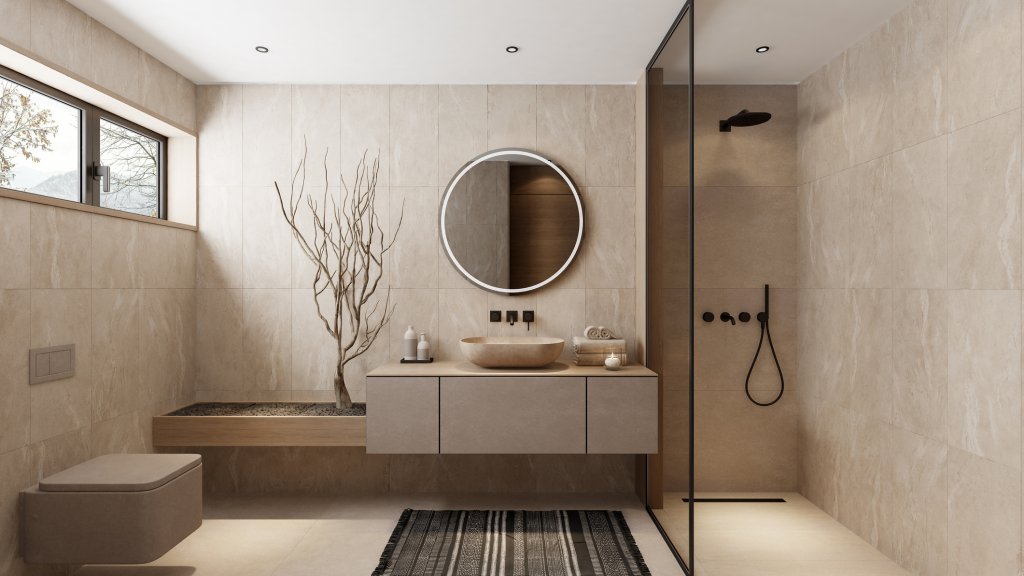
A bathroom can be more than a functional space for your daily routine. Thoughtful design creates a personal retreat that energises you in the morning and helps you unwind in the evening.
You do not need a freestanding bath or an expensive complete renovation to capture the feel of a stylish boutique hotel. Often, the combination of colours, pleasant lighting and carefully chosen materials determines how a room feels. Practical details that barely register in everyday life are just as important: enough storage, easy-care surfaces and a comfortable indoor environment. When aesthetics and function are planned together, even a small bathroom becomes considerably more comfortable.
Colours and materials create a sense of calm
A harmonious bathroom starts with a clear colour scheme. Warm sandy tones, off-white or soft sage green feel calmer than an ill-considered mix of bold colours. If you prefer contrasts, you can combine light surfaces with dark taps and fittings or a single piece of wooden furniture. Not every surface has to look the same. Repeating two or three materials to create a recognisable theme makes for a much more interesting effect. A wood-effect vanity unit, matt wall tiles and a mirror with a slim metal frame, for example, create a modern ensemble without looking cluttered. Particularly in small bathrooms, flooring that is as continuous as possible creates a sense of space. Large mirrors enhance this impression by reflecting light and opening up the view.
If you do not want to replace the tiles, new towels, a high-quality bath mat and matching accessories can already create a different atmosphere (German). Everyday practicality remains crucial: wooden surfaces need suitable protection against moisture, textiles should dry well, and flooring must provide enough grip even under wet feet.
Small details make the difference
A luxurious impression often comes from design that has been considered down to the last detail. Matching taps and fittings, a simple soap dispenser and well-placed shelves look more harmonious than a collection of random individual pieces.
Even seemingly inconspicuous elements deserve attention. Visible ventilation openings, covers and switches are part of the room's design and need not look like out-of-place technical components. For example, stylish ventilation grilles for a modern interior can complement the design, perhaps with an understated white front or a finish that matches the taps and fittings. Appearance is not the only consideration, however. The grille must fit the existing ventilation duct and allow enough air through.
It is worth taking similar care when choosing hooks, towel rails and mirrors. Repeating shapes and colour tones creates a calm overall look. At the same time, frequently used items should remain within easy reach. A towel rail right next to the shower makes the daily routine much easier than an attractive but impractical accessory at the other end of the room. It is precisely this combination of comfort and simplicity that creates the desired hotel feel.
The right lighting changes the mood
Few things influence the feel of a bathroom as strongly as the lighting. A single bright ceiling light may illuminate the room, but it rarely creates a relaxing atmosphere. A scheme with several different light sources makes more sense.
Even lighting at the mirror makes shaving (German), applying make-up and skincare easier, while indirect lighting beneath the vanity unit or behind a mirror adds softer accents. Light sources positioned to the sides also avoid the harsh shadows often cast by a light directly overhead. Dimmable lighting can help you find your bearings in the morning and support a calmer mood in the evening. Daylight is valuable too: an unobstructed window and light surfaces make even small rooms feel more open.
There is no need for glaring brightness everywhere. A carefully placed lighting accent can highlight an attractive wall texture or distinctive tiles more effectively than uniform illumination. However, because water and electricity come together in the bathroom, lights and their installation must be suitable for the relevant electrical safety zones. Particularly near showers and baths, planning should be left to qualified professionals.
Good ventilation is part of a comfortable environment
After a hot shower, humidity in the bathroom rises quickly. If moist air remains in the room for a prolonged period, mirrors and surfaces mist up, and moisture can condense in cool spots. Effective ventilation is therefore as much a part of a relaxing bathroom as good towels and pleasant lighting.
In bathrooms with a window, it helps to ventilate thoroughly straight after showering and keep the bathroom door closed at first so that moisture does not spread through the home. A squeegee also removes water from shower screens and tiles. In bathrooms without windows, a suitable mechanical extraction system takes on a particularly important part of this task. Depending on the building's layout, an in-line duct fan from lueftungsfabrik.de may be an option as part of a planned ventilation system. These devices sit inside the ventilation duct and, where conditions allow, can be positioned outside the bathroom itself.
Tidiness and personal touches create a spa feel
Even the most beautiful bathroom loses its impact when every personal care product is left out on the vanity unit. Closed drawers, narrow tall cabinets or a mirrored cabinet provide storage without making the room look smaller. Designated places for things used every day are particularly practical. This keeps the surface clear and makes it quicker to clean.
A few carefully chosen objects are enough to add a homely touch: an attractive bowl, a subtle fragrance or a picture in a spot protected from direct splashes of water (German). Plants can also work, provided the light levels and indoor conditions meet their needs.