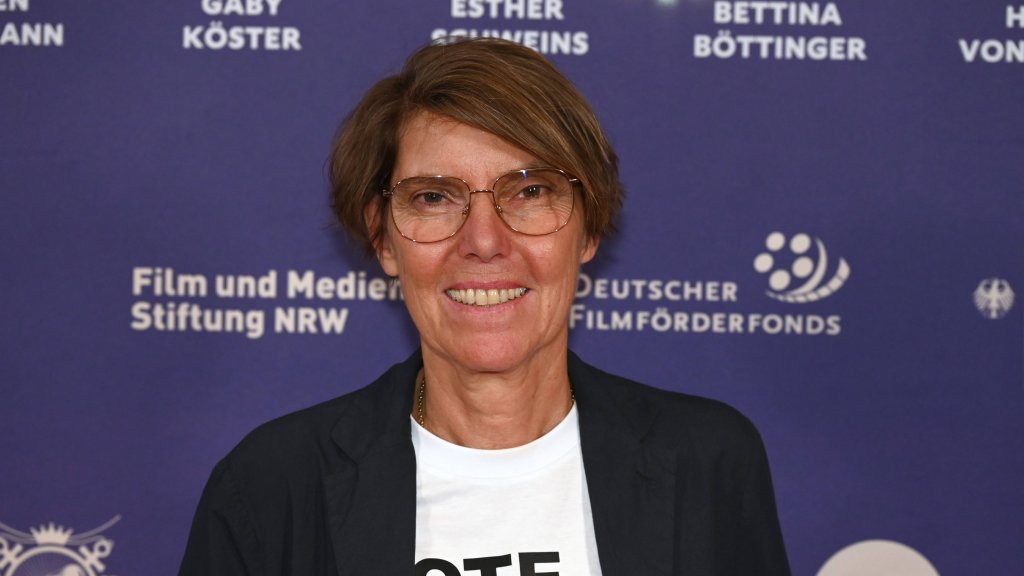
A lack of role models, misogyny and homophobia: German television presenter Bettina Böttinger (70) has spoken about the difficult circumstances in which she grew up as a young lesbian woman in the 1970s. Today, the long-standing presenter of “Kölner Treff” takes a very different view of her personal life. She says she is happily married and leads a good life.
Key points at a glance
- Bettina Böttinger talks on Katja Burkard’s podcast “Glow Up Your Life” about her life as a lesbian woman and her past experiences of discrimination.
- The long-standing presenter of “Kölner Treff” says: “I experienced a great deal of misogyny and, of course, so-called homophobia too”.
- Böttinger describes her school years in the 1970s as particularly difficult. She says she knew of no openly lesbian role models at the time.
- Nevertheless, her decision to live openly “paid off” for her. Today, she describes herself as a “very happy lesbian woman”.
- Böttinger says she has been happily married for many years and leads a good life.
- She does not regard social progress for queer people as irreversible. Achievements could be “quickly destroyed”.
- The 70-year-old therefore calls for a continued fight for democratic structures and the freedom to live as one wishes and love whomever one chooses.
- At the same time, Böttinger advises developing resilience: everyone needs “a certain ability to take knocks” in life.
Being open has “paid off”
On Katja Burkard’s podcast “Glow Up Your Life”, the 70-year-old looks back on her personal experiences and changes in society. Böttinger also makes clear that she does not take the freedoms secured for gay and queer people for granted or consider them permanently guaranteed. “I experienced a great deal of misogyny and, of course, so-called homophobia too,” Böttinger says of her past. Burkard also discusses the circumstances in which Böttinger was open about her sexual orientation at the time. “You were openly lesbian when it was still a real problem to say so, to stand by it,” she tells her guest.
Looking back, Böttinger herself views her decision to live openly positively. She says this path has “paid off” for her. This is also reflected in how she now sees her own life: “Because I can say, and many people may not like hearing this, I am a very happy lesbian woman.” She says she found happiness in her private life long ago. She has been “happily married for many years” and “leads a good life”, says the former “Kölner Treff” presenter. However, getting there was by no means a given. Born in Düsseldorf, she describes her youth in particular as a difficult period.
No lesbian role models
As a lesbian teenager during her school years in the 1970s, she experienced very different social conditions from those of her life today. “It wasn’t such a fun time,” Böttinger says in retrospect. A major problem was the lack of visibility of lesbian women. There were hardly any public figures whom young people could look to for guidance. “I didn’t know of a single lesbian woman in the world who was at all prominent or could have been a role model,” Böttinger recalls. This meant she lacked more than just a personal role model. Social acceptance of gay people was also significantly lower at the time.
For Böttinger, the fact that the situation has changed considerably since her own youth does not mean that the associated problems have disappeared. She points to the situation of queer young people, saying that even today there is “a higher suicide rate among queer young people than among non-queer young people”. For Böttinger, this is a reason to continue working for the rights and acceptance of queer people. The point is “that we keep fighting”. She does not see this development solely as a question of LGBTQ+ rights. She links the freedoms that have been secured to the state of democratic societies as a whole.
“It is always fragile”
Progress and social freedoms are the result of past struggles and are by no means automatically guaranteed to last, Böttinger stresses. “Everything we have fought for – democratic structures or this freedom to live as we want, to love whom we want – has been fought for, and it is always fragile.” In her view, there is therefore also a risk of losing social changes that have already been achieved. An achievement can be “quickly destroyed”, Böttinger warns. She uses a vivid comparison to describe the consequences: “Like a forest burning down. And it takes a very, very long time for it to be restored.” In this way, she connects her own life story with a call not to take social freedoms for granted.
Personal resilience
Alongside political and social engagement, however, Böttinger also considers personal resilience important. Not every negative experience can be prevented. “You also have to be able to take it,” the presenter says. For her, this is not a particular ability that only queer people need. Rather, it is a fundamental part of life. “You do have to develop a certain ability to take knocks in life – and that applies to everyone.” Despite her experiences of misogyny and homophobia, and her difficult teenage years, Böttinger’s assessment of her own life is positive. Today, she describes herself in a sentence that would hardly have been a given for her in the 1970s: “I am a very happy lesbian woman.”