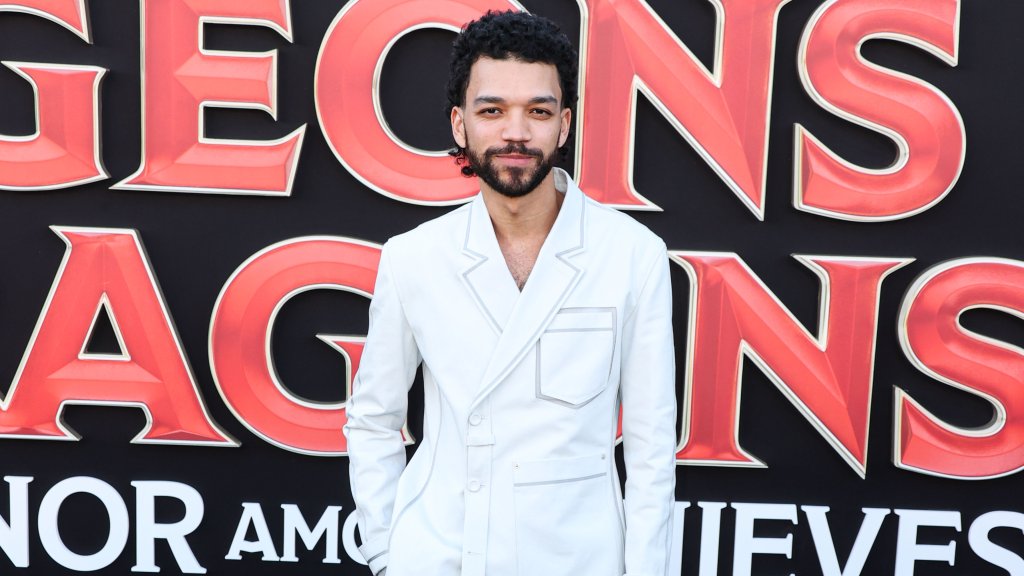
Actor Justice Smith (31) (German) has critically examined expectations of masculinity both within and outside the LGBTQ+ community. The actor, who has been announced for the second season of the gay ice hockey series “Heated Rivalry”, shared his personal experiences of prejudice, social pressure and conflicting ideas about how a queer man should present himself in a social media post.
Key points at a glance
- Social pressure: actor Justice Smith reports that Black men face particularly strong expectations to present themselves in an exaggeratedly masculine way.
- Accusations after coming out: when Smith also displayed traditionally masculine traits, he was accused of “lying”, being “dishonest” or hating himself.
- Criticism of gender stereotypes: the actor sees a close connection between homophobia, sexism and the devaluation of femininity.
- Appeal to the LGBTQ+ community: Smith warns against viewing masculinity as inherently negative and thereby creating new restrictions.
- New role in “Heated Rivalry”: in the second season, he plays Harris Drover, an openly gay social media manager for an ice hockey team who falls in love with a closeted player.
Under greater pressure
Black men in particular often face expectations to appear as masculine as possible, he said. At the same time, Smith found that certain masculine behaviours were suddenly called into question after he came out. The actor said his comments were intended to spark a discussion within the community about gender expression and masculinity. At its heart is the question of why queer men are encouraged to move beyond traditional gender roles, yet sometimes have to justify themselves again when they display certain masculine traits. Smith identifies as a queer man.
Smith described how exploring his own femininity had initially been a liberating experience. The women in his life had helped him develop a personal understanding of masculinity that was not based solely on conventional gender roles. Among the qualities he listed were “my ability to speak my mind, my ability to assert myself, my loudness and my ability to take action”. His father, in turn, had encouraged him to embrace qualities that society often regards as feminine. Smith named gentleness, vulnerability, strength and creativity. These experiences had shown him that masculine and feminine traits did not necessarily have to be opposites.
His own sexual identity
This had become particularly clear to him while exploring his own sexual identity. “When I realised I was queer, I felt it was socially acceptable to express this feminine side publicly. That was incredibly empowering, especially because Black men are under even greater pressure to be hypermasculine,” Smith explained. In doing so, the actor addressed an expectation that he believes affects Black men to a particular degree: they are expected to embody strength and traditional masculinity, while vulnerability or feminine gender expression are often less accepted.
Accusations after coming out
Yet according to Smith, the freedom he had felt through embracing his feminine side also brought new difficulties. When he later wanted to express more of the traits usually associated with masculinity again, he encountered rejection. Other people had accused him of “lying”, being “dishonest” or “hating himself” as a queer man. Smith was describing a contradictory experience: having first had to free himself from traditional expectations of masculinity, he was then sometimes denied the freedom to express himself masculinely again.
In his view, there is a risk of new rules emerging within the LGBTQ+ community that restrict personal gender expression just as much as the social norms queer people have long resisted. What matters, therefore, is not whether particular traits are considered masculine or feminine. Rather, everyone must be able to decide for themselves which of those qualities belong to their own personality.
Homophobia and sexism
Smith sees a fundamental social problem behind these conflicting expectations. “As we know, homophobia is rooted in sexism. It consists of the devaluation and dehumanisation of women and femininity,” the actor said. In his view, femininity is often regarded as inferior. This affects not only women, but also men who display feminine traits. The associated prejudices have also damaged the understanding of healthy masculinity, he said.
Smith criticised the way masculinity is sometimes associated only with dominance, toughness or the suppression of emotions in such debates. Yet traits traditionally considered masculine can also be expressed in positive ways. His own experiences with the women in his life and his father had shown him that confidence, assertiveness, gentleness and vulnerability can coexist.
Criticism of the LGBTQ+ community
It also appeared particularly important to Smith not to limit the discussion solely to prejudice outside the LGBTQ+ community. Queer people, too, can reject men who choose a distinctly masculine gender expression. Such a presentation is sometimes seen as a step backwards because it recalls social gender roles from which many queer people have consciously sought to free themselves. Smith warned, however, against turning this into a wholesale rejection of masculinity. “And in doing so, we reject masculinity as a whole as something negative,” he explained. “That creates a similar restriction on gender expression to what we previously experienced from the other side.”
In his assessment, this creates a risk of people once again coming under pressure to conform to a particular image — only this time on different terms. A queer man who wants to express himself femininely should be able to do so just as freely as someone who presents himself in a more masculine way. That freedom must also apply when a person's gender expression changes over the course of their life.
Masculinity without rigid rules
Ultimately, Smith's post called for a more open approach to masculine and feminine traits. He argued that everyone should be able to find their own balance without losing the acceptance of others. In his understanding, masculinity and femininity need not be viewed as fixed categories between which people must make a definitive choice. Instead, different qualities can be part of the same personality. Smith also links this to his hope for more respectful treatment within the LGBTQ+ community. Rather than judging others hastily on the basis of how they present themselves, different forms of gender expression should be accepted. His appeal thus challenges two extremes: social pressure towards exaggerated masculinity and the idea that queer men must abandon their masculine traits altogether.
New role in “Heated Rivalry”
The actor's comments come at a time when Smith is also becoming more closely associated with a gay love story through his work. It was announced in early 2026 that he was set to take on the role of Harris Drover in the second season of “Heated Rivalry”. The series tells stories of gay relationships in professional ice hockey, exploring homosexuality, secrecy and the expectations of a traditionally masculine environment, among other themes. Smith's character Harris works as social media manager for the Ottawa Centaurs ice hockey team and is openly gay. His counterpart is Troy Barrett, played by Charlie Gillespie. Troy is an ice hockey player himself, but keeps his homosexuality secret. The relationship between the two begins under difficult circumstances. Their relationship is initially marked by bullying before gradually developing into a love story.
Love in a "men's sport"
The characters Harris and Troy thus represent different experiences of dealing with their own sexual orientation. While Harris is openly gay, Troy tries to hide his identity from those around him. Particularly in ice hockey, which is often associated with physical toughness, competition and traditional images of masculinity, this dynamic offers scope for personal and social conflict. Exactly how the relationship between Harris and Troy will be portrayed in the second season remains to be seen. What is certain, however, is that Smith's personal comments have already sparked a debate that extends far beyond the series, even before his appearance in “Heated Rivalry”.