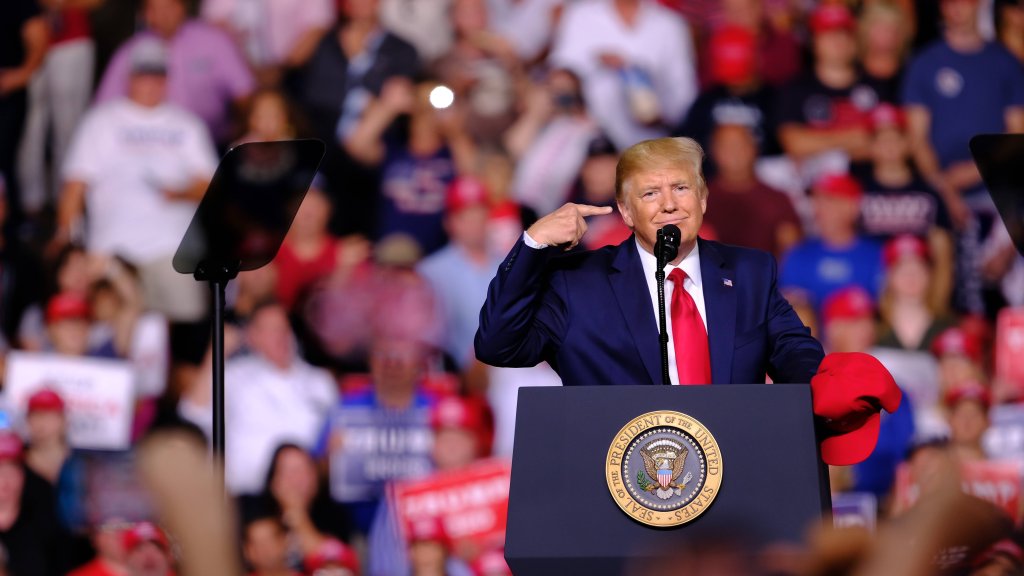
At a campaign appearance in Myrtle Beach, South Carolina, on 21 August 2026, US President Donald Trump claimed that American hospitals were performing “reversal operations” on trans people, saying this was “on my orders”. This claim has no basis whatsoever and contradicts court orders, medical guidelines and common sense.
Key points at a glance
- Trump said: “Hospitals are performing reverse surgery, on my orders.” However, no evidence of any operations or orders has been provided.
- Neither hospitals nor medical associations confirm that surgical reversals are taking place.
- Trump’s orders to date are limited to cutting support for gender-affirming care – they do not mandate reversal operations.
Official denials
Several healthcare experts rejected Trump’s statement as completely unfounded. Adrian Shanker, formerly responsible for LGBTQ+ policy at the US Department of Health and Human Services, stressed that medical decisions were solely a matter for patients, their parents and their healthcare providers. Politicians should not intervene. Dr Demetre Daskalakis of the Callen‑Lorde Community Health Center expressed a similar view: he knew of no order from laypeople such as the president that would mandate clinical procedures.
Facts versus fiction
Significant legal and health policy developments contradict Trump’s account. His orders from 2025 aimed to restrict gender-affirming medical services for minors or exclude them from federal funding – not to reverse operations. Some hospitals, including VCU and UVA in Virginia, subsequently had to pause their care for under-19s to avoid legal consequences. Professional medical organisations continue to stress that gender-affirming operations are rare among minors and are only permissible following a careful individual assessment involving multiple medical specialities.
Background: the medical reality
Gender-affirming operations on adolescents are extremely rare, always voluntary and performed under strict medical standards. Data from 2019 show that among minors, only 0.1 such procedures per 100,000 insured people were performed in the 13–14 age group, and 2.1 in the 15–17 age group – most involved chest surgery. The American Society of Plastic Surgeons recommends that such procedures should only be performed from the age of 19.
Next steps: scrutiny and transparency
The focus now is on which sources Trump is relying on for his claim. Public institutions and professional medical societies should make clear that no surgical reversals are being ordered or performed. Legal and political pressure will increase to ensure that medical care remains evidence-based and patient-centred.
This incident illustrates that statements from politicians can be misleading – the facts remain the essential basis for public debate.