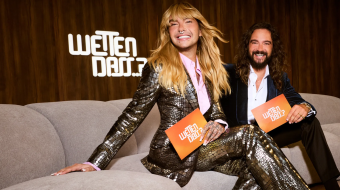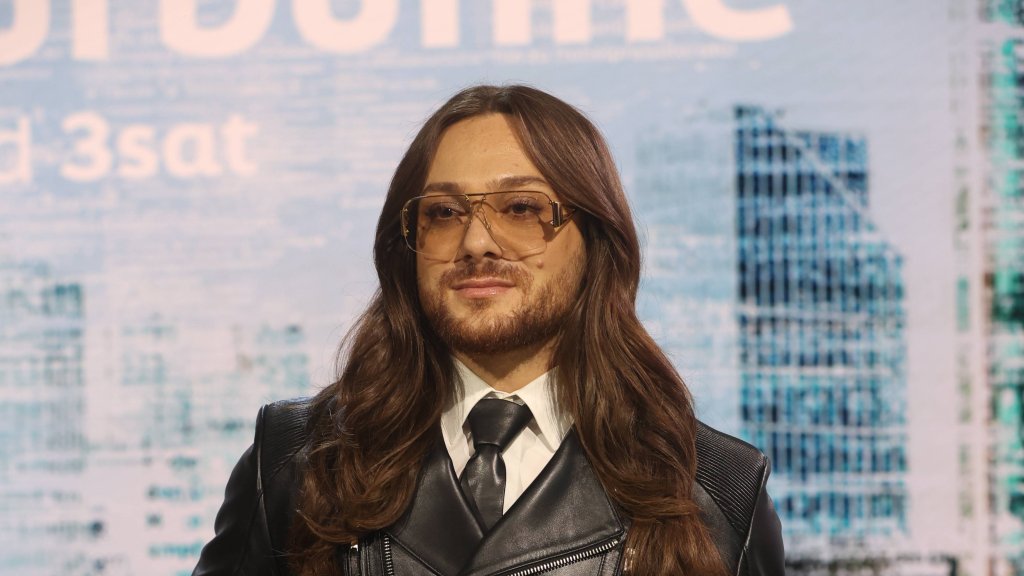
Presenter and author Riccardo Simonetti (33) (German) does not feel safe everywhere as a gay man. In an interview with the magazine “Stern”, the 33-year-old spoke about his experiences of social rejection, his fear of the AfD and the impact of traditional masculine ideals. He made it clear that concern about hostility has influenced his behaviour since his youth.
Key points at a glance
- Fear of the AfD: Riccardo Simonetti is concerned about political developments in Germany and criticises indifference towards the rights of LGBTQ+ people.
- Everyday safety: The 33-year-old says he has avoided certain places for years because he does not feel safe there as a gay man.
- Experiences of hostility: Even as a young person in Bad Reichenhall, Simonetti felt constantly judged for his appearance and manner.
- Criticism of masculine ideals: The presenter calls for men to have greater freedom to question traditional gender roles and express their personalities.
- Insights into his marriage: Simonetti describes how he and his husband Steven encounter stereotypical assumptions about their roles even in liberal circles.
Dangerous places
“As a gay man, you realise early on that some places are not safe for you, which is why I have always avoided being alone in certain places,” Simonetti said. However, the fact that he does not spend much time out on the streets these days is not necessarily down to fear of particular areas. The experience of attracting attention and hostile reactions because of his appearance and manner had been part of his life since his youth. Simonetti grew up in Bad Reichenhall in Upper Bavaria. There, he said, he had to get used to other people commenting on his appearance and behaviour. “I didn't know what it was like to leave the house without provoking an opinion,” the presenter recalled. Others had accused him of wanting to provoke people simply by existing. He says these experiences still affect him today. For example, he wears headphones even when he is not listening to any music. This is intended to send a message to those around him: “I can't hear you.”
Fear of the AfD
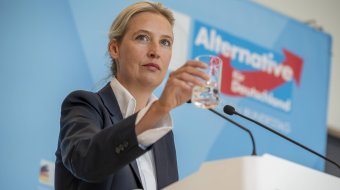
Alongside his personal experiences of exclusion, Simonetti is also concerned about political developments in Germany. Asked whether he was afraid of the AfD, he answered “Yes”. What he finds particularly disturbing, however, is not just hostility towards LGBTQ+ people, but also the willingness of many voters to accept such political positions. Some people support such parties not because of their stance towards gay people, “but because they find other political positions appealing. And in the process, they casually accept that a group of people suffers, even though they may personally have nothing against them. That reveals enormous double standards,” Simonetti criticised.
As an example of the potential political consequences, he pointed to Italy, his parents' country of origin. He said he had observed a deterioration in the legal position of same-sex families there since Prime Minister Giorgia Meloni took office. “Since Giorgia Meloni came to power, the situation regarding queer people's family rights has deteriorated significantly. Same-sex parents have, for example, been removed from their children's birth certificates,” Simonetti said. He also perceives a social backlash against LGBTQ+ rights in Germany.
Social expectations
Alongside political developments, Simonetti also sees traditional ideas of masculinity as a problem. In his view, heterosexual men in particular often put themselves under pressure to meet certain expectations. Gay men sometimes have an advantage in this respect, he explained. “As a gay man, you quickly realise that you cannot live up to society's ideal. That also gives you the freedom to be anything else.” In principle, however, that freedom is available to every man. Simonetti rejected the suggestion that heterosexual men have fewer opportunities to free themselves from social expectations. “Wrong! Every man has that freedom. It's just that many heterosexual men – not all, but many – lock themselves in a cage. If they deviate even a millimetre from the image projected onto them, they believe they will lose their status as men.”
For this reason, he said, he could at least partly understand why some men reacted negatively to him. Someone who constantly suppresses parts of their personality to be seen as particularly masculine might feel provoked by a person who disregards those rules and is successful into the bargain. Rather than being angry at someone like him, he would like men in that situation to direct more of their anger “at the construct” that “stops me from living as my true self. That's what I mean when I say: heterosexual men can learn from queer men.”
Role stereotypes everywhere
Simonetti also experiences how deeply traditional gender stereotypes are embedded in society within his own marriage. He has been married to his partner Steven since August 2024 (German). His husband's appearance fits a conventional masculine ideal: “short hair, a moustache, muscles, 1.85 metres tall”. This repeatedly leads to situations in everyday life where outsiders assign the couple different gender roles. “Everywhere, he is automatically cast as the husband, and I'm the wife because I wear make-up and have long hair,” Simonetti reported.
He observes these patterns even among people who consider themselves particularly liberal and open-minded. At a garden party, the men present had naturally taken his husband along to the barbecue, while Simonetti was left behind. The couple have similar experiences at restaurants. “My husband gets the bill. Always. Yet I'm the one who pays.” Such situations do not make him angry. They do, however, illustrate “how binary our perceptions still are. Yet when two men like us live together, neither has to take on the role of the woman.”
Power to women
Simonetti also explores the expectations placed on men and how these can be changed in his first non-fiction book, “Wann ist ein Mann ein Mann!?”. At the book's launch in Berlin in September, he made his first public appearance together with his husband Steven. He dedicated the work to his father, who had died in January. Back in March, Simonetti had criticised the fact that self-care among men remained largely taboo. In his interview with “Stern”, he also spoke about men's responsibility for social problems and violence. The fact that men are responsible for a substantial share of the suffering in the world and get many things wrong is “unfortunately something you really cannot sugar-coat”, he said.
At the same time, he argued that men should be given more opportunities to lead fulfilling lives beyond rigid expectations about their roles. “But we need happier men, who will then hopefully cause less suffering too.” Simonetti also believes changes are needed in the distribution of political power. In his view, women around the world should take on greater political responsibility. Whether greater representation of women in political leadership would actually improve the world could only be judged once that step had been taken. In his view, however, it was worth trying. “But why don't we give it a go? It can hardly get much worse than it is now. Men have had their chance.”