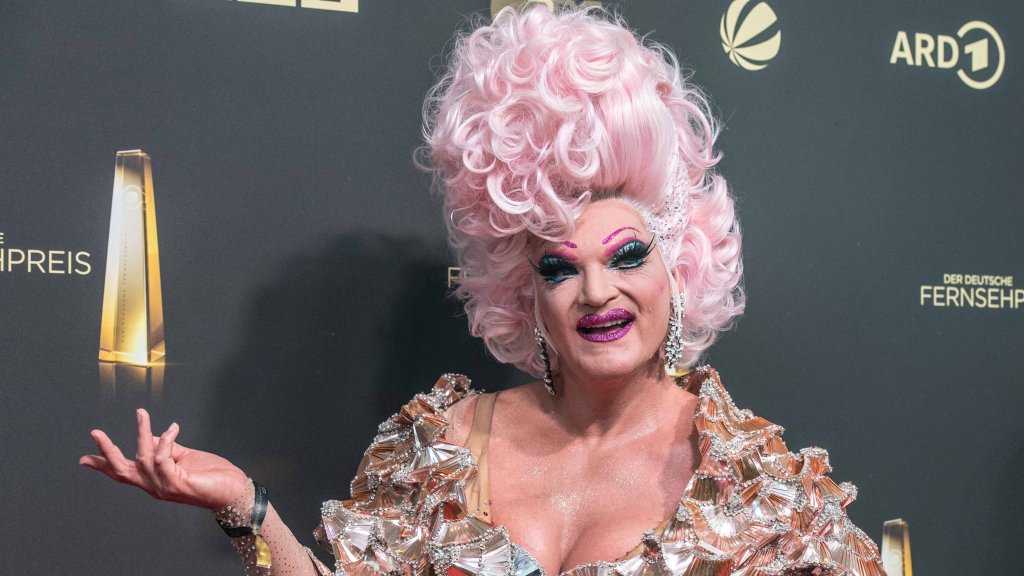
This year's German Television Awards in Cologne were accompanied by clear political messages. A total of 29 awards were presented to figures from the television and streaming industry at the gala. Winners included entertainer Stefan Raab, talk show host Markus Lanz and presenter Laura Wontorra. Particular attention went to the film “Olivia”, about the life of drag queen Olivia Jones, who also attended in person.
The key points at a glance
- The German Television Awards were presented in a total of 29 categories at a gala in Cologne.
- The celebrities honoured included Markus Lanz, Stefan Raab and Laura Wontorra.
- A particular highlight was the award for “Olivia”, about the life of drag queen Olivia Jones
- Johannes Hegemann, who stars in “Olivia”, called for queer people and other minorities to be protected in the face of hostility.
- Several winners used their acceptance speeches to make political statements and advocate democracy and a free society.
Television awards with political messages
Several winners' acceptance speeches attracted particular attention. They used the stage not only to express thanks for their awards, but also to appeal for democracy, a free society and the protection of minorities. One of the political statements came from Markus Lanz. The 57-year-old received the German Television Award in the “Best Information Programme” category for his eponymous talk show on ZDF. It was Lanz's second German Television Award. In his acceptance speech, the presenter spoke about the current mood in society. “I'm encountering so many people at the moment who feel very uncertain, some of whom are afraid,” the 57-year-old said. He then appealed to viewers and guests: “Do not be afraid! Whatever is falling apart right now, we'll simply rebuild it one day without breaking a sweat.”
An appeal against hatred and incitement
Fabian Köster also used his award to make a political statement. The comedian received the award in the “Best Comedy/Late Night” category for his ZDF programme “heute-show extra: Next Stop Köster”. Köster called on people to take a stand in the face of current developments. “Especially in times like these, we must keep reminding ourselves of this, we must speak out against hatred, against incitement and against the enemies of democracy who want to abolish things like this,” he said. His words were met with loud applause in the hall.
Alongside the political messages, the gala also focused on numerous awards for successful TV formats and their creators. Stefan Raab was honoured for his RTL show “Wer weiß wie wann was war?”. Laura Wontorra also had a trophy to celebrate. She won in the “Best Presenter/Individual Performance in Entertainment” category for her work on “Deutschland sucht den Superstar” (RTL). The jury named Tom Schilling best actor. He received the honour for his role in the Netflix series “Achtsam Morden”. The best actress award went to Karin Hanczewski. She was honoured for her performance in “Call My Agent Berlin” (Disney+).
“Olivia” wins best television film
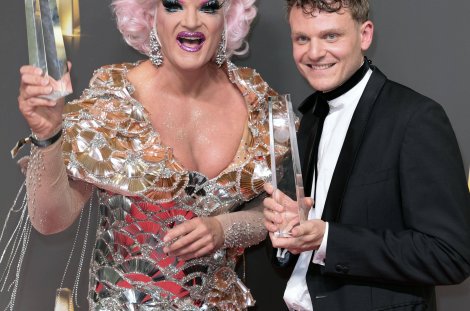
One of the evening's most important awards went to the multi-part production “Olivia” (ZDF). The biopic about the life of well-known drag queen Olivia Jones was named best television film. The team behind it dedicated the award to the LGBTQ+ community. Lead actor Johannes Hegemann also used his appearance to appeal for an open society and the protection of minorities. “Queer people are once again being portrayed as political enemies,” Hegemann said in his acceptance speech. Visibility and the protection of minorities were therefore needed in Germany, he said.
Beyond the political statements, there was also cause for celebration at the awards ceremony. The ZDFneo series “Chabos” was among the evening's big winners. The production was named best comedy series. A special honour went to Peter Kloeppel. The long-serving RTL news presenter accepted the lifetime achievement award. Kloeppel is 67 years old. In total, the jury presented 29 awards at the gala in Cologne. The awards recognise outstanding achievements in television and streaming. The German Television Awards have been presented since 1999. Their aim is to recognise outstanding achievements in television and streaming. The German Television Awards are backed by ARD, RTL, Sat.1, ZDF and Deutsche Telekom. Streaming providers Disney+, Netflix and Prime Video are involved as partners.