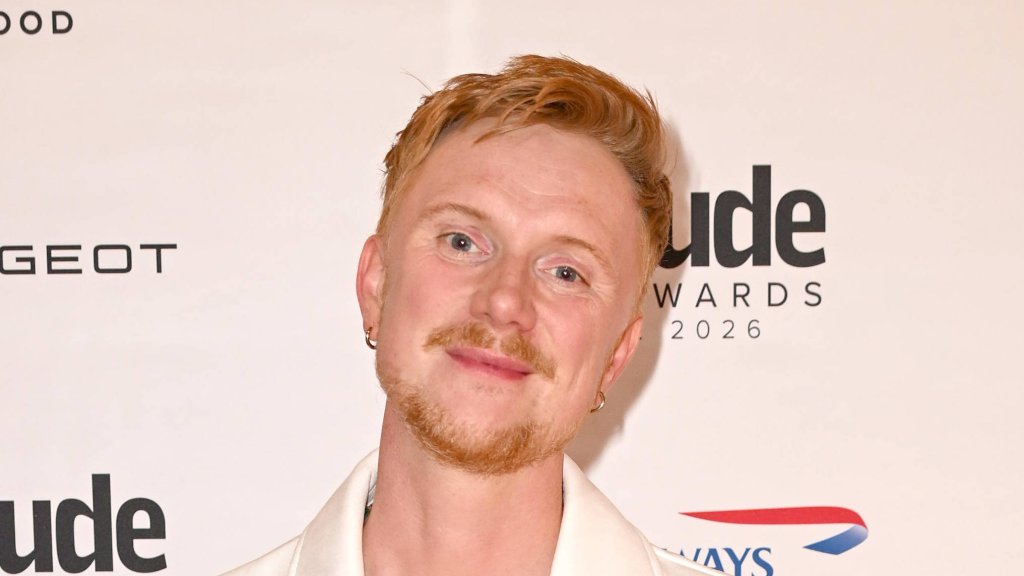
More than 640 kilometres on a bicycle, five days of physical exertion and over five million pounds raised: gay British television and radio presenter Owain Wyn Evans has attracted attention with an extraordinary charity challenge. His achievement is particularly remarkable given his personal history. The now 42-year-old had hated sport at school after being bullied for being gay.
Key points at a glance
- Millions for a good cause: gay BBC presenter Owain Wyn Evans has raised more than five million pounds for the charity Children in Need with a five-day cycle ride.
- More than 640 kilometres: the route took him through all four nations of the United Kingdom – from Scotland via Northern Ireland and England to Wales.
- Sport as a traumatic experience: Evans was bullied at school for being gay. He associated changing rooms and football pitches in particular with fear.
- Decades without cycling: the now 42-year-old said he had not been on a bicycle since he was ten.
- Appeal to parents: together with his husband Arran, Evans campaigns for acceptance of young LGBTQ+ people and calls on adults to love their children unconditionally.
- A new enthusiasm for exercise: despite the physical strain, the presenter wants to buy a bicycle again after his successful fundraiser.
Cycling for Children in Need
Evans completed the “4 Nations Cycle Challenge” for the BBC charity Children in Need. The route took him through all four nations of the United Kingdom. Donations continued to come in after he finished the ride. When he was told the final total this week, the presenter was overwhelmed. “It’s incredible. I can’t even imagine how much money that is and how many people it can help,” Evans said. This is not his first extraordinary fundraising achievement. In 2021, he raised £3.8 million with a 24-hour drumming marathon. On that occasion, he benefited from having been a keen drummer since childhood. It was one of the most successful individual challenges in the history of Children in Need.
Five days through four nations
The latest cycle ride presented the presenter with a considerably greater physical challenge. Evans set off from Glasgow in Scotland before taking a ferry across the Irish Sea to Northern Ireland. From Belfast, he took another ferry to Liverpool in England. His route then led through his native Wales to the capital, Cardiff. In total, he covered more than 400 miles, equivalent to over 640 kilometres. It was by no means a given that Evans would manage such a long distance. Before the ride began, he explained that he had not cycled since childhood. He estimated that he had been about ten years old when he last sat on a bicycle. His lack of sporting experience was only part of the challenge, however. Far more significant were memories of his school days, when sport had primarily been associated with exclusion and fear.
Homophobic bullying
Owain Wyn Evans grew up in a Welsh mining town in the 1980s and 1990s. Even as a teenager, he felt different from many of his classmates. In particular, the expectation that boys should be enthusiastic about football, rugby and other sports did not reflect his own interests. Before the cycle ride, Evans spoke openly about how deeply that period had affected him. “I’m not sporty. I hated PE at school, and I wasn’t a sporty boy who was enthusiastic about football or rugby,” he explained. His experiences were closely linked to society’s treatment of homosexuality. “Growing up as a young gay man in a mining town in the 1980s was very difficult. There weren’t really any positive role models. If a gay person appeared on television, they were often the butt of a joke or portrayed as a caricature.”
He said that realising he was attracted to boys rather than girls had also left him feeling isolated. “When you’re a young gay person and you think, ‘I don’t feel like my friends, and I’m not into girls’, that automatically sets you apart.” Evans found situations in which he felt directly exposed to other boys’ behaviour particularly distressing. These included PE lessons, changing rooms and football pitches. Because of the homophobic abuse, he increasingly associated these places with danger. “That made me really hate environments such as changing rooms or football pitches, because I felt unsafe there,” he said. According to Evans, the effects lasted well beyond his school years. “The things people say to you when you’re young stay with you for the rest of your life. I think that led to a kind of body image disorder that I’ve had to deal with over the years.” For Evans, the cycle ride was therefore more than a sporting fundraiser. It also meant taking on a physical challenge despite exercise and sport having long been associated with painful memories.
From mining town to BBC star
Evans began his professional career as a presenter and has worked for the BBC since 2012. He initially became known partly through his appearances as a television weather presenter. He now presents one of the British broadcaster’s most-listened-to national morning programmes. He had come out to his family and friends at the age of 17. Nevertheless, at the start of his BBC career, he initially felt compelled to hide his sexual orientation again at work. He said it was only as he became better known and appeared regularly on television that he gained the confidence to speak more openly about his private life on camera too. Evans now regularly advocates for LGBTQ+ rights. In particular, he uses his public profile to draw attention to the difficulties faced by gay young people. His own experiences of exclusion and a lack of role models play a central role in this.
Together for 18 years
In his private life, Evans has been in a committed relationship for many years. He met his partner Arran in a nightclub in Swansea, in south Wales. The two have now been together for a total of 18 years. They married in 2017. During the fundraiser, a video was made in which Evans and his husband discuss life as a gay man and the importance of individuality. BBC Radio 2 shared the clip on social media at the weekend. The video subsequently spread widely and was viewed thousands of times.
In it, Evans talks about how different his life has been from that of a straight man. “My life would have been a million times easier if I were straight. But now I wouldn’t change it for the world,” he explained. Looking affectionately at his husband, he added: “Look at my beautiful husband Arran. I love him!” In the video, Evans stressed that, despite the difficult experiences of his youth, he would not want to change anything about his life today. “And all the things I’ve been through that have brought me to this point. That’s why I don’t regret any of it,” he said.
Appeal to parents
At the same time, the presenter made clear that being gay could still bring particular challenges for young people. “But there’s one thing you just have to know: if you’re not gay, life is easier. That’s just how it is.” Evans followed this with an impassioned appeal to parents and other adults who have gay young people in their lives. “So if you have a young person in your life who this applies to, just love them. They’re no different. They’re still the same person.” His message is aimed particularly at families whose children are discovering their sexual orientation or gender identity and may be facing uncertainty or rejection. For Evans, unconditional acceptance is central. Young people should not be made to feel that being gay makes them worth less or that they have to hide.
After completing the five-day ride, Evans was asked whether he wanted to cycle more often in future. The presenter explained that he had thought about it a great deal in the days following the challenge. There were some side effects of the long ride that he did not miss, however. “I haven’t missed the cycling shorts or all the chafing on the sore bits. But the challenge has definitely sparked my enthusiasm for exercise and cycling.” He said he would not regularly put himself through a similarly strenuous ride in his spare time, though. “Of course, what I did was extreme. So I don’t think I’ll be doing anything like that on a casual weekend. But I’m definitely going to buy a bike.”








