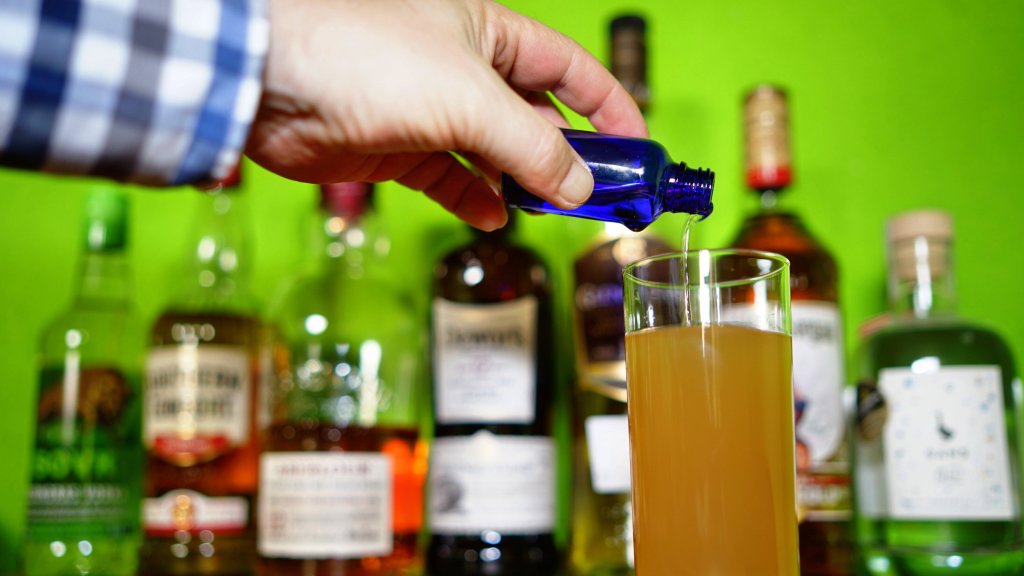
A scientific breakthrough could soon make it significantly easier to investigate crimes involving spiking drugs. Researchers from Switzerland and Denmark have succeeded in extending the detection window for the sedative gamma-hydroxybutyric acid (GHB) in blood to up to 48 hours. A laboratory in Seibersdorf, Lower Austria, is already using the new method, according to Österreichischer Rundfunk (ORF). Until now, conventional analytical methods could only detect GHB in the body for around six to a maximum of twelve hours after ingestion.
Key points at a glance
- Scientists from Switzerland and Denmark have developed a new method for detecting GHB, a substance frequently used in spiking.
- An Austrian laboratory is already using the method and has been able to confirm the study results.
- The method could also be highly significant for gay and bisexual men who become victims of drugging, sexual violence or robbery.
- However, the new analytical method is not yet sufficiently reliable for use in court. Older suspected cases could also be re-examined in future.
A problem in the community
Spiking drugs also pose a serious threat within the gay community. GHB, also known as liquid ecstasy, plays a role in the chemsex scene, among other settings, but can also be administered without the knowledge or consent of those affected. Besides sexual violence, robbery and other crimes may be the motive. Voluntarily taking a substance in no way constitutes consent to sexual activity. As recently as November, a series of robberies in Cologne made headlines, with the gay victims very likely to have been incapacitated by spiking drugs. There have also been several cases in which gay men died because their dates had secretly mixed the substance into a drink (German).
Few successful detections
Seibersdorf Laboratories examines blood and urine samples from people suspected by specialist clinics for victims of violence, police or courts of having been drugged with spiking substances. The laboratory handles around 70 suspected cases a year. However, according to head of forensics Günter Gmeiner, the substance is actually detected in only two to three per cent of cases. The number of undetected cases is likely to be considerably higher. One major problem has been GHB's short detection window. Conventional methods can only identify the substance in the body for a limited period. “In very many cases, that detection window is far too short,” Gmeiner told ORF, “because this substance induces sleep and is, of course, eliminated from the body during sleep.” By the time those affected regain consciousness, traces of the substance are often no longer detectable. This makes prosecuting such crimes considerably more difficult.
New method in use
The analytical method developed by the scientists from Switzerland and Denmark uses an additional biomarker to detect GHB ingestion in blood up to two days later. Seibersdorf Laboratories incorporated the additional biomarker into its mass spectrometry analysis procedure earlier this week. This makes the Austrian laboratory one of the first worldwide to use the new method. It was able to confirm the scientists' findings. “This is a major advantage for those affected because they have considerably more time to visit a specialist clinic for victims of violence and have a blood sample taken, and, from an analytical perspective, there is a significantly greater chance of detecting that a spiking drug has been administered,” the forensic expert said. The new biomarker can be detected in both blood and urine, he said. However, the detection window is longer in blood.
A breakthrough soon?
The method cannot yet be used for court-ordered expert reports. “Criminal law requires proof beyond reasonable doubt,” Gmeiner explained. Before the method can meet legal requirements, a reference framework must first be established. Laboratories would need access to a commercially available reference substance that could be used to calibrate the measuring equipment accordingly. Gmeiner compared the procedure to a speed camera: “It measures speed, but for the radar to know what 100 kilometres per hour is, it first needs to be calibrated. It is exactly the same for us: for a mass spectrometer to know that this is a marker for GHB, it has to be calibrated for it.” The new method could do more than reduce the number of undetected crimes involving GHB. Blood and urine samples already taken could also be re-examined. Gmeiner believes it is possible that cases dating back up to a year could be reopened in court. That is how long the Austrian laboratory keeps the samples. “I believe that a breakthrough has been achieved here in detecting spiking drugs, specifically GHB,” Gmeiner said.
Tougher penalties for spiking drugs
The scientific breakthrough coincides with a tightening of criminal law in Germany. In early November, the Bundestag voted for tougher penalties for the use of spiking drugs in sexual offences and robberies. The minimum prison sentence is set to rise from three to five years. Spiking drugs will in future be explicitly classified as dangerous substances in the Criminal Code, placing them on the same footing as weapons and dangerous implements. CDU/CSU, SPD, the Greens and Die Linke voted in favour of the amendment. The AfD abstained. The change follows a Federal Court of Justice ruling from October 2024. Particularly for victims within the gay community, the tougher penalties and improved detection methods could represent important advances in the prosecution of such crimes.