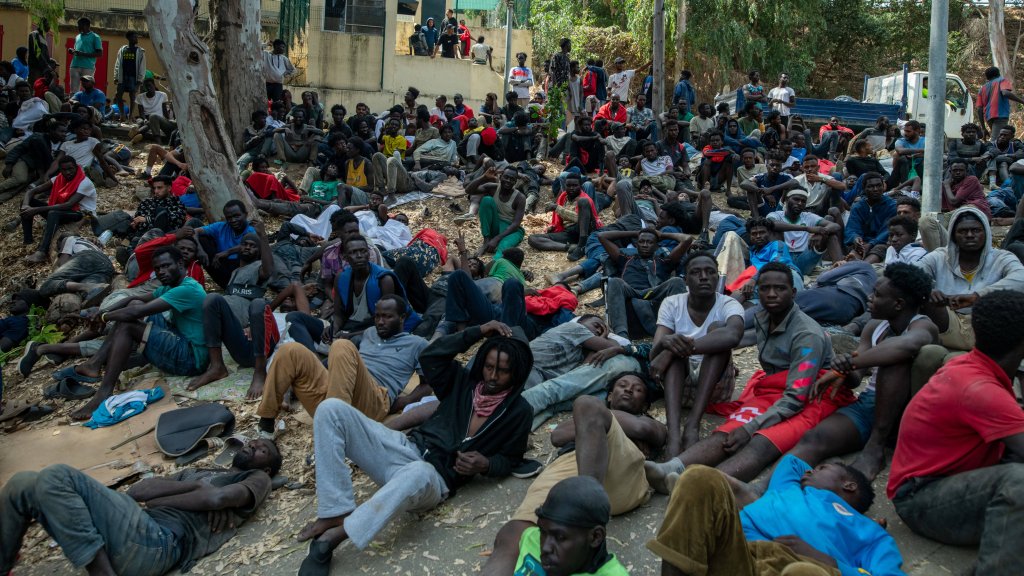
At least 126 LGBTQ+ refugees in the Spanish exclave of Ceuta on the North African coast are facing an acute crisis, according to aid organisations. Many have nowhere safe to sleep and are forced to spend the night on the streets. Those affected also report physical violence, threats and discrimination.
Key points at a glance
- LGBTQ+ refugees in the Spanish exclave of Ceuta urgently need support, according to ILGA-Europe.
- Those affected report physical attacks, thefts, death threats and homophobic abuse.
- Many people seeking protection have no safe accommodation and have to sleep outdoors, according to aid organisations.
- Amnesty International documented witness accounts of alleged ill-treatment by Spanish military personnel.
- Spain's Ministry of Defence intends to refer the allegations to the relevant judicial authorities and have potential responsibility examined.
Dangers facing LGBTQ+ people
The European LGBTQ+ umbrella organisation ILGA-Europe has drawn attention to the situation and is calling for urgent support for those seeking protection. The organisation cites information from local support networks that have documented attacks and the living conditions of gay and queer refugees in Ceuta. According to ILGA-Europe, a particular concern is that those affected are not only exposed to danger outside official accommodation. It says people also face hostility because of their sexual orientation or gender identity inside reception facilities. Separately, Amnesty International has made serious allegations against members of the Spanish military concerning the alleged ill-treatment of migrants and people seeking protection. The Spanish authorities have announced that they will have the reports investigated.
Death threats and attacks
According to ILGA-Europe, LGBTQ+ people in Ceuta have described a wide range of abuses. These include physical attacks, thefts and explicit death threats. The reports come in part from the Border Resistance collective, which supports refugees in the Spanish exclave and documents their experiences. According to these accounts, people without secure accommodation are particularly at risk. Those who have to sleep in public spaces are largely defenceless against potential attacks. They also often lack places where they can retreat to safety and store personal belongings securely.
According to accounts from some of those affected, the difficulties begin with gaining access to official reception facilities. Some LGBTQ+ refugees were reportedly not initially admitted to these centres. According to aid organisations, this denied them access to a safe place to sleep. Those affected continued to have to find somewhere to spend the night outside the facilities. In the organisations' assessment, the figure of at least 126 LGBTQ+ people in need of help illustrates the scale of the current crisis. It is not known whether any other people from the community are affected.
Discrimination and ill-treatment
According to ILGA-Europe, the problems are not confined to life outside the reception centres. It says queer and gay people also report hostility and discrimination inside the facilities. Those affected describe being insulted and demeaned because of their sexual orientation or gender identity. Allegations against staff at the accommodation facilities are particularly serious. According to the European umbrella organisation, staff have also allegedly used homophobic and anti-queer abuse. These accounts are based on reports from those affected and local support organisations.
Alongside the reports about the situation facing LGBTQ+ refugees, serious allegations against members of the Spanish military in Ceuta have also emerged. Amnesty International published findings from a visit to the exclave. Representatives of the human rights organisation conducted more than 65 interviews with migrants and people seeking protection. In total, Amnesty documented 22 direct witness accounts of alleged ill-treatment by Spanish soldiers. The accounts describe various forms of physical and psychological violence. Among other things, those affected reported beatings and humiliation. Amnesty International considers some of the actions described so serious that they could potentially constitute torture. The relevant investigative authorities must establish whether the individual allegations are substantiated and what criminal consequences could follow. Following publication of Amnesty's report, Spain's Ministry of Defence responded by announcing further steps. The ministry said it intended to forward the human rights organisation's findings to the public prosecutor's office and the relevant court in Ceuta. The Spanish exclave of Ceuta lies on North Africa's Mediterranean coast and borders Morocco. As Spanish territory, it is part of the European Union. Its geographical location makes the city an important place for people trying to reach European territory from North Africa.








