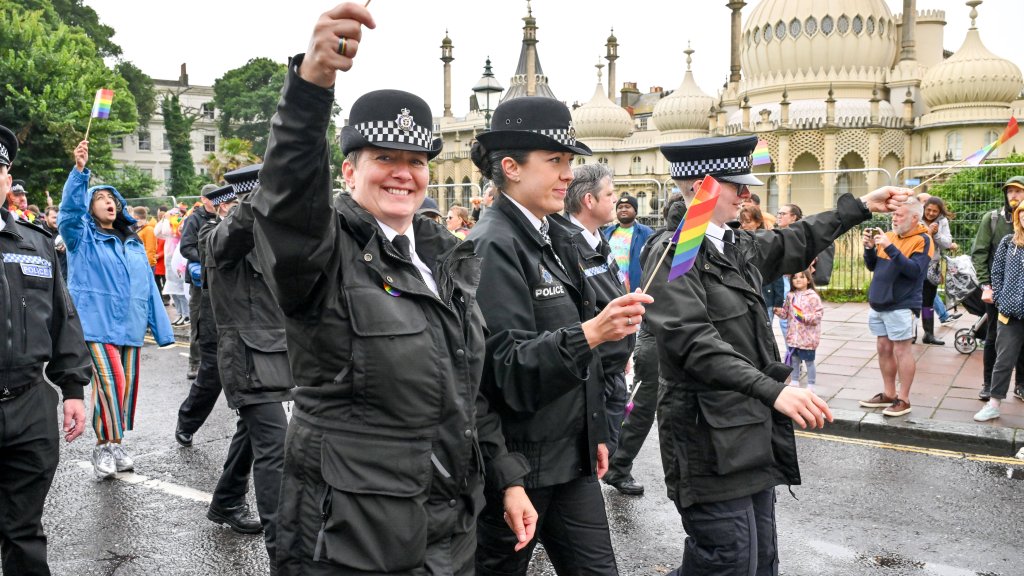
British Home Secretary Shabana Mahmood supports a ban on police officers attending Pride events in uniform. She cites the police's duty of political impartiality as the reason. In her view, uniformed officers taking part in events where socially and politically contentious demands are also promoted could create an impression of political partisanship. This has sparked a dispute within Britain's LGBTQ+ community.
Key points at a glance
- Ban at Pride events: British Home Secretary Shabana Mahmood supports a ban on police officers taking part in Pride marches in uniform.
- Court ruling cited as justification: A British court ruled in 2025 that uniformed police officers at a Pride event in Northumbria had breached their duty of impartiality.
- Criticism from police leadership: Nik Adams, the British police chiefs' lead on LGBTQ+ matters, warns that Mahmood's remarks could undermine LGBTQ+ people's sense of safety.
- No systematic unequal treatment: Mahmood rejects the allegation that policing is fundamentally different for different sections of the population, but acknowledges individual problematic cases.
- New rules on neutrality: The Home Secretary calls for a stricter standard of impartiality and criticises contact with political activists.
Focus on the duty of neutrality
The announcement has also drawn criticism from within the British police. Senior officers warn that the debate about Pride events and LGBTQ+ rights could damage gay and other LGBTQ+ people's trust in law enforcement agencies. Mahmood, meanwhile, justifies her initiative by pointing to declining public confidence in the police. She says a new standard of impartiality is needed to counter this loss of trust. At the same time, she acknowledged that different sections of the population had been treated differently in individual cases. The Home Secretary cited a Pride event in Northumbria last year as an example. Uniformed police officers had taken part in a march there. A court later ruled that the officers had thereby breached their duty of impartiality.
Mahmood referred explicitly to this ruling. “The judgment found that they had not struck the right balance … and that taking part in the march … was not acceptable and was not impartial,” she said. The minister sees the political dimension of some Pride events as particularly problematic. In this context, she pointed to debates about gender identity and trans people's rights. “These days, these marches often involve activists campaigning on issues such as gender identity … and these issues have now become contentious in society … When the police march alongside them, it looks like a political act,” Mahmood explained.
Consequences for those affected
Strong criticism came from Nik Adams, Assistant Commissioner of the City of London Police. Adams is also responsible for LGBTQ+ matters within the British police leadership. He warned that the Home Secretary's choice of words could have a negative impact on LGBTQ+ people, both within the police and in society. “When LGBTQ+ issues are described as contentious, it makes LGBTQ+ people within the police and in society as a whole feel less safe and gives them the impression that their lives are worth less,” Adams said. He also pointed to the legal protection afforded to LGBTQ+ people in Britain. “LGBTQ+ is a legally protected characteristic. These rights were hard won,” the police representative stressed.
Another legal dispute concerns Wiltshire Police. The force is due in court next week over its involvement in a Pride event in Swindon. It had set up an information stand there. Critics accuse it of having breached its neutrality by doing so, given the public disputes over trans people's rights. The case differs from uniformed officers taking part in a Pride march. While the Northumbria case concerned marching at an event, the Wiltshire case centres on the mere presence of the police providing information. The disputes thus touch on a fundamental question: how can the police ensure their political impartiality while also making it clear that they protect the rights and safety of all sections of the population?
Allegations of “two-tier policing”
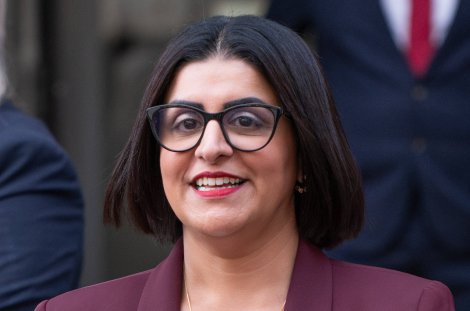
Alongside the planned ban relating to Pride events, the Home Secretary addressed allegations that the British police apply different standards to different sections of the population. The term “two-tier policing” is used particularly by the right-wing populist party Reform UK and other critics. They claim that the police enforce the law with varying degrees of rigour when dealing with certain social or political groups. Mahmood firmly rejected this allegation as a general claim. “There is no systematic, structural or routine two-tier policing in this country. I reject that allegation,” she said.
She was particularly scathing about Reform UK's portrayal. “Reform and others want you to believe that police officers go on duty every single day and practise what is described as two-tier policing. That is complete, utter, ridiculous nonsense.” At the same time, Mahmood acknowledged that there had been individual cases in which people had been treated differently. These had undermined confidence in the police and helped the idea of systematic unequal treatment to spread. “But there have been examples of differential treatment, and these have undermined confidence in the police. They have helped the false notion of two-tier policing to spread,” she explained. The minister added: “I acknowledge that there are a few examples, and I know that the best way to address this is to ensure that we have a new standard of impartiality.”
Social conflicts
Mahmood's remarks have not met with universal approval among police leaders. A senior police representative expressed concern to the British newspaper The Guardian about the political rhetoric. The police already face the difficult task of maintaining their impartiality amid Britain's social disputes while serving all sections of the population fairly. Debates about gender identity, anti-racism and political neutrality pose particular challenges for the authorities. While the police must ensure legal protection against discrimination, they are also expected to avoid being perceived as supporting particular political positions. In the critics' view, however, the question of where engagement with society ends and political partisanship begins cannot always be answered clearly.
Diversity in policing
Mahmood also called for greater diversity within the police. She said there was still considerable ground to make up, particularly in recruiting black officers. The number of black police officers was barely higher than it had been 30 years ago, she explained. Nevertheless, the Home Secretary warned against measures that could lead to people being treated differently in the pursuit of equality. “We must also guard against misguided attempts to correct course, where the pursuit of equality instead leads to differential treatment,” Mahmood said.
Contact with activists
The Home Secretary also called for a clearer distinction between engagement with the public and cooperation with political activists. Police officers should continue to engage with members of the public to discuss local problems and build trust. By contrast, she said, discussions with activist groups and campaigning organisations pursuing their own political agenda should be avoided. Gavin Stephens, chair of the National Police Chiefs’ Council, the body representing British police chiefs, underlined the importance of fairness and impartiality amid the debate. “Public confidence depends on the police being seen as fair and impartial,” Stephens explained. He also pointed to existing problems within law enforcement agencies. “There are still barriers to accessing justice, and discrimination continues to exist within our own ranks too. To do our job, we depend on the trust and confidence of all sections of the population.” Stephens concluded: “A diverse police force is a stronger police force.”








