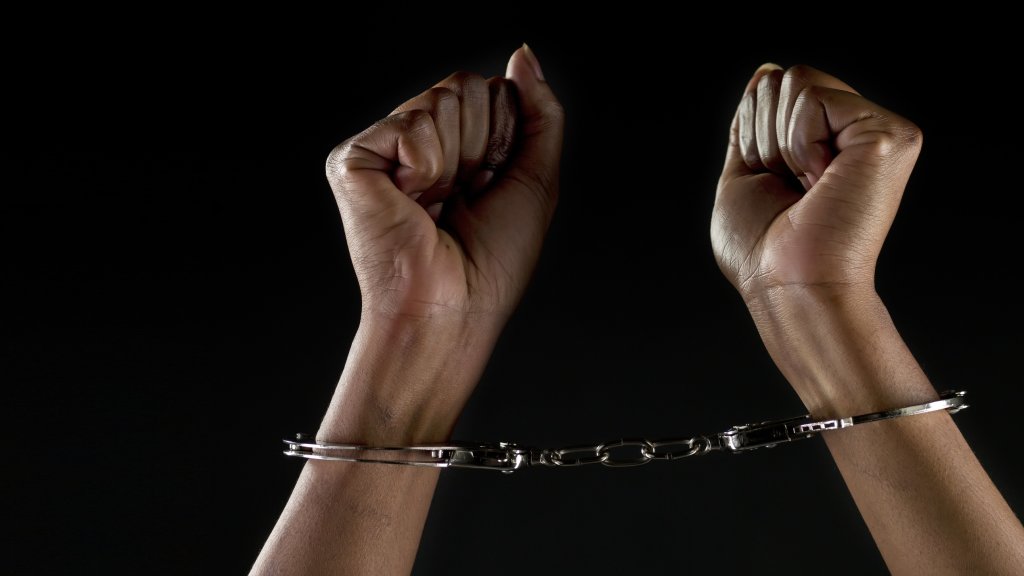
Eight women have been arrested in Senegal on allegations of “unnatural acts” and referred to the public prosecutor’s office in Pikine-Guédiawaye on the outskirts of the capital, Dakar. According to Senegalese media, the investigation began with a private dispute and was subsequently expanded following the examination of mobile phones.
Key points at a glance
- Eight women have been arrested in Senegal on allegations of “unnatural acts”.
- The investigation began after a private dispute and was expanded following the examination of mobile phones.
- The women were referred to the public prosecutor’s office in Pikine-Guédiawaye near Dakar.
- Human rights organisations have criticised the increasing persecution of gay men and lesbians in the country.
- The case comes amid a tightening of anti-gay laws in Senegal.
Investigation into eight women
To protect the women concerned from further public exposure, their names are not being disclosed. Only the initials already circulating in some local media are being published. The case comes against a backdrop of increasingly restrictive legislation targeting gay men and lesbians in Senegal. At the end of June, the National Assembly also amended the constitution, explicitly defining marriage as a union between a man and a woman. The amendment was passed unanimously by the 129 members of parliament.
The new constitutional text does not set out biological criteria for sex, but introduces a binary understanding that excludes intersex people. The reform followed a tightening of the criminal code in March 2026 and, according to human rights organisations, reflects increasing repression of gay men and lesbians. At that time, the penalty for same-sex acts was doubled to ten years in prison. Since then, the country has seen a wave of arrests, primarily of gay men (German). However, prominent women such as “Miss Senegal Univers 2024” (German) have also already fallen victim to the government’s strict policies.
A dispute as the starting point
The current investigation apparently began with a conflict between 23-year-old domestic worker M.D.F. and her alleged partner F.M. (31). According to reports in several Senegalese media outlets, M.D.F. is said to have ended her relationship with F.M. to get to know another woman. This reportedly led to tensions that ultimately culminated in an attack on the home of the younger woman’s employer. A complaint by the person affected prompted an investigation by the gendarmerie. The case was later handed over to the Keur Massar investigation brigade.
F.M., who was arrested in Rufisque, reportedly told investigators, probably not entirely voluntarily, about a group of women who had maintained relationships between Dakar and Thiès since 2022. By analysing her phone contacts and those of M.D.F., investigators are said to have identified six further women. Critics regard the examination of private communications data as a troubling intrusion into privacy. They accuse the authorities of scrutinising personal contacts spanning several years and potentially revealing people’s sexual orientations in the process.
Women referred to public prosecutor’s office
According to Senegalese media outlet Seneweb, the eight women have already been questioned and are said to have admitted to the acts they are accused of. They were subsequently referred to public prosecutor Saliou Dicko, who heads the public prosecutor’s office in Pikine-Guédiawaye. A so-called “retour de parquet” was ordered in the case. This is a deferral for further review before proceedings may be initiated before an investigating judge. The name of a well-known social media personality is also said to have come up during questioning. Local sources report that she is an artist known in Senegal. To avoid further public persecution of those concerned, no further details are being given about anyone who may be involved.
Religion plays an important role
The case follows a tightening of Senegalese criminal law on so-called “unnatural acts”. New penalties have also been introduced for so-called “unnatural acts” and the “promotion of homosexuality”. According to the organisation STOP Homophobie, at least one hundred arrests have been reported since the change in the law. At the end of April, the French newspaper Le Monde described the development as a possible “political distraction mechanism” at a time of social and economic tensions in the country.
Senegal is a Muslim-majority country. Around 95 per cent of the population follow Islam, predominantly its Sunni branch. Sufi brotherhoods such as the Mourides and the Tijaniyya are particularly influential in society. The remainder of the population is predominantly Catholic. Although Senegal is constitutionally a secular state, religious institutions retain considerable influence over politics. This influence is frequently cited as a factor in the tightening of laws targeting gay men and lesbians.








