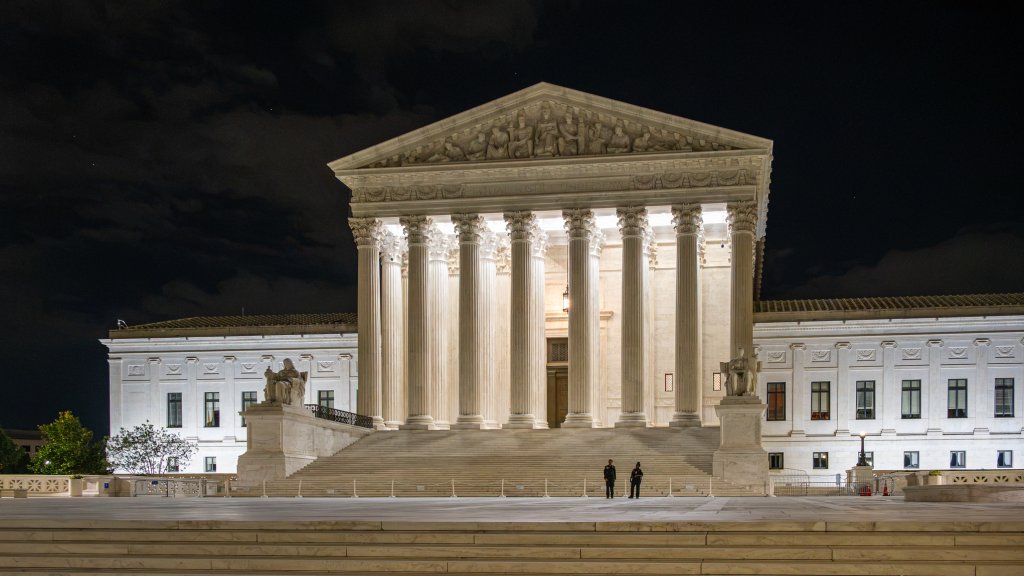
The US Supreme Court has brought a lawsuit against five Democratic lawmakers in the state of Colorado to a definitive end. Without giving reasons, the justices declined to review a legal dispute over the treatment of trans people during legislative hearings. This leaves in place a federal appeals court ruling that protected the lawmakers from civil claims.
Key points at a glance
- Lawsuit definitively defeated: The US Supreme Court has declined to review a lawsuit brought by the organisation Gays Against Groomers against five Democratic lawmakers from Colorado.
- Dispute over misgendering: The plaintiffs had challenged a ban on referring to trans people by their former pronouns or names during a legislative hearing.
- Lawmakers protected by immunity: A federal appeals court had ruled that legislators may set and enforce rules for hearings without facing civil liability for doing so.
- Constitutional question remains open: The Supreme Court did not decide whether restrictions on misgendering violate the freedom of speech guaranteed by the First Amendment.
No ruling on the underlying principle
The lawsuit was brought by representatives of Gays Against Groomers and the Rocky Mountain Women’s Network. They accused the five lawmakers of violating their freedom of speech by preventing them from referring to a trans person by their former pronouns and former name during a hearing. The Supreme Court’s decision now ends the proceedings without resolving the underlying constitutional question. Whether rules against misgendering and the use of trans people’s former names are compatible with the First Amendment to the US Constitution remains open. Both sides, supporters and opponents alike, had hoped for a ruling on the underlying principle from the US Supreme Court.
Hearing sparked dispute
The conflict began with a legislative debate in 2024. At the time, lawmakers in Colorado were considering what was known as Tiara’s Law. The bill was intended to make it easier for people convicted of serious crimes to change their legal names. Those intended to benefit included trans people wishing to bring their official documents into line with their gender identity. The law was intended to reduce existing legal barriers to name changes.
Rich Guggenheim of Gays Against Groomers and Christina Goeke of the Rocky Mountain Women’s Network opposed the proposal. Both wanted to present their criticism of the bill during a legislative hearing. According to their account, however, five lawmakers interrupted their contributions after they refused to use a trans person’s name and pronouns. Goeke also alleged that parts of her testimony were subsequently removed from the official hearing record. The activists saw this as unfavourable treatment on the basis of their political beliefs and took legal action. They argued that the five Democratic lawmakers had violated their freedom of speech and discriminated against them because of their political views.
Gays Against Groomers
Gays Against Groomers, the organisation involved in the lawsuit, was founded in 2022 by Jaimee Michell. It describes itself as a coalition of gay and lesbian people seeking to protect children from “sexualisation and indoctrination” by queer activists and gender-affirming interventions. The US civil rights organisations Southern Poverty Law Center (SPLC) and the Anti-Defamation League (ADL), by contrast, list Gays Against Groomers as an anti-LGBTQ+ hate group. Since its founding, the gay and lesbian organisation has repeatedly faced disputes over its political direction.
Legislative immunity
The legal dispute over the hearing on Tiara’s Law had already passed through two levels of the courts before the plaintiffs approached the Supreme Court. In November 2024, a federal district court dismissed the lawsuit. In March, the federal appeals court for the Tenth Circuit upheld that decision. The judges based their ruling on the defendant lawmakers’ legislative immunity. This, they said, protected legislators’ authority to set rules for conducting hearings and to enforce compliance with them. In the appeals court’s view, the five Democratic lawmakers therefore could not be held civilly liable for the contested actions. The decisive issue was thus not whether the plaintiffs’ statements were in principle protected by freedom of speech. Rather, it was whether the lawmakers could be held accountable in court for their actions during a legislative hearing.
Disappointment at decision
The Institute for Free Speech, which represents the plaintiffs, criticised the Supreme Court’s decision. “We are disappointed that the court declined to hear this case,” lawyer Del Kolde said after the petition was rejected. The decision leaves the federal appeals court’s ruling in force. The five defendant lawmakers are therefore protected against the civil claims brought in these proceedings. However, this does not amount to a ruling on the underlying limits of freedom of speech when using pronouns or trans people’s former names.








