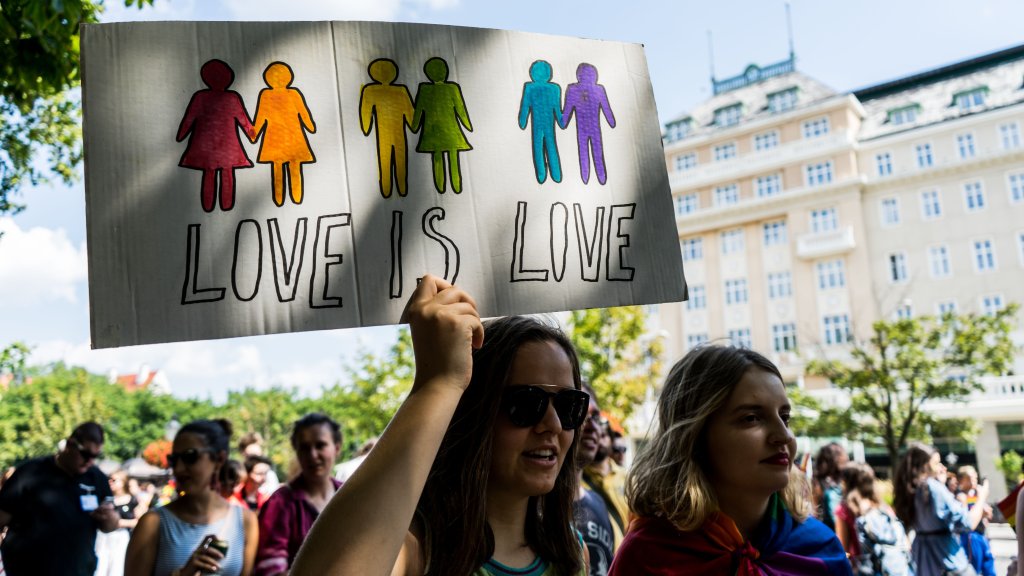
The Slovak government is openly opposing a ruling by the Court of Justice of the European Union (CJEU) on the recognition of same-sex marriages within the European Union (German). According to Interior Minister Matúš Sutaj Estok, marriages or registered partnerships entered into abroad by people of the same sex should continue to receive no legal recognition in Slovakia. The minister has now commented on the matter in a video on social media.
Key points at a glance
- The Slovak government intends to continue refusing to recognise same-sex marriages and civil partnerships entered into abroad.
- Interior Minister Matúš Sutaj Estok cites the constitution and rejects implementing the CJEU ruling.
- The dispute stems from the case of a male couple married in Austria whose marriage was refused registration in Slovakia.
- The Court of Justice of the European Union considers non-recognition a violation of fundamental EU rights.
- The decision forms part of a series of restrictions on gay and queer people in Slovakia.
Slovakia refuses recognition
Estok cited the Slovak constitution as justification. It defines “marriage as a union between a man and a woman” — something he said was not altered by the fact that a union had been “validly entered into under another country’s legal system”. In the interior minister’s view, a fundamental change to the understanding of marriage could only be achieved through a constitutional amendment. “If someone wants such a fundamental change, the only route is through a constitutional amendment, not by circumventing it or through official forms and documents from abroad,” Estok said. Family law in Slovakia should remain “as it has been for centuries”. During a visit to a registry office in June, Prime Minister Robert Fico had already stated that same-sex partnerships could not be registered under Slovak law. The ban on marriage for same-sex couples was enshrined in the constitution in 2014, during an earlier term in office for Fico.
Legal action by two gay men
The current dispute was triggered by the case of a gay couple who, after marrying in Austria, had unsuccessfully attempted to have their marriage entered in Slovakia’s civil register. The two men subsequently announced that they would take action “against this unlawful conduct”. At the same time, they called on other same-sex couples not to leave Slovakia, saying they had to “stand up to intimidation”. The Court of Justice of the European Union had already ruled in November 2025 that EU member states must recognise marriages lawfully entered into in another member state (German).
That ruling arose from the case of a Polish male couple who married in Germany in 2018 and subsequently wanted to move to Poland. However, the authorities there refused to enter their marriage certificate in the civil register. In March, Poland’s Supreme Administrative Court subsequently ruled that same-sex marriages entered into in another EU member state must be recognised. Shortly afterwards, however, the Polish Constitutional Tribunal, whose composition resulted from controversial appointments under the previous government, opposed such recognition (German). In its ruling, the CJEU found that refusing recognition violates the right to freedom of movement and residence within the European Union, as well as the fundamental right to respect for private and family life.
Conflict intensifies
The Slovak government’s stance forms part of a wider series of restrictions on gay and queer people (German). Since a constitutional amendment passed last year (German), only married couples have been allowed to adopt children. Legal recognition of non-binary and intersex people was also ruled out, while the requirements for gender transition were tightened. The European Commission therefore launched proceedings against Slovakia in November.
Alongside Poland, Bulgaria and Romania, Slovakia thus remains one of the few European Union member states that offers neither marriage nor registered civil partnerships to same-sex couples. It remains unclear whether its now openly declared refusal to implement a ruling by the Court of Justice of the European Union will lead to further infringement proceedings. However, the conflict between national constitutional law and European law is likely to intensify further.








