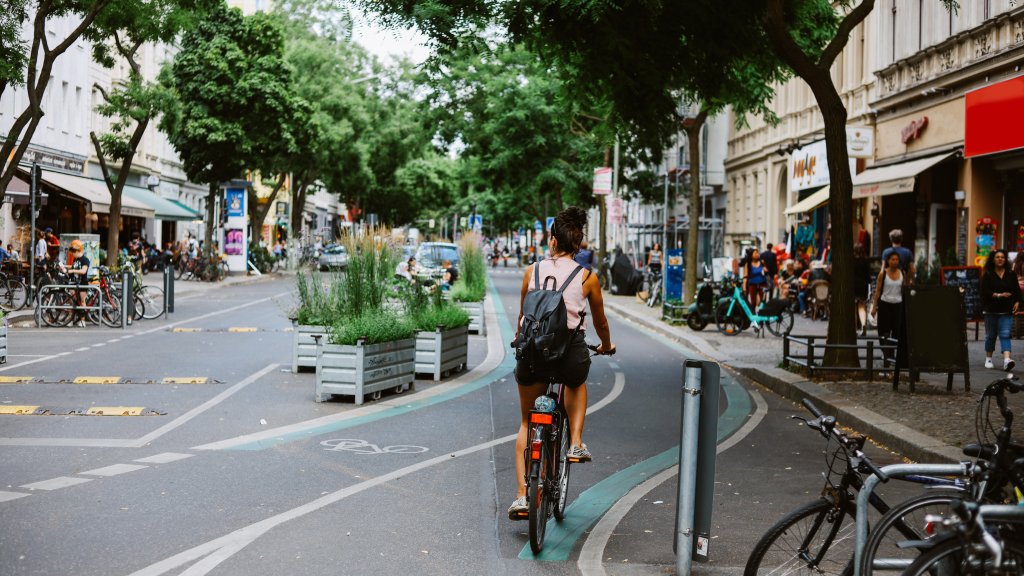
The debate over car-free city centres is intensifying in Germany. While some criticise the loss of parking spaces and restrictions on drivers, others see them as a necessary step towards modern, liveable cities. One thing is clear: urban mobility is changing, and this transformation is reshaping not only traffic but also the way we live, work and spend our leisure time.
Only a few years ago, many people considered owning a car essential. Today, younger generations in particular think differently. Bicycles, e-bikes, public transport, shared mobility services and short journeys are becoming increasingly important. The aim of many cities is less traffic, fewer emissions and more space for people rather than parked cars.
Cities rediscover public space
Anyone walking through cities such as Copenhagen, Amsterdam or Paris quickly notices how much urban spaces can change. Where multi-lane roads once dominated, wide cycle paths, green spaces, pavement cafés and places to meet are now emerging. The city is no longer seen merely as a space for traffic, but as a place to live.
In Germany, too, more and more municipalities are embracing traffic calming. Superblocks, cycle streets and car-free zones are now part of the landscape in many major cities. Summer in particular reveals how dramatically the atmosphere changes when there are fewer cars on the road. People sit outside, children play in squares and the soundscape becomes noticeably more pleasant.
This has long been about more than climate policy alone. Studies show that less car traffic improves air quality, reduces stress and can even have positive effects on health. Cities become quieter, safer and often more sociable too.
The car is losing its status
For decades, the car was a symbol of freedom and independence. In urban areas in particular, however, this image is becoming increasingly less relevant. Many young people consciously choose not to own a vehicle. Instead, they take a more flexible approach to mobility.
Car-sharing, hire bikes and e-scooters are now part of everyday life for many people. At the same time, interest in sustainable alternatives is growing. Green mobility has long ceased to be a niche topic and is now part of a modern outlook on life.
Cycling in particular is undergoing a genuine cultural shift. A bicycle is no longer seen merely as sports equipment or a cheap means of transport, but as an expression of a conscious urban lifestyle. Many cities are therefore investing heavily in new cycle routes and infrastructure.
Better quality of life instead of endless streams of cars
The biggest change can be seen wherever street space is redistributed. Cars take up an enormous amount of space, not just when being driven, but above all when parked. On average, a car sits unused for around 23 hours a day.
Car-free or low-car schemes, by contrast, create space for other uses. Parking spaces become green spaces, outdoor dining areas or bicycle parking. This also changes social life within neighbourhoods.
For the first time in years, many people are experiencing neighbourhoods where they enjoy spending time. Streets become meeting places rather than through routes. Queer people in particular often value urban spaces that are pleasant to spend time in, with open meeting places and lively neighbourhoods.
Criticism remains vocal
Of course, there is also resistance to car-free schemes. Critics fear restrictions on commuters, greater burdens on older people or economic disadvantages for retailers. Many cities do indeed face the challenge of reconciling different interests.
Experts therefore stress that car-free city centres can only work if appealing alternatives are created at the same time. Reliable public transport, safe cycle routes and accessible mobility are considered essential prerequisites.
The issue of social equity remains particularly important. Sustainable mobility must not be a luxury project for the wealthy. Good transport schemes must work for everyone, regardless of income, age or where they live.
The future is multimodal
Most transport researchers believe that the future of mobility does not lie in a single solution. Instead, a mix of different options is emerging: sometimes a bicycle, sometimes a train, sometimes a shared car. What matters will be how well these systems are connected.
Digital apps, mobility platforms and flexible ticketing options are playing an increasingly important role. At the same time, there is growing awareness that mobility must be not only efficient, but also sustainable and people-friendly.
The under-35 generation in particular is placing new demands on cities. They want less traffic noise, more green spaces, safe routes and liveable neighbourhoods. For many, the traditional model of the car-oriented city now seems outdated.
The city of the future starts now
The debate over car-free city centres is therefore about far more than transport. It touches on fundamental questions about how we want to live together in the future. Who does the city belong to? Cars or people?
One thing is certain: the transformation has long since begun. Bicycles, e-bikes and sustainable mobility are increasingly shaping everyday urban life. Cities are changing step by step, and with them our understanding of freedom, movement and quality of life.
Perhaps this is the real revolution in urban mobility: not getting from A to B faster, but making cities places where people enjoy living once again. (tb)