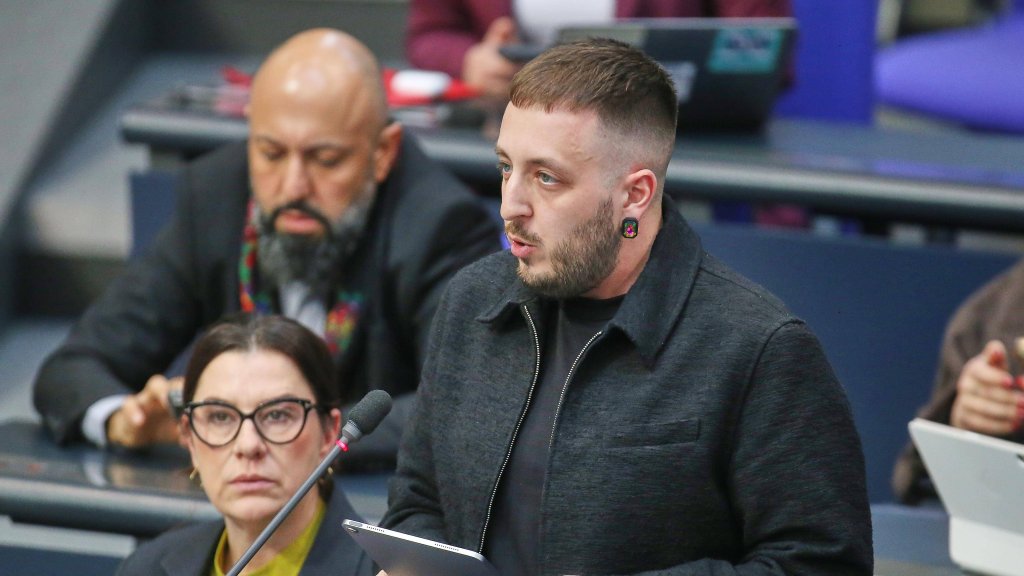
The Left Party's parliamentary group in the Bundestag accuses the German government of failing to do enough to protect LGBTQ+ people in the face of increasing repression against them in Turkey. The criticism follows Germany's decision not to sign an international declaration against the persecution of sexual and gender minorities. Left Party MP and LGBTQ+ policy spokesperson Maik Brückner criticised the government for failing to give a specific answer to a parliamentary question about the reasons for its decision.
Key points at a glance
- Opposition criticism: Left Party MP Maik Brückner accuses the German government of disregarding MPs' right to ask parliamentary questions and failing to provide adequate answers to questions about the protection of LGBTQ+ people.
- Germany does not sign declaration: The German government did not endorse an Equal Rights Coalition statement from October 2026 condemning the persecution of LGBTQ+ people worldwide as a human rights violation.
- Other countries support declaration: The signatories include the Netherlands, Canada and Denmark.
- German government cites foreign policy: Minister of State Serap Güler said decisions on participation in international declarations took account of their content, purpose, occasion and foreign policy context.
- The German government's Commissioner for LGBTQ+ Affairs, Sophie Koch, stressed that the government should advocate clearly and unequivocally for the rights of queer people internationally.
- Turkey in focus: The criticism comes against a backdrop of intensified repression against the LGBTQ+ community in Turkey. Brückner is demanding an explanation from the German government's Commissioner for LGBTQ+ Affairs, Sophie Koch.
Germany remains silent
At the centre of the dispute is a statement by the Equal Rights Coalition (ERC) dated 7 October 2026. In it, the international alliance of states, of which Germany is also a member, condemns the persecution of LGBTQ+ people worldwide as a violation of human rights. The declaration refers to the international human rights situation in general. Given the repression in Turkey, however, Brückner also sees it as an indirect criticism of the Turkish government. While countries such as the Netherlands, Canada and Denmark signed the declaration, Germany did not endorse it. In the Left Party's view, a specific explanation for this decision has yet to be provided.
Parliamentary questions
Brückner, the Left Party parliamentary group's spokesperson on LGBTQ+ policy, reacted angrily to the German government's answer to his oral question of 11 November: “I'm getting fed up: the German government repeatedly disregards MPs' right to ask parliamentary questions, obstructing the opposition's work in the process. One example: as a member of the Equal Rights Coalition, Germany did not sign its latest statement of 7 October, which explicitly condemns the persecution of queer people as a human rights violation and thus implicitly criticises the Turkish government's actions. The German government has not given a single reason why it no longer even supports this minimum consensus. Is it so afraid of upsetting the dictator in Ankara?” According to his office, there had already been several cases in which federal ministries had failed to provide adequate answers to parliamentary questions on various topics. It said the German government was, however, legally obliged to provide MPs with the information they needed for their parliamentary work.
Foreign policy context
In his oral question, Brückner explicitly asked why Germany had not signed the Equal Rights Coalition's statement. The answer came from Serap Güler, a Minister of State and member of the Bundestag. She said: “The German government decides whether to participate in joint international declarations on a case-by-case basis, taking account of their content, purpose and the specific occasion. The foreign policy context is considered in this process.” The answer does not reveal which specific considerations weighed against German participation in the declaration of 7 October. In particular, it remains unclear whether relations with Turkey played a role in the decision. The Left Party therefore considers the general reference to foreign policy considerations inadequate.
Koch's response
Brückner called on the German government's Commissioner for LGBTQ+ Affairs, Sophie Koch (SPD) (German), to comment on the decision. In the Left Party politician's view, an explanation is needed as to why Germany, as a member of the Equal Rights Coalition, is not supporting a declaration on the protection of human rights. Koch immediately made her position clear: “My stance on the persecution of queer people in Turkey is absolutely clear, and I have also made it clear together with the German government's Commissioner for Human Rights. I also expressly welcome the Equal Rights Coalition's statement of 7 October 2026. I do not understand why the Federal Foreign Office did not co-sign it on behalf of the Federal Republic of Germany. The German government would do well to advocate clearly and unequivocally for the rights of queer people, particularly at international level.” Previously, in a joint statement with the German government's Commissioner for Human Rights, Lars Castellucci, she had already stressed with regard to Turkey: “The raids against the LGBTQ+ community in Turkey and the arrests of activists and protesters are shocking. Our solidarity is with queer people and their allies in Turkey. No one should be persecuted because of their sexual or gender identity. Turkey has also committed itself to this under the European Convention on Human Rights.”
Repression against LGBTQ+ people
The dispute comes against the backdrop of a wave of repression against the LGBTQ+ community in Turkey that has continued since mid-September 2026. Under the name “My Family Is Safe”, the authorities are taking action nationwide against LGBTQ+ organisations, activists and meeting places. Police searches targeted gay bars and queer nightclubs in Istanbul, as well as association offices and private homes in several cities. Numerous people were arrested. During protests against the crackdown, police also temporarily detained more than 100 demonstrators. At the same time, the authorities had hundreds of social media accounts blocked or restricted, including those of human rights organisations and journalists. In early November, nine dating and social networking platforms were also blocked. Further police operations followed in October and November. Human rights organisations criticise the measures as the systematic criminalisation of the LGBTQ+ community and report ill-treatment and degrading searches in detention. The Turkish government, by contrast, justifies its actions as protecting families, children and public morals.








