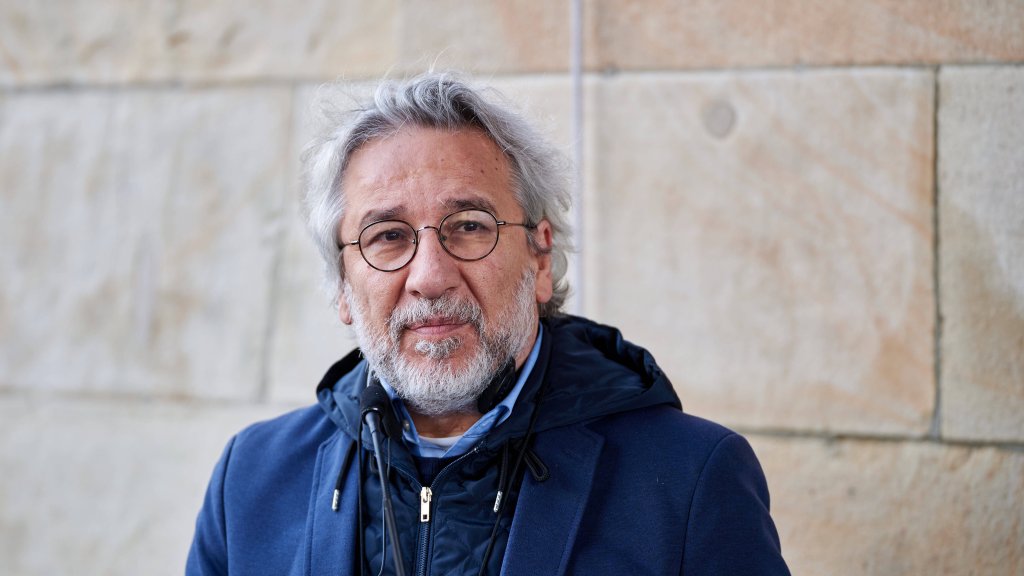
Following the Islamist-motivated attack on Christopher Street Day (CSD) in Berlin (German), Turkish journalist and exiled author Can Dündar warns of the political causes of homophobia. In a commentary, he describes the exclusion of queer people as an integral part of authoritarian politics, while also criticising double standards in the response to extremism.
Key points at a glance
- Author Can Dündar sees homophobia as a central tool of authoritarian politics.
- Following the Berlin Pride attack, he warns against sweeping judgements about Muslims.
- He also criticises the handling of Islamist fundamentalism in Europe.
- Dündar draws parallels between Islamist extremism and right-wing populist movements.
- He accuses Western governments of taking a contradictory stance towards authoritarian heads of state.
Homophobia as part of authoritarian politics
At the start of his article in the Kölner Stadt-Anzeiger, Dündar describes an incident in Turkey. A governor was reportedly removed from office after an opposition MP from the social-democratic CHP publicly criticised him for wearing cycling shorts while riding a bicycle. The MP declared in parliament: “We cannot have a governor who walks around in public in cycling shorts. I call on the interior minister: either dismiss such governors or send them a fig leaf.” President Recep Tayyip Erdoğan then reportedly dismissed the governor by an overnight decree. The governor defended himself simply by saying: “We wear sportswear when we exercise.” For Dündar, the case illustrates how, in patriarchal societies, anything perceived as a threat to traditional masculinity is demonised. Homosexuality tops that list.
An attack as an expression of hatred
Referring to the attack on Berlin's Christopher Street Day on 25 July, Dündar writes that people from countries such as Turkey have been familiar with this form of hatred for years. Berlin's Governing Mayor, Kai Wegner (CDU), said the attack had targeted a “free and open society”. Federal Interior Minister Alexander Dobrindt (CSU) spoke of “Islamist terror”. In Dündar's view, however, this hatred does not begin with the perpetrators, but is already present in the language of political leaders.
He points to heads of state and government such as Donald Trump, Vladimir Putin, Jair Bolsonaro and Recep Tayyip Erdoğan. They have, he writes, made hostility towards queer people a central part of their strategies of political polarisation. Dündar writes that Erdoğan opened his 2023 election campaign with the words (German): “The family structure of this nation is strong. We do not produce LGBT people.” He also reportedly described opposition parties as a “rainbow alliance” and homosexuals as “perverse enemies of humanity”. Turkey's interior minister at the time also declared: “The LGBTQ+ movement also includes animals and humans marrying.” Dündar also points to banned Pride parades, arrests of demonstrators (German), anti-LGBTQ+ rallies, rainbow-painted steps being painted over, and the banning of a television series because it featured a gay character.
No sweeping judgements
Following the attack in Berlin, Dündar observes two opposing reactions in Germany. One blames Muslims indiscriminately; the other defends Muslim communities in an equally sweeping way. In his assessment, both fall short. He stressed that being a Muslim does not necessarily mean being homophobic. Despite the propaganda of radical Islamist groups, many predominantly Muslim societies have numerous LGBTQ+ people and organisations campaigning for their rights. Anyone who ignores this diversity also alienates believers who are not hostile towards homosexuals, thereby strengthening the very fundamentalist forces at issue.
Islamism and far-right extremism
Dündar also sees ideological overlaps between Islamist fundamentalism and right-wing populist or far-right extremist movements. “It is precisely on the issue of homophobia that the language of IS representatives shows striking parallels with that of populist leaders around the world. Here, two authoritarian mindsets converge.” In his view, both currents reject gay rights, multiculturalism, sexual diversity, feminist movements, freedom of expression and the basic principles of an open democracy. Dündar asks: “Is there really a major difference between restricting freedom in the name of religion and restricting it in the name of the family?” The right response, he argues, is to protect freedom and security equally, without condemning entire population groups indiscriminately. Otherwise, there is a danger of losing both.
Dealing with fundamentalism
In his own words, Dündar finds a blanket defence of all Muslims no more convincing than a blanket condemnation of them. Combating anti-Muslim hostility and defending freedom of religion and expression are indispensable. However, he is critical of state support for Islamic organisations or imams that spread hostility or hatred. He observes with concern that the fundamentalism fought for decades in Turkey can, in some cases, operate unhindered in Europe under the protection of religious freedom. At the same time, Dündar warns against withholding necessary criticism for fear of it being co-opted by the far right. Freedom of religion must not be equated with religious coercion. Anyone who believes in liberal democracy must oppose its enemies – “whether radical Islamists or far-right extremists” – with equal determination.
Finally, Dündar accuses Western governments of pursuing contradictory policies. “Anyone who strongly condemns those who attack a ‘free and open society’, while also rolling out the red carpet for statesmen who reject these values or support their opponents, risks a crisis of credibility. As long as political interests are placed above principled politics, it will be difficult to convince society that we really are on the right side – on the side of good against evil.”








