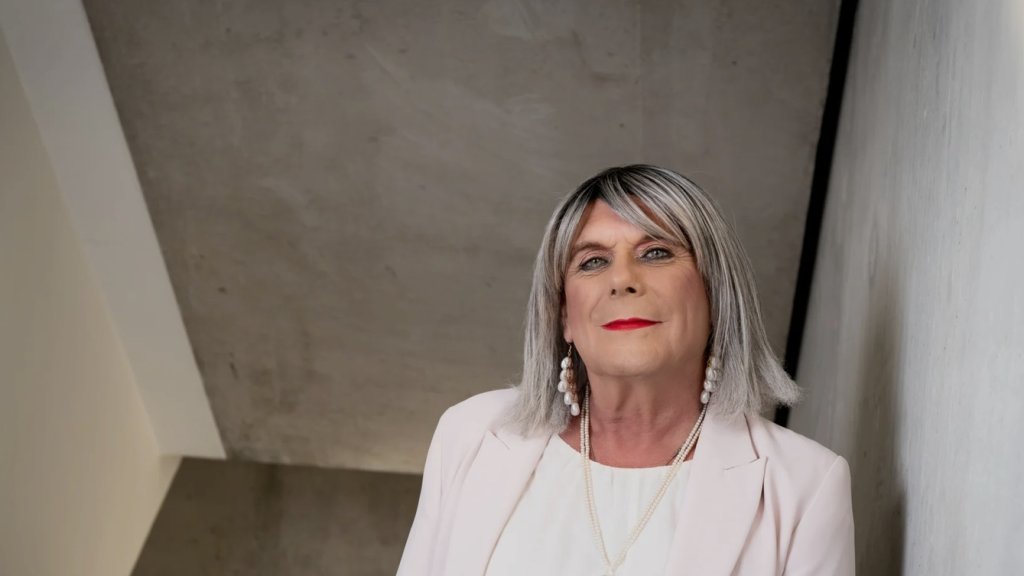
Jennifer Kubach wants to become mayor of Linkenheim-Hochstetten. The independent trans candidate is standing for election on 27 September 2026, hoping to bring her many years of professional experience, her voluntary work and her vision of a resident-focused administration to the role.
The key points at a glance:
- Jennifer Kubach is standing as an independent candidate for mayor of Linkenheim-Hochstetten on 27 September 2026.
- The trans woman says she has around 45 years of professional experience at a major German energy company.
- She volunteers to promote diversity and social cohesion.
- Her policy plans include renewable energy, sound finances, a medical centre and the expansion of local public rail transport.
- Kubach stresses that her candidacy should focus on her professional qualifications rather than her life story as a trans woman.
A candidate with professional experience
Kubach says she has around 45 years of professional experience at one of Germany’s largest energy companies. She began her career in a technical field. Later, she took on specialist responsibilities and worked in central corporate functions. Her work included internal and external communications, coordinating complex projects and playing a leading role in establishing the company’s renewable energy division.
Kubach explains that this professional work has given her particular experience in taking responsibility, commercial thinking and decision-making processes. She says she has learnt to develop workable solutions even in difficult situations. Alongside her career, Kubach has been involved in voluntary work for many years. She founded the non-profit association Diversity Events e. V. and is its chair. The association promotes social cohesion, diversity and mutual respect. Projects initiated by Kubach include the Diversity-Ballnacht. The event will take place in Karlsruhe for the second time in October. It aims to bring together people of different backgrounds, religions, generations and ways of life and, according to the candidate, has attracted attention beyond the Karlsruhe region.
Administration and infrastructure
Kubach is putting forward several specific policy proposals as part of her candidacy. She advocates a modern, resident-focused administration, transparent decisions and sound municipal finances. She also wants to drive forward the use of renewable energy and strengthen volunteering. The candidate sees a need for action on infrastructure too. Her plans include further expansion of local public rail transport. She also wants to establish a medical centre in the municipality.
Kubach says she does not want to limit her contact with residents to the town hall. She wants to be regularly available in the community and seek dialogue with associations, businesses and social organisations, as well as at public events. “I am not standing for a party, but for the people of Linkenheim-Hochstetten,” says Jennifer Kubach. “As an independent candidate, I am accountable solely to the residents. I want to listen, get things done and work with people to develop our municipality further. Good ideas must not fail because people say: 'We’ve always done it this way.'”
Winning support through policy
Kubach’s candidacy also carries a personal and broader social and political message. She says she is one of the few trans women in Germany to stand for a full-time mayoral position. By her account, she is only the third trans woman to take this step into the public eye. However, her own life story is not intended to be the focus of her election campaign. Instead, she says, what matters is her qualifications, her experience and her willingness to take responsibility for the municipality.
“I do not want to be reduced to my life story. For me, the crucial question is what ideas, experience and commitment someone brings to a municipality. If my candidacy also encourages other people to follow their own path and get involved in society or politics, then that is a positive sign for our democracy.” Kubach sees diversity, openness and mutual respect as important foundations for living together in a municipality. At the same time, she places great importance on sound economic judgement, transparent decisions and an effective administration. She says her aim is to bring different positions together and build bridges.








