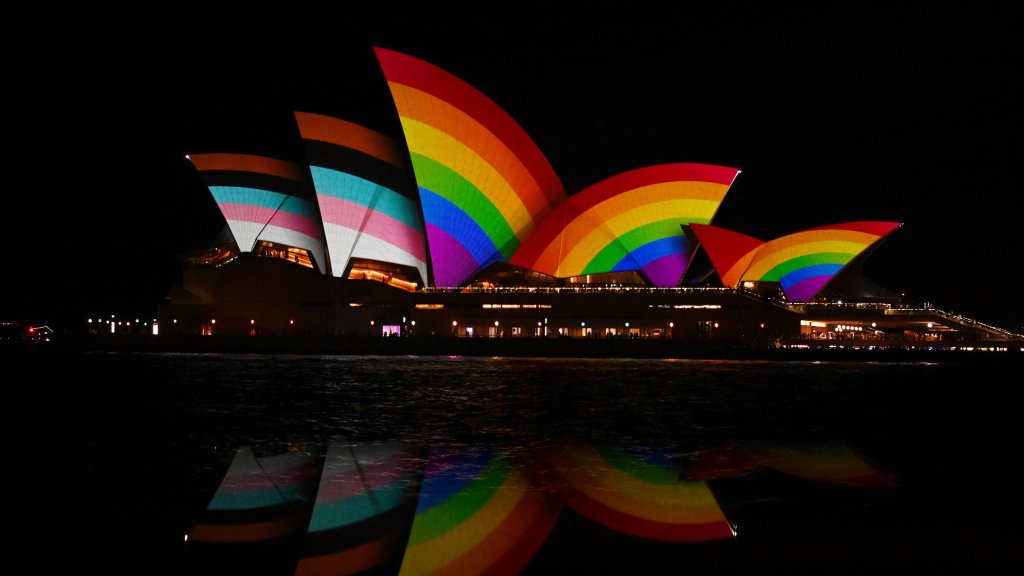
For the first time in history, Australia's census this year included questions on sexual orientation and gender identity (German). The census takes place every five years, most recently yesterday, Tuesday. The community is celebrating the inclusion of LGBTQ+ people in the census and hopes it will provide important new insights.
Key points at a glance
- Australia's census this year included questions on sexual orientation and gender identity for the first time.
- People aged 16 and over could provide this information voluntarily.
- Questions covered sexual orientation, gender identity and sex registered at birth, among other things.
- The statistics authority aims to improve data on gay and queer people.
- The change stems from a 2022 election pledge by Prime Minister Anthony Albanese's Labour Party.
- According to earlier estimates, 4.5 per cent of Australian adults identify as LGBTQ+. The new survey is now intended to reveal whether that figure still holds.
Specific questions about LGBTQ+ people
The census comprised 66 questions in total. According to the Australian Bureau of Statistics (ABS), the survey is intended to show how Australian society changes over time. The data also helps estimate the population and inform important decisions about the country's future. This year, people aged 16 and over could voluntarily provide information about their identity for the first time. According to the Australian statistics authority, the new questions were developed together with a panel of LGBTQ+ experts. Care was reportedly taken to ensure that the questions were worded accurately and appropriately.
For sexual orientation, respondents could select options including “heterosexual”, “gay or lesbian” and “bisexual”. They could also give another answer or choose not to provide this information. There were also several options for gender identity. These were “man”, “woman” and “non-binary”. Respondents could also enter another term or select “prefer not to answer”. Another question asks: “What sex was registered at the person's birth?” The ABS points out that a question about sex has been part of the Australian census since 1911. For the 2026 census, however, it was revised and supplemented with a question about gender identity. The authority says the reason for recording these separately is to improve the quality of the data collected.
New data on the community
The introduction of the questions stems from a 2022 election pledge by Prime Minister Anthony Albanese's Labour Party. Before its election victory, the party had announced plans to collect this demographic data on the population. The Labour Party's election victory ended nine years of government by the conservative coalition. Also in 2022, the Australian Bureau of Statistics published estimates of the size and composition of Australia's LGBTQ+ population.
According to those estimates, 4.5 per cent of Australian adults identified as LGBTQ+. The new census questions are now intended to collect more comprehensive data on sexual orientation and gender identity. Queer organisations hope the new census data will provide a more realistic picture of the LGBTQ+ population, which has so far been inadequately represented in official statistics. The data is intended to help identify needs more effectively and enable targeted planning and funding of health, social and support services.








