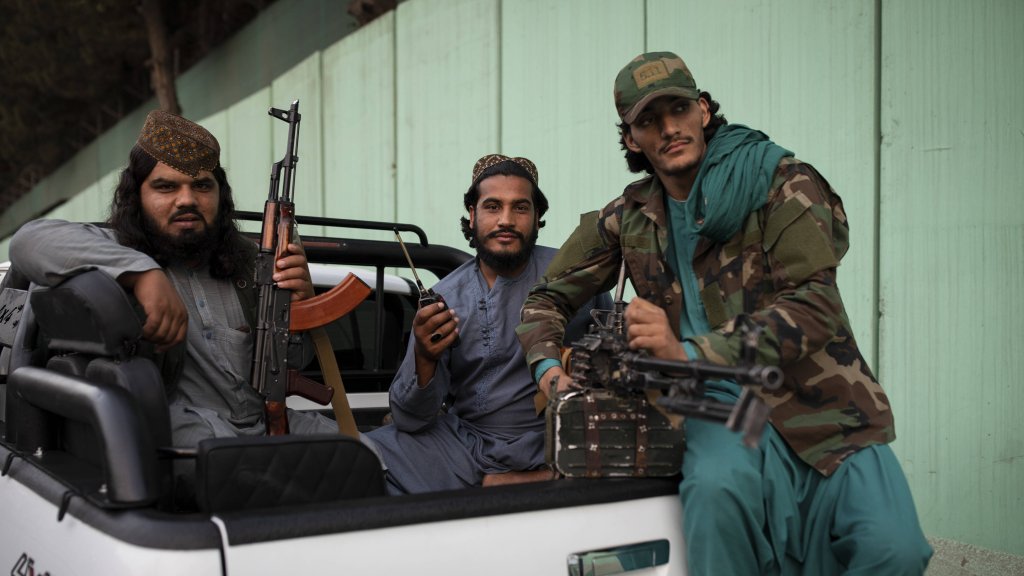
Five years after the Taliban seized power on 15 August 2021, Amnesty International is calling on the German federal government to honour its pledges to admit Afghans at particular risk and to stop deportations to Afghanistan. According to the latest estimate by the organisation Kabul Luftbrücke, more than 600 people are still waiting in Pakistan for their promised admission to Germany. Meanwhile, the situation in Afghanistan continues to deteriorate, particularly for women, activists and gay people.
Key points at a glance
- Five years after the Taliban seized power, Amnesty International describes the human rights situation in Afghanistan as dire.
- Women and girls, as well as gay people, are particularly affected by the systematic denial of rights and persecution.
- Homosexuality carries the death penalty under the “Criminal Procedure Code for Courts” adopted by the Taliban in January 2026.
- According to the organisation Kabul Luftbrücke, more than 600 Afghans are still waiting in Pakistan for their promised admission to Germany.
- Amnesty is calling for all admission pledges to be honoured and for deportations to Afghanistan to end without exception.
Repression, torture, executions
The human rights situation in Afghanistan has deteriorated dramatically since the Taliban returned to power. According to Amnesty, women and girls in particular are being systematically excluded from public life and stripped of their rights. The restrictions on their rights are so extensive that Amnesty International classifies them as crimes against humanity. Gay men also face persecution, arbitrary detention, torture and corporal punishment such as flogging, as well as execution. The “Criminal Procedure Code for Courts” adopted by the Taliban in January 2026 permits the destruction of property as punishment, institutionalises torture and other ill-treatment through corporal punishment, and allows the death penalty for a wide range of offences.
The code also entrenches discrimination based on gender, religion and social status, and explicitly recognises slavery. The situation is particularly dangerous for gay people: homosexuality carries the death penalty. Gay men therefore face not only social exclusion and persecution, but must also fear for their lives under Taliban rule.
Widespread human rights violations
“The Taliban have not only normalised widespread human rights violations, but also enshrined them in law. Anyone forced to return to Afghanistan – whether through deportation from Germany or the withdrawal of an admission pledge – may be affected. Calling Afghanistan a safe place is cynical,” says Theresa Bergmann, Asia specialist at Amnesty International in Germany. “It is all the more shameful that Germany has repeatedly broken its promise of protection to Afghan human rights defenders, queer people and former locally employed staff.”
The German federal government originally pledged to admit a total of 3,087 people, including numerous human rights activists, journalists and LGBTQ+ people. According to Kabul Luftbrücke, 2,447 Afghans have so far been able to enter Germany under the Federal Admission Programme established in 2022. This leaves more than 600 people currently in Pakistan. Every day, they face the threat of ill-treatment by the Pakistani authorities and deportation to Afghanistan.
Government delays procedures
Amnesty specialist Theresa Bergmann says: “Instead of honouring its admission pledges as quickly as possible, the German federal government has delayed, obstructed or effectively blocked admission procedures and systematically withdrawn pledges made to Afghan women at risk. If these people pay for this with their lives, the German federal government shares responsibility. Those who have promised protection must also provide it and must not risk sending people back into mortal danger. The German federal government must now do everything it can to allow all Afghan women with admission pledges to enter Germany immediately.”
Amnesty also considers the latest expansion of deportations to Afghanistan – now including people who have not committed criminal offences – unacceptable from a human rights perspective. The principle of non-refoulement under international law prohibits deportation to a country where those affected face serious human rights violations. In the organisation’s view, this also applies to people who are not entitled to asylum. Amnesty therefore considers deportations to Afghanistan incompatible with human rights guarantees and any expansion of deportation practices a violation of international law.
Returnees face danger
The European Union Agency for Asylum explicitly classifies people returning to Afghanistan as a group at heightened risk. People who return to Afghanistan are often regarded as traitors, spies or supposedly “Westernised”, and face severe persecution and punishment. Even aspects of their appearance can put them at risk. So-called “Western” haircuts, trimmed beards or clothing that does not comply with Taliban rules can be classified as “un-Islamic behaviour” and harshly punished. The United Nations Assistance Mission in Afghanistan (UNAMA) has documented hundreds of serious abuses in this context, including arbitrary arrests and ill-treatment.
Gay people face an additional, specific risk. The explicit threat of punishment up to and including the death penalty for homosexuality exacerbates the already high level of danger for people targeted by the Taliban because of their sexual orientation. For members of the LGBTQ+ community in particular, returning can therefore have life-threatening consequences. Nina Alizadeh Marandi, an expert on asylum policy and law at Amnesty International in Germany, explains: “Afghanistan is not a safe country. This applies not only to women, but to everyone returning. Even if people have not been granted asylum, human rights standards prohibit their deportation to Afghanistan. Any expansion of deportation practices and any further negotiations with the Taliban for this purpose violate human rights guarantees and put lives at risk.”
An end to deportations
Amnesty International is therefore calling on the German federal government to honour its outstanding admission pledges and end deportations to Afghanistan. Specifically, the organisation demands that all Afghans still waiting in Pakistan to travel onwards to Germany be admitted immediately, that deportations to Afghanistan cease without exception, and that, in cases where deportations have already taken place, monitoring establish whether Afghans can enter the country unmolested following their deportation and subsequently live in Afghanistan without persecution or danger to life and limb.
Five years after the Taliban seized power, Amnesty is thus once again fundamentally challenging Germany’s policy on Afghanistan. Given the particular dangers facing gay people and other groups at particular risk, the organisation is pressing for existing protection pledges to be honoured immediately and for an end to deportations.








