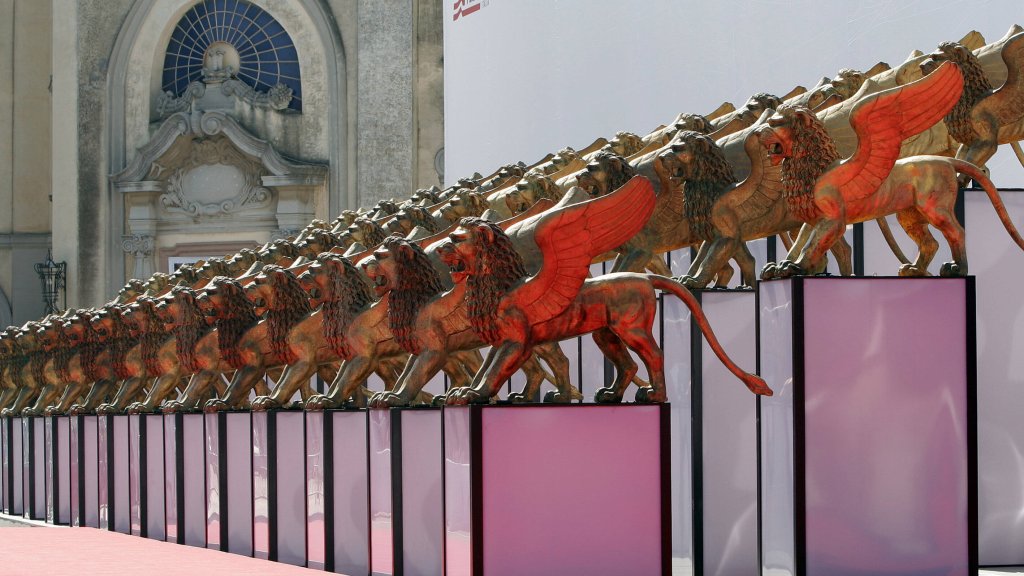
Just as the Queer Lion marks its 20th birthday (German), a long-standing source of institutional support is being withdrawn: for the first time this year, the Italian Ministry of Culture is refusing to grant its patronage to the prestigious LGBTQ+ film award. The award is a parallel event at the Venice International Film Festival and honours films with gay or queer themes.
Key points at a glance
- The Queer Lion LGBTQ+ film award is celebrating its 20th edition at the Venice Film Festival.
- For the first time, the Italian Ministry of Culture is refusing to grant the award its patronage.
- The Veneto region and the city of Venice, by contrast, continue to support the Queer Lion.
- Founder Daniel N. Casagrande says he cannot understand the ministry’s decision.
- First presented in 2007, the Queer Lion honours LGBTQ+ films at the Biennale.
- The 2026 Venice Film Festival takes place from 2 to 12 September.
Support from elsewhere
Support continues to come from the Veneto region and the city of Venice. Both are led by centre-right politicians. The Ministry of Culture is headed by Alessandro Giuli. For the Queer Lion, the decision is particularly striking because the ministry supported the award continuously from 2011 to 2017, albeit under different culture ministers. Other institutions also supported the award in the past. These included the Department for Equal Opportunities within the Italian Presidency of the Council of Ministers, several universities and the Italian association of film critics.
Since 2019, the Queer Lion had deliberately refrained from applying for institutional patronage. For its 20th anniversary, however, the organisation decided to make an exception and once again submit applications to the Ministry of Culture, the Veneto region and the city of Venice. The then regional president, Luca Zaia, agreed as early as November, while Venice’s new city administration granted its patronage in mid-July. The Ministry of Culture finally announced its unexpected refusal only in mid-August, and only after being asked.
An award with a long history
The Queer Lion’s story began with an idea from Daniel N. Casagrande. In 2003, he interviewed the then director of the Venice Film Festival, Moritz De Hadeln. As director of the Berlinale, De Hadeln had previously laid the groundwork for the creation of the Teddy Award, which was first presented there in 1987. Casagrande suggested to De Hadeln that a similar project should be established in Venice. The then festival director immediately agreed. Four years later, in 2007, the Queer Lion was presented for the first time. Since then, the award has accompanied the careers of numerous filmmakers whose works received their world premieres in Venice.
When the Queer Lion was being established in its early years, however, reactions to the award were different from those today. Casagrande recalls press offices sometimes calling the organisers because they feared that a film’s inclusion on the list would mean being given a “gay label” and consequently being marginalised. Today, he says, the situation is reversed, with many filmmakers pleading to be included.
Inexplicable behaviour
Casagrande cannot understand the Ministry of Culture’s latest decision: “I cannot explain it, not because we consider ourselves so important that no one should be allowed to refuse us patronage, but simply because we are talking about films selected by the festival’s management: that should be enough to guarantee that the Queer Lion focuses on works of unquestionable merit.” Although patronage has political significance, it brings the award no direct financial or practical benefits, Casagrande went on to explain. It is not about funding, tax exemptions or other advantages. The Queer Lion is therefore entering its 20th year despite the Ministry of Culture’s refusal to support it. Biennale Cinema 2026 takes place from 2 to 12 September. Before then, the list of films competing for the Queer Lion is due to be announced as early as next week.








