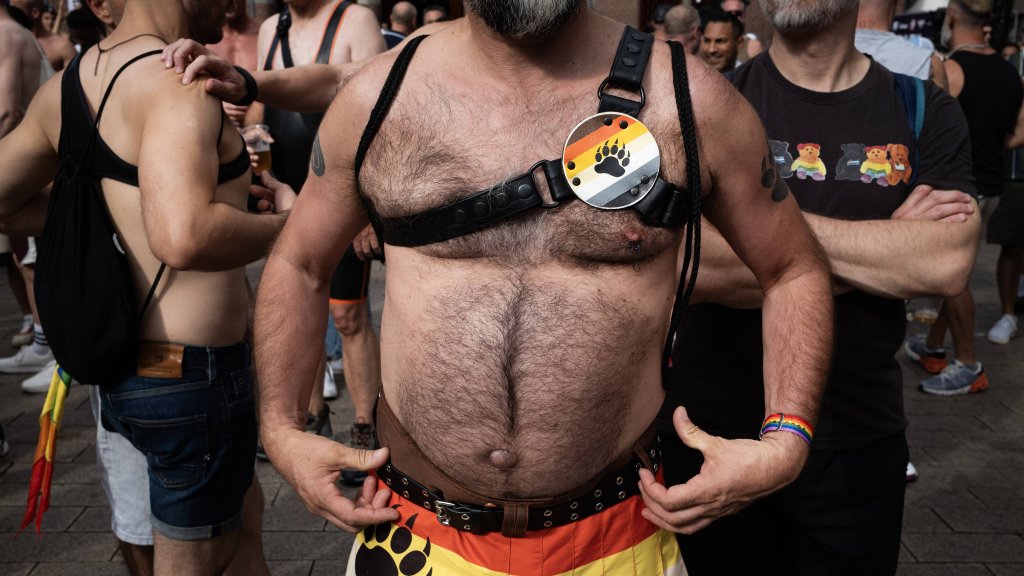
For a quarter of a century, Bear Week in Provincetown in the United States has been a meeting place for larger, hairy gay men. This year, however, observers noticed a change that is still reverberating a month later: more and more participants were noticeably slimmer. Among the possible reasons cited is the growing use of GLP-1 drugs such as Ozempic, colloquially known as weight-loss jabs (German). The debates surrounding them continue.
Key points at a glance
- Increasing numbers of slimmer participants were noticed at Bear Week in Provincetown.
- Observers attribute this partly to the growing use of GLP-1 drugs such as Ozempic.
- Bear Week has been regarded as a symbol of body positivity and diversity for 25 years.
- Participants report mixed feelings, balancing health benefits against the loss of a sense of community.
- A politician and several visitors emphasise that health and body acceptance need not be at odds.
Ozempic is changing the bear community
Journalist Joseph Bernstein visited the long-established event for the New York Times and described his impressions. Rather than the burly “bears” typical of the scene, he reported encountering striking numbers of slimmer “cubs”. “It’s a completely different kind of Bear Week,” said a visitor from San Francisco. Bear Week has existed for around 25 years and describes itself as a week-long festival celebrating body diversity, community and self-acceptance. Parties, gatherings and a humorous approach to one’s own body have traditionally been part of the concept. The New York Times reports, for example, on two visitors dressed as park rangers who jokingly kept an eye out for “problem bears” at a tea dance at the Boatslip Resort.
Beauty during the AIDS crisis
The origins of the bear community date back to the 1960s. The first written mention of the term appeared in 1966 in the records of a dance club in Los Angeles, which referred to a “bear cub”. The scene became more widely known in 1987 with the launch of Bear Magazine, which is still published today and caters to burly, hairy men. A gay historian told Bear World Magazine that larger bodies had increasingly been seen as attractive, particularly during the HIV/AIDS crisis. Later, however, beauty ideals within the gay community changed again. Slim bodies, and for many years bodies as hairless as possible, increasingly became the ideal. Today, both can coexist – at least, until now.
The influence of medication
Against this backdrop, many are asking what impact weight-loss medication is having on the scene. Initial estimates suggest that up to eleven per cent of the US population takes GLP-1 drugs. For years, there has been a joke in Provincetown that restaurants have hardly any tables available during Bear Week. Bernstein spoke to the owner of a cupcake shop, who said that Bear Week had put his business on the map in the first place. Now, however, he was noticing that many of his regular customers were arriving with significantly smaller appetites. One visitor had told him: “I’ve lost 65 pounds” and “my doctor is so happy.” The man then ordered just a mini cupcake.
Self-acceptance and health
Julian Cyr, an openly gay Massachusetts state senator, takes a nuanced view of the development. Healthier lifestyles are fundamentally positive, he said. At the same time, he recalled what Bear Week had meant to many people. “I felt I couldn’t be gay and overweight at the same time,” he said. “Bear Week became a place of affirmation and recognition for me – a rejection of body ideals that didn’t work for me.” In his view, however, physical health and body acceptance are not mutually exclusive. He also said that Bear Week had always been a meeting place for a wide variety of groups within the community.
Losing a sense of community
Content creator Charlie Nuttall, known on Instagram as “studlycub”, also describes his experiences of substantial weight loss. By his own account, he has lost a total of around 98 kilograms in recent years and now weighs about 109 kilograms. Although he feels considerably better physically, he said a new feeling had emerged alongside this. “I feel like I’ve lost my tribe,” he said.








