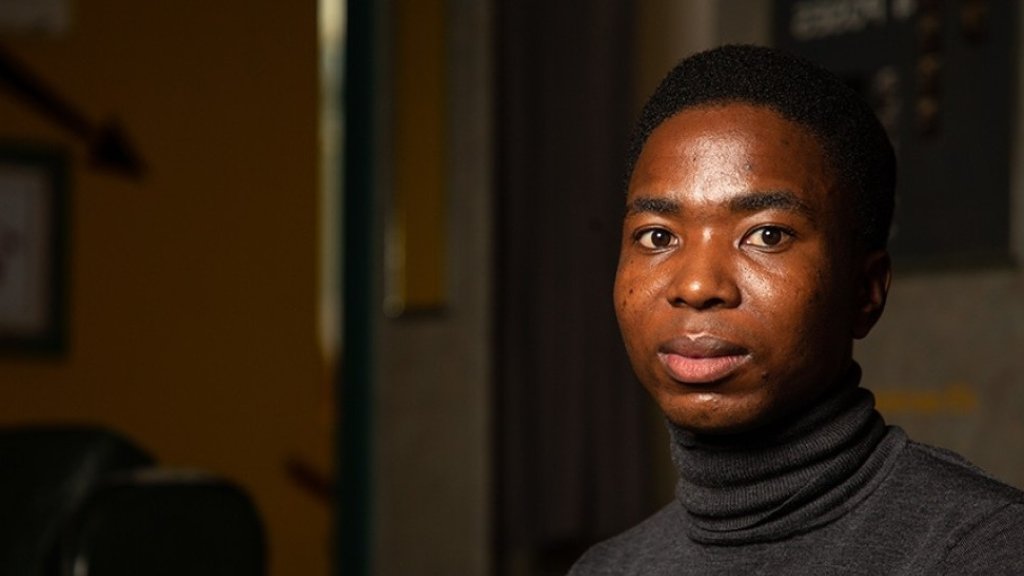
While the rights of LGBTQ+ people are increasingly being restricted in many African countries, Botswana is considered an exception. In recent years, the country has made several significant advances towards equality – including the decriminalisation of same-sex relationships. This was made possible by a legal challenge brought by Letsweletse Motshidiemang, a teacher who is now openly gay.
Key points at a glance
- Openly gay teacher Letsweletse Motshidiemang secured the decriminalisation of same-sex relationships in Botswana through a legal challenge.
- The country’s highest court declared the so-called sodomy laws unconstitutional in 2019, and the ruling was upheld in 2021.
- This year, the government finally removed the relevant criminal provisions from the law.
- UN High Commissioner for Human Rights Volker Türk praised Botswana’s progress.
- Despite the change in the law, Motshidiemang continues to report discrimination, violence and homophobia.
Taking on the state at 21
The Office of the UN High Commissioner for Human Rights (OHCHR) recently published a profile of the teacher who played a key role in initiating the legal fight against the criminalisation of same-sex relationships. Motshidiemang was just 21 when he went to court to challenge Botswana’s criminal laws at the time. The graduate in English and African Studies received support from the organisations Legabibo, Bonela and the Southern Africa Litigation Centre. They supported the case and, despite limited resources, continue to advocate for the rights of LGBTQ+ people in the country. “The reason I sued the government to decriminalise homosexual acts in our country lies primarily in my own sexuality. I am gay. That is why this law affected me directly,” said Motshidiemang. At the time, the penal code provided for prison sentences of up to seven years for consensual sexual relations between people of the same sex.
A milestone for equality
Botswana gained independence from the United Kingdom in 1966. More than five decades later, in 2019, the country’s High Court declared the criminalisation of same-sex relationships unconstitutional. The Court of Appeal upheld the ruling in 2021. This year, the government finally removed the relevant criminal provisions from the law entirely. Back in 2017, a court in Botswana had already granted trans people the right to change their legal gender marker.
For Motshidiemang, the ruling meant far more than a legal success: “My success gave people the freedom to love.” When the court ruled that criminalising same-sex relationships violated the rights to liberty, privacy, dignity and equal treatment, he described the ruling as a “legal victory”. The young teacher also stressed: “It has helped many people feel seen, safer and more confident, and live openly. Today, there is more discussion of the issue, and many people in Botswana are becoming more tolerant and understanding.”
Praise from the United Nations
UN High Commissioner for Human Rights Volker Türk highlighted developments in Botswana as an example of global progress on the rights of LGBTQ+ people: “Over the past year, there have been some important advances in their human rights. In response to court rulings, Botswana repealed the criminal provisions against same-sex relationships.” At the same time, he warned against normalising hatred towards sexual minorities in society. “History has shown that societies which normalise hatred and discrimination against LGBTQ+ people create conditions that lead to wider oppression.”
The fight is not over yet
Despite the historic court rulings, Motshidiemang believes the struggle for equality is far from over. The teacher, who teaches Setswana in north-western Botswana, stresses that everyday life for many LGBTQ+ people has so far improved only in part. “The fight is not over yet. We continue to experience discrimination, rejection, violence and homophobia. Changing the law alone is not enough – we must also change hearts, attitudes and systems.” He is therefore calling for more political and financial support for human rights organisations advocating for the rights of LGBTQ+ people. “What we want now is very simple: safety, equality, dignity and protection for everyone – regardless of who they are or whom they love.”








