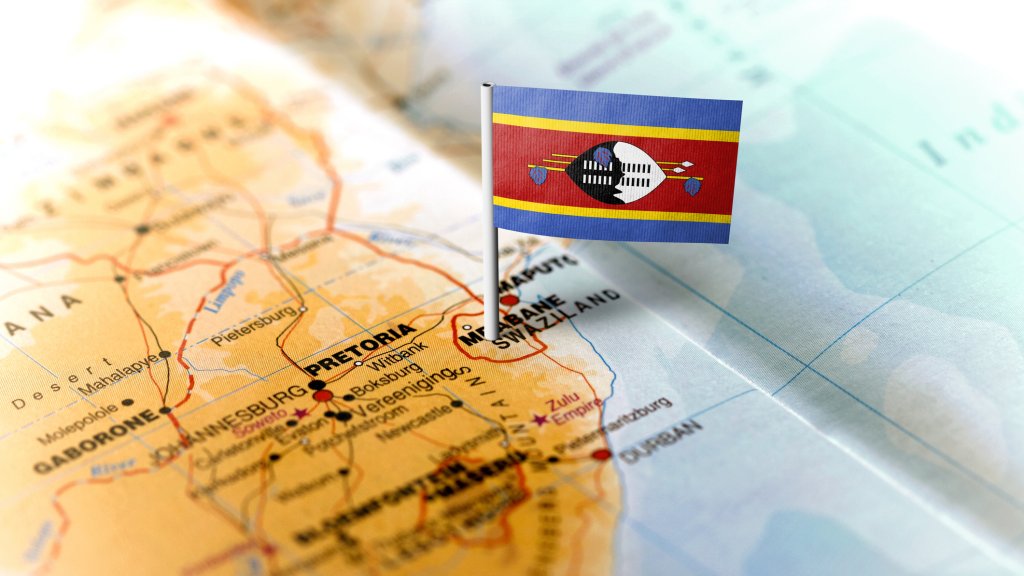
The Supreme Court of the southern African kingdom of Eswatini has ordered the government to officially recognise and register the LGBTQ+ advocacy group Eswatini Sexual and Gender Minorities (ESGM). Under the ruling, the authorities have 60 days to do so. This marks the first time an official organisation representing the community will be recognised. The judges’ decision also offers a glimmer of hope for gay and queer people in the country.
Key points at a glance
- Eswatini’s Supreme Court has ordered the official registration of the LGBTQ+ organisation ESGM.
- The government must comply with the decision within 60 days.
- The court had already declared the refusal to register the organisation unconstitutional in 2023 – to no avail.
- Amnesty International sees the case as a barometer of LGBTQ+ rights and freedom of expression and association in the country.
- Same-sex sexual activity remains punishable in Eswatini under colonial-era laws.
Supreme Court demands recognition
According to the Kenyan online news service Streamline, the ruling has far-reaching implications for the rights of sexual minorities in the country. “Why does this matter right now? The Kingdom of Eswatini, formerly known as Swaziland, continues to uphold strict colonial-era laws that criminalise same-sex relationships.” It continues: “The refusal to register the advocacy group effectively denied its members the fundamental right to freedom of association. This excluded them from access to healthcare funding, legal protection and formal participation in society. The five-member Supreme Court has now confirmed that constitutional rights apply equally to all citizens – regardless of their sexual orientation.”
Government ignored earlier ruling
The latest decision could bring a seven-year legal battle to an end. However, uncertainty remains over whether the government will actually implement the ruling. Eswatini is an absolute monarchy and has previously failed to comply with a similar court decision. Back in 2023, the Supreme Court unanimously ruled that the refusal to register ESGM was unconstitutional. Nevertheless, the government continued to deny the organisation recognition.
In September 2024, the Minister for Commerce, Industry and Trade again rejected the registration application. He justified this by saying that traditional Swazi law did not recognise same-sex relationships. ESGM then returned to court in August 2025 to appeal against that decision. With its latest ruling, the Supreme Court has once again found in the organisation’s favour.
Amnesty sees a struggle for civil rights
For Amnesty International, the case goes far beyond the recognition of a single organisation. Khanyo Farisè, Amnesty International’s regional researcher on civic space, said: “In Eswatini, the struggle for LGBTQ+ rights is also a struggle for the freedom of civil society. As the government intensifies its attacks on civic space, LGBTQ+ groups are once again being portrayed as a threat to culture and national identity. King Mswati III and other senior government officials have repeatedly condemned LGBTQ+ people in the name of protecting ‘Swazi culture’. In his speech at an Easter prayer service earlier this year, King Mswati made it clear that LGBTQ+ people had no place in Eswatini under his rule. In doing so, he echoed earlier remarks by the education minister, who had called for LGBTQ+ children to be excluded from schools.”
A turning point in southern Africa?
Streamline also believes the government must now act: “As the 60-day deadline approaches, the executive faces a defining test of its commitment to the rule of law. The world will be watching to see whether the kingdom respects the ruling of its highest court or once again seeks administrative loopholes to oppress its particularly vulnerable citizens.” Eswatini, officially known as Swaziland until 2018, is a landlocked country in southern Africa with around 1.2 million inhabitants. It borders South Africa and Mozambique. Male homosexuality has been illegal since 1907, while female homosexuality has never been criminalised. The British colonial-era law provides for prison sentences of several years, but has not been enforced recently. Same-sex relationships remain largely taboo in society and have been described by King Mswati as “satanic”. Nevertheless, the country’s first Pride took place in 2018.








