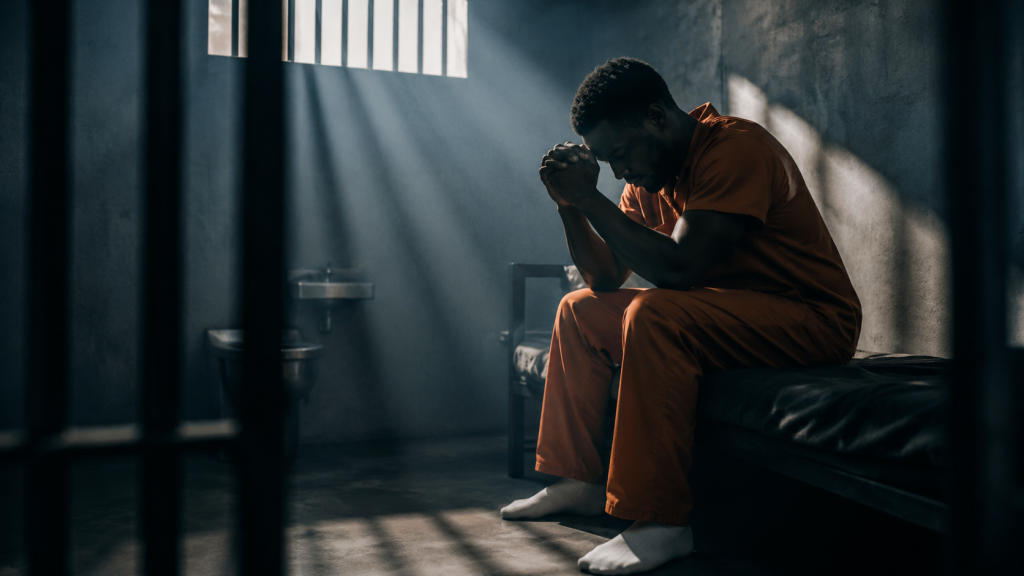
The gay and lesbian community in Senegal is living with uncertainty following a tightening of the law, even though the move to enshrine heterosexual marriage in the constitution was unexpectedly halted in July (German). Nevertheless, harsher penalties for same-sex relationships (German) remain in force. The law describes these as “unnatural acts” and now provides for prison sentences of up to ten years. Alongside this, there has been a wave of arrests and witch-hunts since this summer (German). Several people affected have now given first-hand accounts of the situation.
Key points at a glance
- Senegal has significantly increased the penalties for same-sex relationships.
- Several people affected describe a dire situation on the ground.
- Gay and lesbian people speak of growing fears of arrest and surveillance.
- Some people have been arrested; others have fled to neighbouring or third countries.
Fear of arrest
Many gay men and lesbians fear being targeted by the authorities. One of them is Latyr, a man in his thirties. For safety reasons, he wishes to remain anonymous. Shortly before a planned meeting with representatives of the French newspaper Le Monde in Dakar, he wrote: “I don’t know whether you will find me still at liberty. The gendarmes are closing in on me. You cannot escape your fate.” Latyr explained that he wanted to make his experiences public so that the world would “find out”. At the same time, speaking under an assumed name had also been a safeguard — “in case” he was deprived of his freedom.
After a friend’s arrest, Latyr said he had thought he might be next. He feared the authorities could track him down through sexually explicit messages from 2025. He could no longer say exactly how many friends he had lost since the new repression began. There had probably been “about ten” since February. Some were in Senegalese prisons; others had left the country and fled to Gambia or Morocco. In this instance, his fear of arrest did not initially materialise. Latyr was still free the following day, but remained extremely cautious.
Two lives in one
For years, Latyr has kept his public and private lives separate. “Since childhood, I have lived my homosexuality discreetly,” he said. “I am lucky: I am not feminine. Nobody could suspect that I am homosexual, because I have never allowed myself an unintentional gesture.” Yet the constant fear was taking its toll. “During the day, I constantly have headaches and a racing heart. At night, I barely sleep. I have lost five kilos.” His daily life had changed dramatically: “Outside work, my life now consists solely of reading messages in my bedroom. I only go out to eat or to go to the mosque.”
Latyr describes how homosexuality in Senegal is punished not only by the law, but already through social pressure. Since his youth, he had learnt to ignore homophobic comments and avoid giving himself away, and still did so today. “When conversations about the current wave of arrests become heated, I stay silent, just as I used to,” he said. Some colleagues, however, had now noticed his reticence. “When you are my age and have a stable life, people become suspicious. I know my colleagues have questions, but I remain in control.”
The dedicated and professionally successful man still lives with his parents, who know nothing of his sexual orientation. He said his life was divided into two spheres: the official world of family, work and the mosque, and his hidden private life in Dakar’s gay nightlife scene. “I have experienced great love affairs and great heartbreak,” Latyr said. “I always had good times with my friends. We danced in clubs that were actually open to everyone, but where most people were gay. We partied as though there were no tomorrow.” Today, he said, none of that remained. “You talk to a man in the morning, and in the evening you find out he has been arrested.”
Between faith and fear
Like many others affected, Latyr said he had long tried to reconcile his feelings with his faith. As a practising Muslim, he had felt guilty about his sexual orientation. At the same time, religion had been an important source of support. “Since I was a child, prayer has sustained me. Every day, I ask God to guide me along the right path. I beg him to forgive me, to accept my repentance and to protect me from this relentless hunt.” Yet the strain had sometimes been unbearable. “Sometimes I suffer so much that, when I go out to meet a man, I pray that a car will run me over so that it will all be over.”
Others interviewed by the newspaper also reported suicidal thoughts triggered by social rejection and feelings of guilt. Several also described physical or sexual violence within their families. Ibou Gaye, who now lives in France, chose to give his real name. He said he had been attacked as a teenager because of his manner. “When I was 13, my older brother took me fishing out at sea. After a while, he tied me up. He beat me and said it was meant to ‘correct’ me, otherwise I would become a bad person.” He has lived in the Paris region since July 2024 and speaks about the “hunt” for gay and lesbian people in his home country.
Trying to fit in
Gaye comes from a family of traditional fishers from Yoff, north-west of Dakar. He said his behaviour had made him stand out from an early age. He had never fully concealed his gestures or manner. “Unlike other gay men, I did not hide the way I moved.” A friend had warned him: “Look at how you walk and how you speak! How you move your hands! It looks far too gay; you are putting yourself in danger!”
Later, Gaye said, he had tried to conform to social expectations. He swapped his fisherman sandals for trainers because, according to a cousin, these were supposed to give him a “more masculine” walk. As the son of an imam, he regularly attended the mosque and prayed to become heterosexual. “I prayed constantly to change and to ask for forgiveness.” After six months, he had abandoned the attempt. The prospect of a traditional family life had put him off. “Where I come from, a man marries between the ages of 18 and 20. At around 25, he takes a second wife so he can have more children and retire at 35. I realised that I did not want that life.”
Sham marriages and fear
Ndongo, 38, also spent a long time under the pressure of social expectations. He had almost agreed to a so-called “lavender marriage” — a marriage between a man and a woman intended to conceal a homosexual or bisexual orientation and escape social persecution. The tradesman spoke of constant fear and surveillance. “The pressure is too great,” Ndongo said. “Recently, I had to see a doctor because of my anxiety.” His greatest concern was his family’s reaction. “If I am caught, it is over for me. My family would never accept it.”
He said he had experienced exclusion even as a child. “I preferred staying with the girls to playing football with the boys. They insulted me for it, but I did not understand why.” Later, he began a relationship with a woman. After six years together, he ended the relationship shortly before their wedding and left his home town. “I imagined the disastrous life I would lead, and the suffering I would inflict on this woman, who had never asked for any of it. I could not bear it, so I left everything behind.”
A community under threat
In Dakar, Ndongo discovered a hidden gay scene. Gatherings in private homes made friendships and relationships possible, but still carried risks; he also contracted HIV. “Many of us are now afraid to go to a clinic or hospital. We wonder whether we will be arrested because someone accuses us of having transmitted HIV.” For Ndongo, Senegal is now at a turning point. While he had never had the chance to live openly and peacefully as a gay man, he said social attitudes had recently become even harsher. “In Senegal, homosexuality has been made into the greatest sin. Yet there are other offences that are just as serious.”
He also criticised claims by some politicians and activists that homosexuality was a Western influence. “I grew up far from the capital and far from white people until I was 30. How could they have influenced me?” Instead, he points to the traditional figure of the “goor-jigéen”. The term comes from the Wolof words “goor” (man) and “jigéen” (woman). It referred to men who wore clothes or adopted behaviours associated with women. Some of them were homosexual and had long held an accepted role in certain areas of society. “They were celebrated at our ceremonies. They entertained us with their gestures and shocked nobody.”
Change driven by conservative movements
While LGBTQ+ people in Europe and North America fought for greater rights from the 1990s onwards, more homophobic rhetoric gained influence in several African countries. Religious conservative voices also came to play a greater role in Senegal. In the 2000s, the opening up of the media landscape increased the presence of conservative preachers who promoted traditional ideas about society and morality.
In her 2013 study of same-sex relationships between men in Senegal, researcher Ndèye Gning wrote that this development had increased the visibility of such voices. A central role was played by the organisation Jamra, founded in 1983, which originally campaigned against drugs, prostitution and HIV. Later, it increasingly directed its attention against a supposed “LGBTQ+ lobby”. Among other statements, co-founder Mame Makhtar Guèye declared: “These blasphemers threaten public order!” The extremist is now also targeting lesbians, after the focus had long been solely on gay men. Some of those interviewed want to stay and fight; others, such as Latyr, want to leave Senegal despite his good professional circumstances. The situation of his imprisoned friends weighs particularly heavily on him. “What will become of them when they are released? They will not get their lives back and will not be able to reintegrate into society. Only a few will have the opportunity to leave.”








