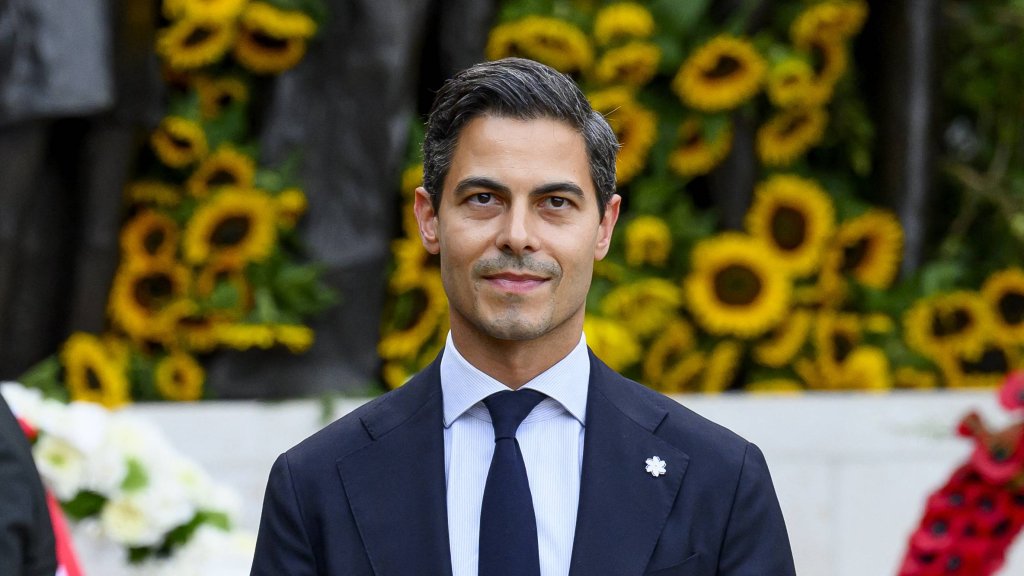
The Netherlands’ gay prime minister Rob Jetten has warned of a further decline in acceptance of LGBTQ+ people among younger generations. His own country in particular must not rely on its reputation as a pioneer of queer rights, the 39-year-old said. “There is still a lot to do here in the Netherlands,” said Jetten. “We see that acceptance of queer rights among the younger generation is under enormous pressure.” Two years ago, an initial study from Amsterdam showed that acceptance of gay people among young people in the city had fallen from 69 to 43 per cent (German). Jetten himself has also faced homophobic hostility for years (German).
Key points at a glance
- The Netherlands’ openly gay prime minister Rob Jetten warns of growing pressure on acceptance of LGBTQ+ people among young people.
- He sees a need for action in the Netherlands too – despite its long tradition as a pioneer of LGBTQ+ rights.
- Queer rights are “under enormous pressure” worldwide, says Jetten.
- He calls for greater international cooperation between LGBTQ+ communities, activists, politicians and allies.
- His government’s plans include stronger protection for trans people, better access to surrogacy for same-sex couples and greater police protection.
- Reflecting on his own youth, Jetten says he would have advised his 15-year-old self “not to be afraid to be yourself and live your life”.
No complacency on LGBTQ+ rights
In 2001, the Netherlands became the first country in the world to open marriage to same-sex couples (German). Yet Jetten is now warning against resting on the laurels of that historic achievement. “There is a lot to do,” he said. The Netherlands might be “a little too proud” of its progress so far. “We have also been complacent in recent years,” the prime minister said. He also points to political forces in the Netherlands that, in his view, openly oppose gay and lesbian rights, as well as debates about possible restrictions on medical care for trans people. At the same time, he says, the pressure on LGBTQ+ people has long since ceased to be a problem confined to the Netherlands.
“We see it online, on social media,” said Jetten. “We see it on the streets, in bars and taxis. We see it in countries where new laws have been introduced to actually further criminalise gay rights rather than improve them.” Queer communities should therefore now work more closely together, support activists in countries where pressure is particularly intense and share successful strategies, the prime minister continued. “We can win this fight,” Jetten affirmed.
From teenager to prime minister
Jetten also spoke about his own story. At around 15, he knew he was attracted to boys. At the time, however, he had been “so afraid to open up about it”. Today, Jetten is the youngest prime minister in the history of the Netherlands and the country’s first openly gay head of government. If he could send a message to his younger self, it would be the advice “not to be afraid to be yourself and live your life”. He added: “That is something we should say to every single person in the world who is struggling with their identity right now!” Since taking office in February, the prime minister has made LGBTQ+ equality an important part of his public work. At the Pride canal parade in Amsterdam, he became the first serving Dutch prime minister to take part. During World Pride, there was also increased discussion of safety and discrimination against LGBTQ+ people
Plans for greater protection and rights
Jetten also points to his government’s plans. These include stronger protections for trans people, improved access to surrogacy for gay and lesbian couples, greater police protection for LGBTQ+ people and investment in education. “I am very confident that in the coming years we can show the world that gay rights are human rights, that love is love and that we can win the fight against the conservative forces trying to hold us back,” said Jetten. Recently, the 39-year-old, who may be hoping to marry his partner Nicolás Keenan later this year, also received the international Pride Award. “I am very grateful to receive this award, but it is not just an award for me. It is an award for every single politician, human rights activist, every NGO or simply every spectator who decides to stop being a spectator.”








