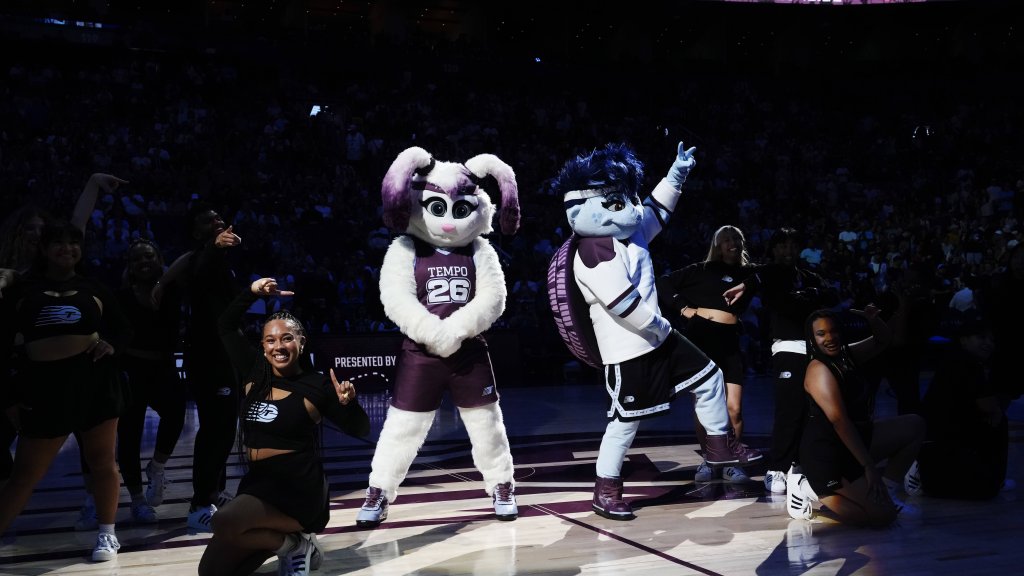
Former ESPN sports presenter Sage Steele has condemned the unveiling of the Toronto Tempo women’s basketball team’s new non-binary mascot as "ridiculous". The mascot, named Dez, was introduced on the evening of 18 August 2026 at a home game against the Indiana Fever, reigniting debate about inclusion, marketing strategy and political statements in sport. Steele saw the mascot as a symbol of a self-righteous display of diversity and described the presentation as a "desperate attempt" to demonstrate inclusive values.
The key points at a glance
- Former ESPN presenter Sage Steele publicly criticised Toronto Tempo’s mascot Dez on the platform X as “ridiculous” and a “desperate attempt to appear inclusive”.
- Toronto Tempo unveiled two mascots at Scotiabank Arena on 18 August 2026 during a game against the Indiana Fever: Dez, a non-binary turtle with she/they pronouns, and Dot, a rabbit with she/her pronouns.
- The unveiling coincided with an appearance by Indiana player Sophie Cunningham, who had previously taken a controversial stance in the debate about trans women athletes.
- Toronto Tempo defends the concept as an expression of Canadian identity and a deliberate balance between calm (Dez) and energy (Dot).
A rocky reception online
Steele posted on X on 22 August 2026: “If your mascot is a ‘masculine, non-binary Borealis blue turtle who uses she/they pronouns and has a fondness for soft-shell tacos’ … then you deserve to be laughed at … simply for your desperate attempt to prove your inclusivity. Ridiculous @TempoBasketball @WNBA.” She was responding directly to the official descriptions of the mascot. Her choice of words draws immediate attention to the question of whether the marketing presentation represents inclusivity or provocation.
The context of the unveiling
Dez and Dot were introduced on the same evening that Sophie Cunningham visited Toronto with the Indiana Fever. Cunningham had previously attracted attention with statements advocating the exclusion of trans women from women’s leagues, sparking widespread controversy within the WNBA. Many observers saw the simultaneous introduction of the mascot as a deliberate statement of the Tempo team’s position in the current dispute over trans women athletes.
A statement from Tempo’s marketing chief
Whitney Bell, the Tempo team’s head of marketing, meanwhile explained that the characters were intended to be “unmistakably Tempo” and that their messages — calm and energy in balance — were deeply rooted in their identity as a Canadian team. Dez and Dot thus embodied different approaches: Dez as a calm and thoughtful athlete, Dot as an energetic one. This contrast was deliberately chosen to reflect the team’s name. Toronto Tempo thereby emphasises that this is a culturally conscious presentation — not a targeted attack.
Wider reactions
Alongside Steele, other influential voices in the media also expressed criticism. Some saw the unveiling as a political provocation that went beyond a mascot’s actual function. Toronto Tempo, meanwhile, stands by the intended symbolism and continues to present the duo at games and on social media.
The longer-term impact of this branding will become clear through the response from fans, sponsors and other observers.








