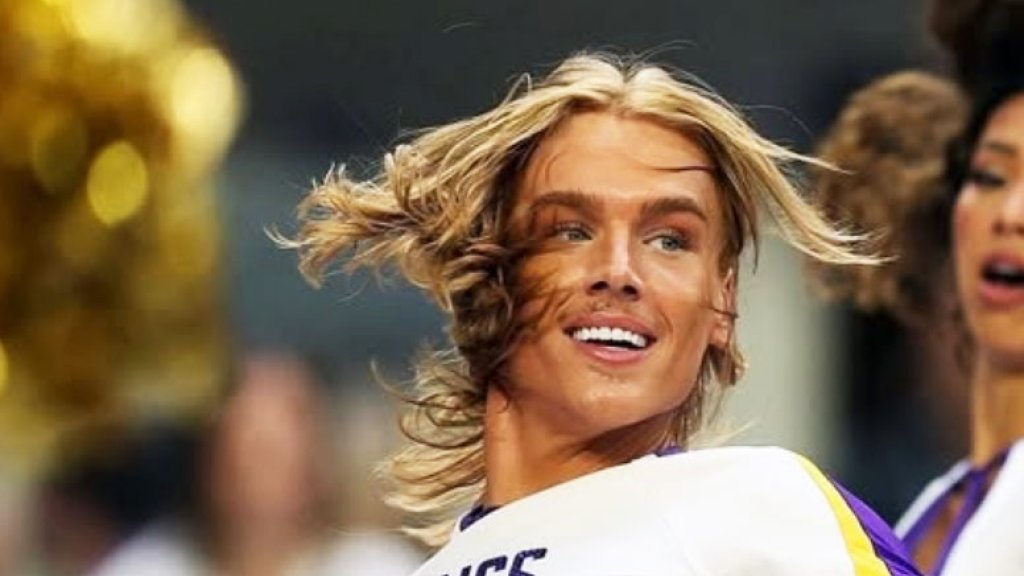
In the coming National Football League season, 68 men will perform as cheerleaders for teams in the largest US American football league for the first time – including several openly gay men. According to the NFL, male cheerleaders will thus have a secure and permanent role in 11 of its 32 teams from the 2026/2027 season onwards. Observers regard this development as a milestone for inclusion in US professional sport and a sign of long-term change in sporting culture and team recruitment.
Key points at a glance
- In the 2026/2027 NFL season, 68 men are officially registered as cheerleaders.
- Eleven teams in the league now have male cheerleaders, some as dancers and others as stunt performers.
- In 2018, the Los Angeles Rams signed two men to a professional cheerleading team for the first time.
- Historically, cheerleading roles in the NFL were considered exclusively female.
- The participation of male cheerleaders continues to draw mixed reactions from fans and the media.
- Male and queer cheerleaders are becoming increasingly visible and standing their ground against prejudice and exclusion.
Clear figures and a structured distribution across teams
The latest statistics, published by the NFL on 3 September 2026, show the steady integration of male cheerleaders. The 68 active male cheerleaders are spread across 11 clubs, including the New England Patriots, Baltimore Ravens, Philadelphia Eagles, Los Angeles Rams and Minnesota Vikings. Compared with the previous season, there are just three fewer male cheerleaders. Thirteen teams continue to use women exclusively. Eight franchises have no cheerleading squads at all. According to league information, the Baltimore Ravens' stunt team is by far the largest group, with 25 male members.
From isolated examples to normality
The path to the current situation began in 2018 with the groundbreaking recruitment of Napoleon Jinnies and Quinton Peron by the Los Angeles Rams. Their appearance at the 2019 Super Bowl was considered historic: for the first time, male cheerleaders performed alongside women in front of an audience of millions at the world's most prestigious American football event. Figures such as Napoleon Jinnies and Louie Conn are now among the best-known male faces on the scene. According to NFL officials, their presence now has little promotional value as a “curiosity”; instead, teams and a large proportion of fans accept them as a natural part of the choreography.
Particular attention has focused on Blaize Shiek and Louie Conn of the Minnesota Vikings, who experienced fierce anti-LGBTQ+ reactions online after joining the team. Napoleon Jinnies and Quinton Peron made history in 2019: they were the first male cheerleaders to perform at the Super Bowl – both are gay. José Capetillo and Brendan Ryan also made a statement: in 2023, they became the first openly gay men to captain an NFL cheerleading team.
Significance for diversity and future developments
Specialists and associations emphasise the social significance of this development. Experts in American sports journalism see the NFL's decision as recognition of ongoing processes of social change. They argue that integrating male dancers and acrobats broadens sporting diversity in American football and sends a message against gender-based role expectations. Critical voices remain, however, particularly on social media, where individual performers continue to face hostility.
The NFL confirms that no restrictions on male applicants are planned for the coming season. For the first time, this guarantees across the board that talented applicants will have equal opportunities in the selection process, regardless of gender.








