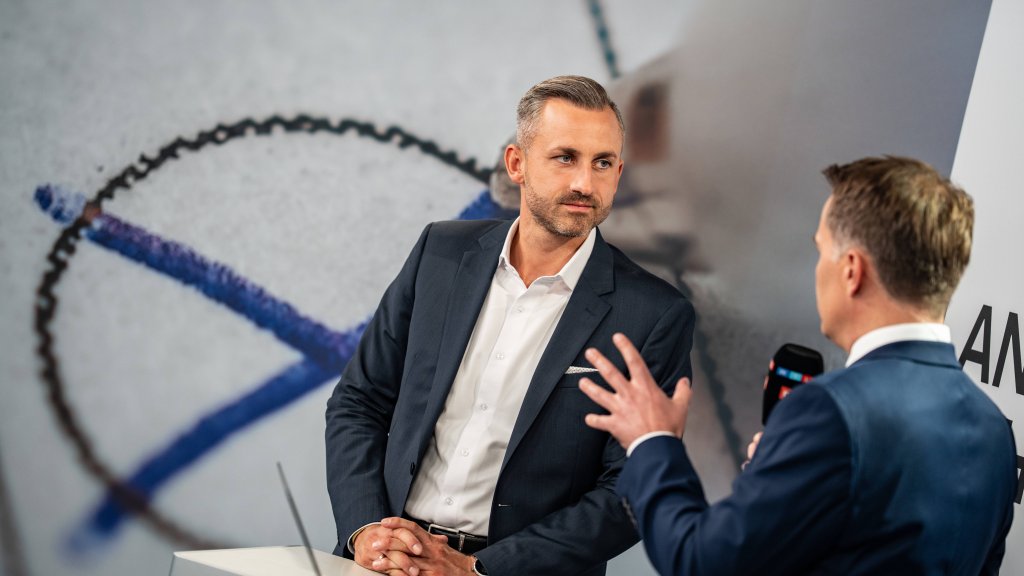
The AfD has won a decisive victory in the Saxony-Anhalt state election, according to the provisional result. The state electoral authority said 43.8 per cent of voters backed the party. However, the result does not give it an absolute majority of seats.
The key points at a glance
- The AfD has emerged as the largest party in the Saxony-Anhalt state election with 43.8 per cent of the vote.
- The party wins 39 of the 83 seats, falling short of an absolute majority.
- The CDU takes 17.2 per cent, its worst-ever state election result in Saxony-Anhalt.
- The SPD, Greens and Left Party return to the state parliament, while the BSW enters for the first time with 5.3 per cent.
- The FDP falls short of the five per cent threshold with 2.6 per cent.
- There is initially no obvious majority for forming a government: all other parties had ruled out a coalition with the AfD.
- The BSW signals a willingness to talk but wants a non-partisan state premier.
- Turnout was 77.8 per cent, significantly higher than the roughly 60 per cent recorded at the previous state election.
- Protests against the AfD took place in several German states after the election.
Historic defeat
The CDU, by contrast, suffered a severe setback. It took 17.2 per cent, its worst-ever result in a Saxony-Anhalt state election. The Left Party lost a little ground, securing 8.6 per cent. The SPD took 9.3 per cent and the Greens 8.9 per cent. Bündnis Sahra Wagenknecht (BSW) cleared the five per cent threshold with 5.3 per cent and will therefore enter the state parliament. The FDP failed to secure re-election with 2.6 per cent.
According to the provisional result, the AfD wins 39 of the 83 seats. The party therefore needs at least one other partner if it wants to form a government. So far, however, the other parties have ruled out such cooperation. At the same time, the BSW, which wins five seats, indicated it was open to talks with the AfD. To prevent an AfD-led state government, all five other parties in the new state parliament would have to agree to work together. Both possible paths were most recently considered politically unlikely, which is why a fresh election is already being discussed.
High voter turnout
Around 1.7 million people in Saxony-Anhalt were eligible to vote. Of these, 77.8 per cent exercised their right to do so. Turnout at the previous state election had been around 60 per cent. After the election, AfD lead candidate Ulrich Siegmund made clear that his party did not intend to abandon its political positions in exchange for a place in government. Speaking on ZDF, he said the AfD would not make compromises to secure a coalition. The party did not intend to sacrifice its values and goals for power games. In his words, cooperation would only be possible with political forces that supported the change in policy demanded by the AfD. Siegmund told ARD: “We have made history in this state.”
At federal level, too, the AfD's result was viewed as a major success. Party co-leader Tino Chrupalla referred to an earlier statement by CDU leader Friedrich Merz suggesting that support for the AfD could be halved. “Friedrich Merz wanted to halve our support; now we have halved the CDU's,” Chrupalla said. He described the election result as a clear mandate from voters. “Ulrich Siegmund will be the next premier of Saxony-Anhalt,” Chrupalla said. AfD co-leader Alice Weidel also spoke of a “historic result”, telling ZDF: “This is a very clear mandate to govern.” At the same time, Weidel signalled a willingness to talk in the search for potential partners. “Our hand is always extended.” In the long term, she also sees a place for Siegmund in federal politics. “It is perfectly clear that, in the long term and once his work on the ground in Saxony-Anhalt is done, I can also envisage a leadership role for Ulrich Siegmund at federal level,” Weidel told Funke Mediengruppe.
CDU concedes defeat
CDU lead candidate and state premier Sven Schulze acknowledged his party's poor performance. “This is a defeat for us,” Schulze told ARD. He explicitly congratulated the election winner. “First of all, I would like to congratulate the winner of the election,” the state premier said, referring to the AfD, which projections showed had emerged as by far the largest party. At the same time, Schulze rejected the description of election day as a “dark day” for Saxony-Anhalt. “I say: this is democracy.” He said the unusually high turnout was a clear signal from the public that politicians had to respond to. “People have sent a message.”
Chancellery Minister Nina Warken (CDU) described the result as a “watershed” for her party. It was a “very, very difficult result”, she told ZDF. The situation was also difficult for the federal government. According to CDU general secretary Franziska Hoppermann, there would be no debate at federal level about CDU leader and Chancellor Friedrich Merz. That had not been up for discussion at all, Hoppermann told ARD. The new CDU parliamentary group in Magdeburg would not cooperate with the AfD either. Speaking on ZDF, Hoppermann also rejected “serious” talks with the Left Party. “How are we supposed to hold serious talks with a party that has a serious antisemitism problem, that wants a completely different model of society from ours and that accuses us of pursuing fascist policies?” Hoppermann told ZDF.
Meanwhile, according to Stern, the Junge Union Sachsen-Anhalt called for state premier Sven Schulze (CDU) and the party's entire leadership in the state to resign. Its initial statement reportedly said: “The CDU in Saxony-Anhalt needs a comprehensive fresh start. We therefore call for the resignation and prompt re-election of the entire state leadership – from the state chair to the entire executive board.” There could be no “business as usual” after a defeat on this scale. Both the Junge Union and CDU economic policy politician Sepp Müller declared: “We have no mandate to form a government; that now lies with the AfD.” Müller added that the result was devastating and a dark day for his party. “Platitudes will not help.” He spoke of a historic defeat. “There can be no business as usual.”
Reactions from the SPD, Greens and Left Party
SPD co-leader Lars Klingbeil sees the federal government's policies as one factor behind the election result. The figures were “also a signal to Berlin”, Klingbeil told ZDF. Many people were dissatisfied with the direction of reform. The result was a reason to review the federal government's policies. “And you can be sure that we will do just that.” SPD general secretary Tim Klüssendorf, by contrast, expressed satisfaction with the Social Democrats' performance. “Our result is solid; we are doing our part to make an alternative majority possible,” Klüssendorf told ZDF.
After the first projections, Left Party lead candidate Eva von Angern spoke of a “dark day for Saxony-Anhalt”. This was not primarily about her own party's result, but about “the consequences this result may have for Saxony-Anhalt and the people of Saxony-Anhalt”, she told ARD. Von Angern also made clear that, depending on the election result, her party was prepared to elect a CDU state premier in Magdeburg. The Left Party had always wanted to prevent an AfD politician from becoming state premier.
Greens lead candidate Susan Sziborra-Seidlitz initially expressed satisfaction with her party's performance. The result was “great, but also worrying” for the Greens. Speaking on ARD, Sziborra-Seidlitz also said that many people were afraid of a possible AfD government. These included people with a migrant background, women and members of the queer community. Heidi Reichinnek expressed similar views, highlighting the fears of young LGBTQ+ people. Yet ARD's voter survey last night showed that 41 per cent of first-time voters from Generation Z voted for the AfD. Around 22 per cent of Gen Z identify as LGBTQ+ (Ipsos study).
BSW favours shifting majorities
BSW lead candidate Thomas Schulze responded defiantly to the election result. “Now we can see that this party is not dead,” he told the dpa news agency. “This party is alive, and today's result shows that.” However, fellow BSW lead candidate Claudia Wittig ruled out voting for AfD lead candidate Siegmund as state premier. “I do not want to vote for Mr Siegmund,” she told ARD. She did not want to vote for CDU lead candidate Sven Schulze either. Society was currently deeply divided, Wittig said. The BSW saw its role as mediating between the political camps.
FDP announces consequences
After the party failed to return to the state parliament in Magdeburg, Saxony-Anhalt FDP state chair Lydia Hüskens announced her resignation. FDP leader Wolfgang Kubicki also viewed his party's departure from parliament as a personal defeat. “It is a bitter day for the whole party, and it is also a particularly bitter day for me,” Kubicki said. The Free Democrats had previously been part of a three-party coalition with the CDU and SPD in Saxony-Anhalt. Losing their seats in the state parliament means they also lose their role in government. Kubicki added that the FDP had now lost another election this year.
US President Donald Trump also took note of the election in Saxony-Anhalt. A projection as of 7.57pm German time was published on his Truth Social account. The graphic showed the AfD's victory. However, Trump made no further comment on it.
Protests against the AfD
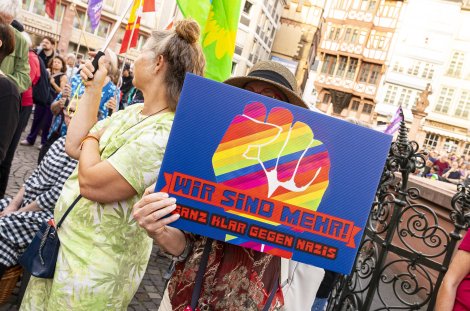
After the election in Saxony-Anhalt, people in several German states took to the streets against the AfD. In Frankfurt am Main, around 2,500 people joined a demonstration, according to police. Hundreds also gathered in Berlin and Mainz. The protests there were directed, among other things, against the AfD and supported proceedings to ban the party. Various rallies and protests had already taken place in Saxony-Anhalt during the election campaign and on election day itself. Police expect further demonstrations. A larger protest has been announced for today outside the Brandenburg Gate in Berlin. Police expect around 5,000 participants there.
Before the election, Andreas Bösener of LSVD+ Sachsen-Anhalt had stressed to SCHWULISSIMO: “In its manifestos and political statements, the AfD has repeatedly taken positions that oppose equality for queer people. Trans* people in particular experience the current political debates as an immense burden, because their existence and rights are repeatedly turned into matters of political dispute. Both we and LSQpRT (Lesben-, Schwulen- und Queerpolitischer Runder Tisch Sachsen-Anhalt) are increasingly hearing reports of trans* people considering leaving Saxony-Anhalt. People who grew up here, who live and work here and call it home, are asking themselves whether they will still be able to live safely and on their own terms in this state in future. This is a serious warning sign. When people consider leaving their home because of political developments and the social climate, it shows the impact political debates have on people's actual lives.”








