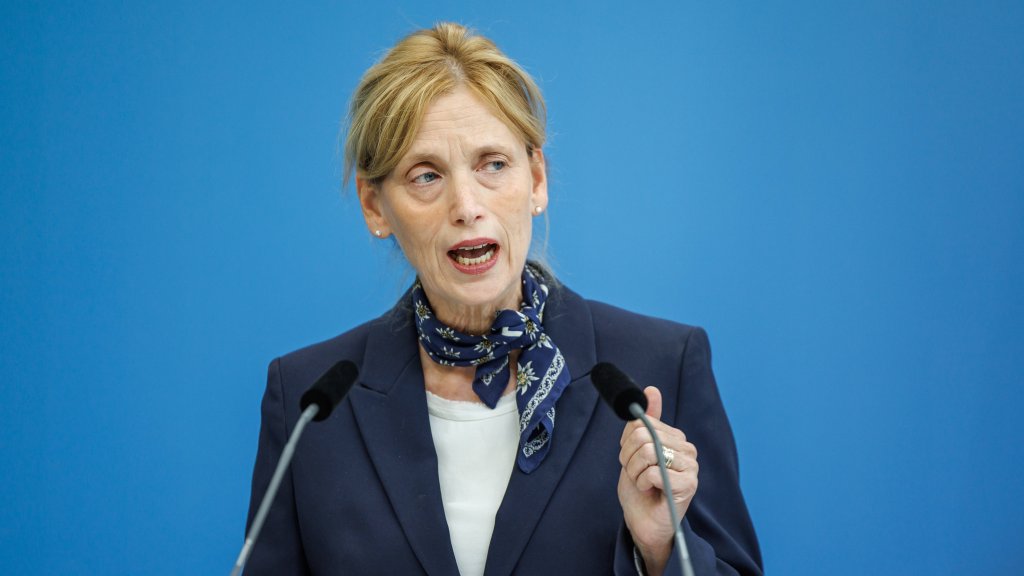
How can children and young people grow up safely, healthily and with self-determination in the digital world? This is an important issue, particularly for queer young people, who are especially exposed to online hate. The expert commission “Kinder- und Jugendschutz in der digitalen Welt” has been examining this question since it was established in September 2025. This morning, its two chairs handed the final report to Federal Family Minister Karin Prien.
The key points at a glance
- The expert commission “Kinder- und Jugendschutz in der digitalen Welt” has presented its final report.
- It contains 56 evidence-based recommendations for action to bring the protection of children and young people up to date.
- The focus is on protection, empowerment and participation for children and young people.
- More than 100 young people took part in seven workshops across Germany.
- The recommendations span early childhood through to the transition to adulthood.
- Demands include safe default settings, age-appropriate services and effective reporting systems.
- Protection standards should also be built into social media and artificial intelligence from the outset.
- Digital spaces are particularly important for queer young people: they offer opportunities to find information, develop their identities, build networks and connect with like-minded people.
- Federal Family Minister Karin Prien stressed: “Implementation begins now.”
Specific recommendations for action
The report brings together the results of an extensive interdisciplinary process of work and participation. It contains 56 evidence-based recommendations for action to bring the protection of children and young people in the digital world up to date. The guiding theme of the recommendations is “Supporting development, taking responsibility”. The starting point is the rights of children and young people. Protection, empowerment and participation are to be considered together. Media safeguards for children and young people should be more closely tailored to their different stages of life and development than before. At the same time, greater consideration should be given to the responsibilities of the relevant stakeholders.
“Implementation begins now”
Federal Family Minister Karin Prien said: “The commission’s work ends today, but implementation of its recommendations began long ago. We need to make adjustments on many fronts and get things moving: from local authorities to the EU, from nurseries to youth welfare services. I am very optimistic that we can quickly achieve tangible, practical improvements. One insight has already gained acceptance: we share responsibility for protecting children and young people in the digital world. The expert commission’s 56 recommendations give us an important basis for translating the three pillars of protection, empowerment and participation for young people into political action. Now everyone is called upon to work together on implementation and remain open to learning, given the many rapid changes in this field.”
No social media ban
Five guiding principles are at the heart of the recommendations. These call for building on established structures and practices. At the same time, there should be appropriate scope to shape provision locally. Responsibility should be organised collectively, with binding commitments. Friction at points of coordination should also be reduced, and technological developments should be taken into account on an ongoing basis. The expert commission itself does not recommend a blanket ban on social media for children and young people, as Federal Chancellor Friedrich Merz had meanwhile called for. The youth participation process supporting the commission explicitly concludes that young people do not want less digitalisation, but a safe, age-appropriate digital world. According to the published participation report, rather than blanket bans, they favour education, empowerment and the safe use of digital services.
Commission brings together perspectives
The expert commission’s co-chair, Prof. Dr. Olaf Köller, said: “With the expert commission’s final report presented today, the picture is now complete: it includes the full assessment of the current situation, the recommendations for action, and insights into the participation of children and young people, expert hearings and the strategic foresight process. Through a very comprehensive process, the expert commission has incorporated as many perspectives as possible. This provides a robust, evidence-based foundation that considers protection, empowerment and participation together. I am now very keen to see how implementation unfolds.”
Different perspectives were brought together to develop the recommendations. Alongside the interdisciplinary work, six expert hearings were held with specialists from various disciplines, representatives of organised civil society and young people. The participation of children and young people played a particular role. In seven workshops across Germany, more than 100 young people discussed their experiences, expectations and demands. The findings fed into the commission’s work and its recommendations.
Queer young people in digital spaces
Any consideration of growing up safely in the digital world must also take account of the particular circumstances of queer young people. For young people who are lesbian, gay, bisexual, trans, intersex, non-binary or queer, social media and other digital spaces can fulfil an important function. The German Youth Institute describes the internet as a key source of information and a place for queer young people to build networks. Particularly where there are few or no queer youth groups or meeting places, digital services can enable contact with like-minded people. They can also make information about sexual and gender diversity accessible and help young people develop their own identities.
The importance of these spaces is also evident in the prevalence of queer identities among younger generations. According to a 2025 Ipsos survey, 22 per cent of Generation Z in Germany identified as LGBTQ+. For many queer young people, social media can therefore be more than entertainment or communication. It can provide a protected first point of access to information that may be missing from their immediate surroundings. Young people can find others with similar experiences, learn about coming out, relationships or gender identity, and discover that they are not alone in their questions.
Digital contacts can be particularly important for young people in rural areas, where relevant advice services, youth groups or meeting places are sometimes lacking. At the same time, social media is not automatically a safe space: studies and research also point to cyberbullying, hate messages, and anti-queer and homophobic content. A contemporary approach to protecting children and young people therefore needs to consider both sides: queer young people need protection from hate, harassment and discrimination, while digital spaces must also enable their participation and self-determination. Protection must not result in young people losing access to important spaces for information and community.
Recommendations across life stages
The recommendations cover the entire course of growing up – from early childhood to adulthood. They state that families need early advice, schools need reliable approaches, and young people need safe services and accessible support. Platforms should be subject to clear obligations. Safe default settings, age-appropriate services and effective reporting systems should provide practical relief for children, parents and professionals. Protection standards should be built into social media and artificial intelligence from the outset. The breadth of the challenges involved in growing up in the digital world was also evident at the closing conference, attended by around 250 participants from politics, research, professional practice and civil society. It took place in Berlin alongside the handover of the final report to Prien.
From cyberbullying to AI
The discussion spanned early childhood through to adulthood. Topics included screen use and media literacy education in nurseries, children’s first digital devices and cyberbullying. Age limits, online grooming, recommendation algorithms and so-called dark patterns were also addressed. For young people, the issues included behavioural addictions, sexualised violence and blackmail, as well as easily accessible ways to report offences and seek help. A dedicated youth panel gave young people the opportunity to comment on the findings and set out their expectations of policymakers and society. The transition to adulthood was also considered. This covered training for parents and professionals, young adults helping to pass on knowledge, and strengthening adult education on dealing with disinformation.








