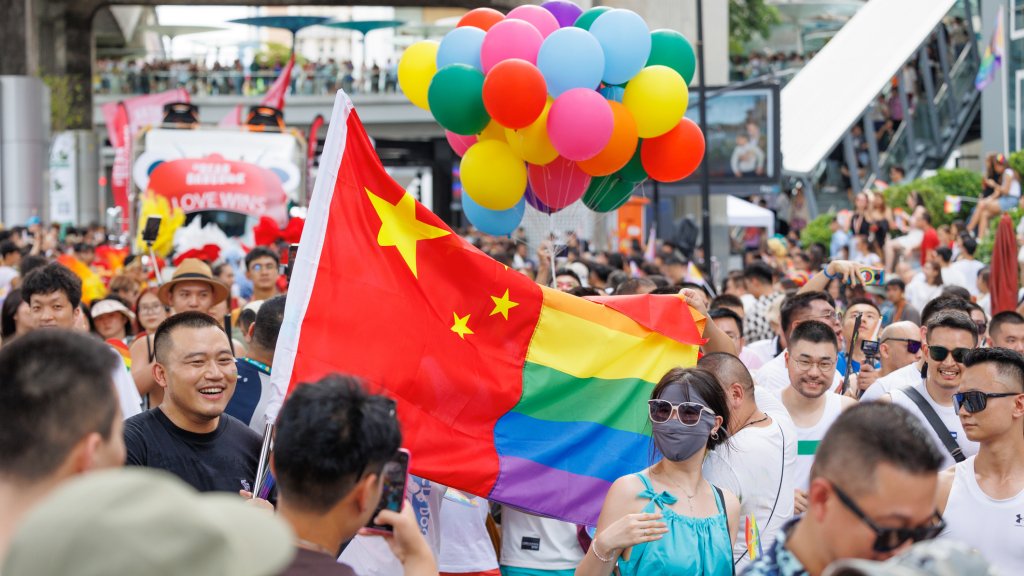
A museum unlike any other in the world has opened in the heart of San Francisco’s Chinatown. The OUT Museum describes itself as the world’s first Chinese LGBTQ+ museum. It aims to bring visibility to gay and queer Chinese art, stories and life experiences, while connecting people across generations and regions.
Key points at a glance
- San Francisco’s Chinatown is home to the world’s first Chinese LGBTQ+ museum.
- The museum is dedicated to the history, art and life experiences of Chinese LGBTQ+ people, immigrants and diaspora communities.
- Founder Xiangqi Chen left China after the government cracked down on LGBTQ+ activism.
- The museum is currently run entirely by volunteers.
- Its first exhibitions include an opera performance, a historical timeline, and interactive and multimedia artworks.
- Visitors have described very different personal connections to the museum.
- Activist Helen Zia sees the museum as an important visible space for Chinese queer people.
- The founder also wants the museum to encourage dialogue between different generations and regions.
A place for Chinese LGBTQ+ history
The museum, which is free to visit, still has a relatively small exhibition and is currently open only on Saturdays, with advance reservations required via its website. Those running it plan to expand the premises and opening hours in the coming years, the Associated Press (AP) reported. The first exhibitions already demonstrate the project’s breadth. Among the works visitors can see or experience are an opera performance featuring two artists, a colour-coded timeline tracing the development of the LGBTQ+ community in China, and an interactive yarn installation. Visitors can use the latter to map their own experiences of sexuality and gender. The exhibition also includes mixed-media works combining historical photographs, heirlooms, mementoes and other objects.
Founder came from China
The person behind the museum is Xiangqi Chen. Born in China, she left her home country after the government began cracking down on LGBTQ+ activism. In 2022, she came to San Francisco on a visiting scholar visa. There, her own advocacy for queer people developed further. During an exhibition at the Asian Art Museum and a residency at the Chinese Culture Center of San Francisco, she had “so many opportunities to connect with the local queer Asian American community and even the Chinatown community in general”, she told AP. Chen subsequently raised money to establish the museum. It is currently run entirely by volunteers.
A meeting place for the community
Speaking to KTVU, Chen explained that she wanted the museum to inspire people and share knowledge with them. She also hoped it could help bring the local Chinese queer community closer together. Visitors’ reactions had particularly moved her. Chen said she was “100% moved” by the straight, gay and queer Chinese immigrants who came to the museum to thank it for amplifying Chinese LGBTQ+ voices. Visitors reportedly included a 60-year-old trans man. He had immigrated to the United States in the 1970s to receive gender-affirming medical treatment there. A mother also visited the museum to build a connection with her gay adult son.
Connecting stories
The museum’s Chinese-language-only website describes its aim as “preserving queer creations, life journeys, social movements and cultural production from a Chinese-speaking perspective, and reconnecting the art, documents and stories of LGBTQ+ Chinese people, Chinese immigrants and diaspora communities”. The museum also seeks to build a bridge between queer experiences in different regions. It aims to connect the life stories of different generations. The goal is to “enable everyone in society to find understanding, dialogue and resonance”.
For Helen Zia, an author, activist and member of the museum’s advisory board, the museum has particular significance because hostility towards LGBTQ+ people exists within Chinese communities. This applies both to the United States and mainland China. In the United States, older and religious Chinese immigrants in particular may hold anti-LGBTQ+ views. In China, meanwhile, the government sees LGBTQ+ activists as a “subversive threat to state power”.
“It is a physical place”
Zia therefore sees the museum as far more than an exhibition space. “It is a physical place where we can say that we exist and that we have beauty in our lives, expressed in the artworks we create, the performances and the books we write,” she said. The museum helps other people to “see our humanity”, Zia added. “For example: here is the beautiful art that we create and imagine and contribute to the world.”
Hong Kong-born artist Dixon Ngai also sees the museum as an important step towards greater visibility. He told AP: “Although we are not represented by traditional or mainstream media, we exist, and I believe we will only keep moving forwards.” With its Chinatown location, the OUT Museum is thus intended to be more than a place for art and historical documents. It also aims to provide space for personal stories, encounters and dialogue within a Chinese queer community that extends beyond San Francisco.








