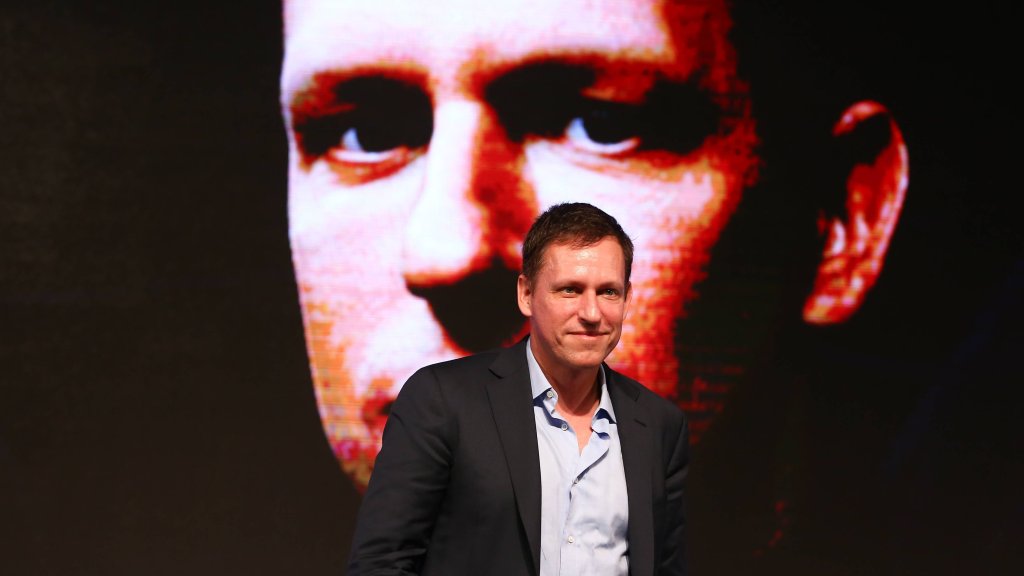
Gay tech billionaire Peter Thiel (58) has raised the prospect of a fundamental technological transformation of human beings. In his vision, this development should go far beyond what is currently possible. In this context, he referred, among other things, to physical changes undergone by trans people.
Key points at a glance
- Gay tech billionaire Peter Thiel has advocated a far-reaching technological transformation of human beings.
- The PayPal co-founder said physical changes brought about by transition treatments did not go far enough for him.
- In his own words, Thiel wants to enable changes affecting the heart, mind and entire body.
- At the same time, he said humanity should continue to exist despite technological changes.
- His remarks come from a 2025 interview with The New York Times.
- The statements are receiving renewed attention against the backdrop of current warnings about the potential dangers of artificial intelligence.
A new human being
The remarks come from a 2025 interview with The New York Times and are now being revisited amid the current debate about the risks of artificial intelligence. During the conversation, Thiel, who co-founded PayPal, initially did not make clear whether he supported humanity's continued existence at all. Interviewer Ross Douthat asked him whether he would “prefer humanity to continue to exist”. Thiel initially hesitated. Eventually, he answered yes. At the same time, he made clear that he could envisage a radical transformation of human beings through technological possibilities.
Thiel said: “There is a criticism of, say, trans* people in a sexual context. Or, I don't know, a transvestite is someone who changes their clothes and dresses in the clothes of the opposite sex, and a transsexual is someone where you, I don't know, turn the penis into a vagina, and then we can discuss how well these operations work. But we want more change than that.” In his view, such changes were not “strange and unnatural”. Rather, considering the scale of the transformation that might be possible, he described them as “so pathetically little”. Thiel then went further. “We want more than cross-dressing or changing your sexual organs,” he said. “We want you to be able to change your heart and change your mind and change your whole body.”
Technology and religion
In his reflections, Thiel also linked technological development with religious ideas. He considered science and religion together. “It's about transcending nature, it's about overcoming things, and the closest thing you can put to nature is that human beings are fallen. What is natural in the Christian sense is that there is something wrong with you. And that's true, but there are some ways in which, with God's help, you are meant to transcend and overcome that,” Thiel said.
Warnings about AI risks
Thiel's statements are receiving renewed attention at a time when scientists and AI industry employees are increasingly warning about the technology's potential dangers. Last week, Jacob Coxon announced his resignation from AI company Anthropic, which develops the AI system Claude, among other things. According to his account, insufficient attention is being paid to potential risks as the technology is developed. Coxon explicitly warned of a scenario in which artificial intelligence could wipe out humanity. “The people developing AI genuinely believe that it could kill us all by the end of the decade. This is not a marketing gimmick,” he said.
Evan Hubinger, who works as head of alignment research at Anthropic, also considers such a scenario possible. He said: “I personally think it's more than 10 per cent within the next decade.” This brings two debates together: while Thiel describes a far-reaching technological transformation of human beings as desirable, others warn of developments in artificial intelligence that could, in the worst case, threaten the continued existence of humanity itself.








