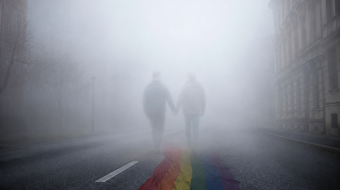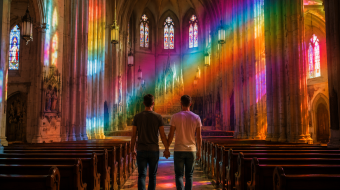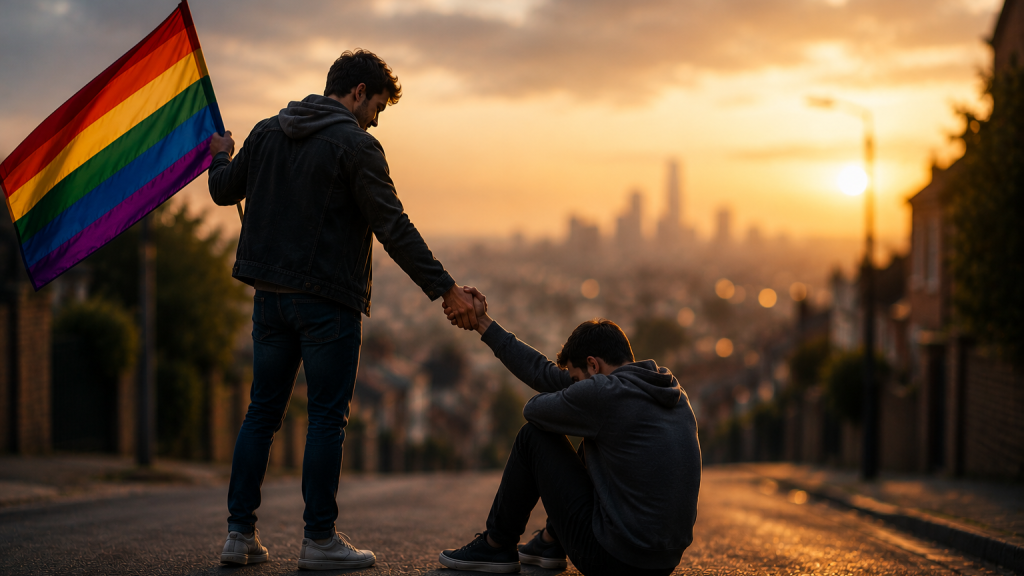
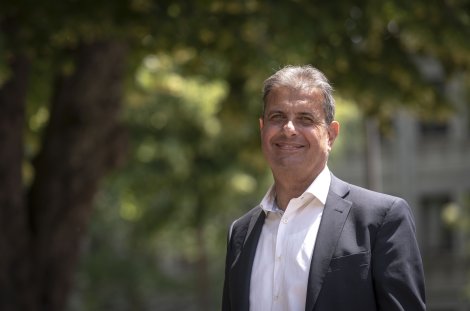
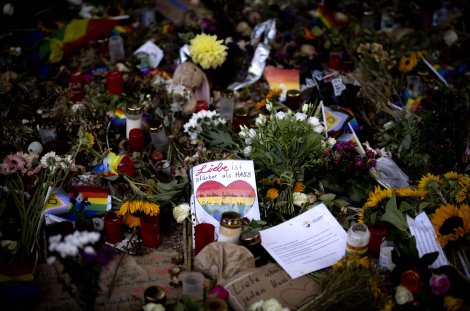
Acceptance of LGBTQ+ people has been declining again for several years, while September's state elections have further darkened the outlook for many queer people. And many are still deeply shaken by the Islamist attack at Berlin Pride. Time to give up? Not at all! Because now, more than ever, it is important to hold on to hope. SCHWULISSIMO spoke to Prof. Dr. Andreas M. Krafft, a university professor, lecturer and one of Europe's leading researchers into hope.
Dr Krafft, you have been studying hope for many years. What exactly is hope – and how does it differ from optimism or mere wishful thinking?
Hope always begins with a heartfelt wish, a dream or an ideal: something we wish for with all our heart – for ourselves, for other people or for society. For this wish to be more than wishful thinking, we have to believe that it is possible. Not easy, perhaps not even likely, but at least not impossible. Added to this is an acknowledgement of obstacles, difficulties and setbacks – combined with trust that they can be overcome. Optimism, by contrast, assumes that things will turn out well. In uncertain situations, we cannot say that so readily. Things may turn out well, but we do not know. Hope begins where optimism and confidence end. Especially in difficult times, during illness or in crises, hope sustains us because it keeps us from giving up amid uncertainty.
Where does the feeling of hope come from? Is it innate, or does it develop over the course of our lives?
Essentially, both: fear and hope are two sides of the same coin. Both phenomena are part of human nature. Since we are future-oriented beings, hope is part of being human. At the same time, the ability to hope develops in early childhood and continues to evolve throughout our lives. As young children, we unconsciously learn to trust our parents and caregivers and to believe that we will be cared for in life despite pain and hardship. This requires a loving, caring environment. Without it, our capacity for hope suffers. Over time, this trust develops into self-confidence and self-determination, making hope less dependent on others. Nevertheless, hope remains a fundamentally social phenomenon.
What does current research into hope tell us about its role in our mental health and resilience?
An important foundation of hope is trust – including self-confidence. This encompasses healthy self-esteem, a positive view of ourselves and the belief that we are loved and accepted by others too. It is about appreciation and respect, both for ourselves and from others. When these basic needs are called into question, our mental health suffers and our resilience diminishes.
Do we know what effects hope has on the brain or the body?
Neuroscientists have only recently been able to measure brainwaves. We know more about the release of hormones and neurotransmitters, and about the autonomic nervous system as a whole. With hope, as with fear, there is a close interplay between our bodies, our minds and our social relationships. While negative emotions put our biopsychosocial system on alert and weaken it over time, hope strengthens both our immune system and our psychological resources. We need these to stand firm in times of crisis.
Why does hope often seem to become more important in times of crisis than when everything is going well?
Yes, it is paradoxical. In fact, we do not need hope when everything is going well. Hope is not a fair-weather phenomenon. In those circumstances, we are confident and optimistic. Hope only becomes relevant when we are not doing well, when we face challenges, difficulties and crises. The vast majority of people – I would even say everyone – experience such situations several times in their lives. Hope is innate precisely to help us cope with situations like these. These experiences are unpleasant and can push us to the limits of what we can bear. Yet they are also a source of development and growth. We lose hope above all when we feel abandoned, helpless and powerless, and crises threaten to overwhelm us.
Many people are currently experiencing uncertainty – wars, social polarisation, economic worries. In your view, are we living in a time when hope is being particularly challenged?
Yes, we are. In Europe especially, we have not experienced threats like these for a long time. It is different in other countries. I grew up in Argentina and spent the first 25 years of my life there. I notice that people there deal with uncertainty very differently. In Europe, we have forgotten how to hope because we have had so few crises to overcome. When do you think people hope the most? Where there is war, people hope for peace. Where they are oppressed, they hope for freedom and equal rights.
For many queer people, exclusion, discrimination or even violence are sadly still part of everyday life. What significance does hope take on under such conditions?
It is precisely in such critical situations that hope gives people the energy to carry on living according to their personal wishes and values. It is therefore a prerequisite for meaningful action and perseverance. With the courage that hope gives us, we stand up for our rights and keep fighting for them even under difficult conditions. Once you give up hope, you give up on yourself as a person – and in the long term, that makes you ill.
After acts of violence or attacks around Pride events, such as the recent one in Berlin, the question often arises: how can hope survive at all when fear and grief are so present?
Optimism and purely positive thinking would be out of place here. Hope does not say: ‘Don't worry, everything will be fine’, but rather: ‘We know how hard it is, but we will keep going and will not let it defeat us.’ Fear will not have the last word as long as there is hope for a better society. We know how long that can take. Sometimes it takes decades or even entire generations. But it is worth persevering and not giving up.
What helps people avoid falling into resignation or powerlessness after such events?
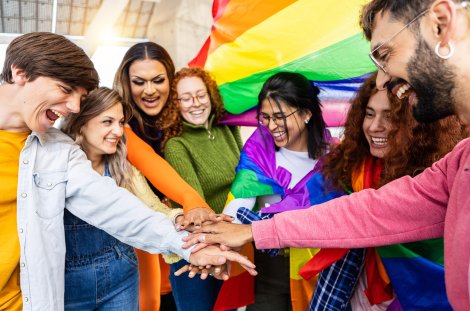
Above all, they need encouragement, solidarity and support from other people. On our own, we are generally too weak to resist overwhelming attacks. Within a community, hope can flourish again. Together, we can muster strength that individuals rarely possess. Loneliness is the greatest killer of hope. That is why hope is primarily a social and collective phenomenon. We are social beings who depend on one another.
Hope does not mean ignoring problems. How can we strike a balance between a realistic perception of danger and the belief that change remains possible?
Unlike wishful thinking and naive optimism, hope is grounded in reality. The balancing act lies between acknowledging present realities and believing in future change. That is where hope's extraordinary power lies: the present is as it is, but the future can be different. Having overcome adversity and experienced positive change strengthens our belief in the future. One thing must be clear: the future is inherently uncertain and thus always a realm of belief in new, sometimes unimagined possibilities.
Many queer people say they feel unsettled by the growing social backlash. What effect can a lasting sense of threat have on hope and confidence?
Hope is always associated with obstacles and difficulties. Yet it particularly needs positive experiences. Our minds do not make life easy for us in this respect. In psychology, we talk about ‘negativity bias’. We tend to pay more attention to negative experiences and give them greater emotional significance than positive ones. Over time, that can be exhausting. Negativity bias can be partly overcome – not by downplaying negative experiences, but by noticing positive experiences more consciously, bringing them more firmly into our awareness and allowing them to strengthen us.
Can hope also be a form of resistance? Or is that ‘not enough’, in your view?
As I understand it, hope is a prerequisite for resistance. But you are right: while resistance is justified and good, it suggests a somewhat defensive stance. Constantly fighting against the wind is exhausting. In the long run, that is not enough, because a defensive outlook is not necessarily conducive to greater self-worth, self-respect and self-confidence – and therefore to hope. What is needed instead is the ability to imagine and shape a new normal.
Particularly after attacks, the question arises: should you withdraw or remain visible? What role does hope play in such decisions?
Sometimes it is good to be cautious and withdraw for a while. Hope also encompasses the strengths of patience and humility. In the long term, however, withdrawing can be neither good nor healthy. Patience and humility must not be stretched too far and turn into resignation or despondency. At that point, hope must become more courageous again and dare to do something – which brings us back to trust.
How do people manage to keep standing up for equal rights and social acceptance despite setbacks?
A look at history may help. Around the world, minorities have repeatedly been excluded and oppressed – whether because of their skin colour, religion, gender, origins or sexual orientation. This seems to be a constant in human history. At the same time, we can discern a certain, albeit slow, development. I would venture to say that, compared with past centuries, we live in a freer, fairer and more egalitarian world. The upheavals of the 21st century can be interpreted as a step backwards or as signs of imminent change. Experiences such as overcoming slavery in America, the apartheid regime in South Africa or communism in the Soviet Union give us reason to hope that humanity can evolve – even if this initially involves much suffering and pain, as well as some setbacks.
Is hope something we can train – like resilience or self-confidence?
I doubt whether resilience and self-confidence can simply be trained. At least not in the way you practise a language, an instrument or a sport. The fact is that everyone naturally carries within them a capacity for resilience, self-confidence and hope. Of course, these abilities can be strengthened and developed, but in most cases they are already there. When people temporarily lose hope, telling them to find hope again does little good. In my courses, I take an experience-based approach. People experience their lives over time, between past, present and future. To strengthen hope, we must first engage with positive experiences from the past, then with our strengths in the present, and only then with our wishes and expectations for the future. If we can build trust and regain our belief in ourselves, we will also be able to look to the future with greater hope.
What role do personal relationships play in this? Can hope be "contagious"?
Loving, caring and respectful relationships strengthen trust and belief in ourselves and in the future. The greatest gift my wife and I could give our children was to let them know that we continued to believe in them – especially in those moments when they no longer believed in themselves. What happens when someone tells you that, despite all the difficulties and disappointments, they believe in you and trust you? It strengthens your self-esteem, encourages you and gives you a sense of responsibility. In that sense, hope is contagious.
Are there habits or ways of thinking that particularly foster hope – or unconsciously destroy it?
Thoughts such as ‘I am worthless’ or ‘I won't manage it anyway’ are certainly counterproductive. In psychology, we distinguish between a ‘fixed’ and a ‘growth’ mindset. Essentially, a fixed mindset rests on the conviction that nothing will change and everything will stay as it is. A growth mindset, by contrast, is based on belief in people's and society's capacity to develop and change. This fundamental attitude makes an enormous difference – both to how we see ourselves and to how we view the world.
Many people consume distressing news every day. How can we stay informed without losing hope?
My strategy is to consume as much news as necessary and as little as possible. The question is what still counts as information and what is already developing into voyeurism or compulsion. The pull of social media means we are increasingly confronted with negative events. Information should help us make wise decisions and remain able to act. Sensory overload from uncontrolled consumption of video clips often leads to precisely the opposite. Our judgement becomes clouded, which can lead to poorer decisions and hasty actions. Here too, we need to stay grounded in reality so that we can continue to hope.
What responsibility does society have for ensuring that minorities can retain hope for a safe and fair future?
The task of a democratic society built on solidarity is indeed to ensure a good life for all its residents. Yet we also know that societies consist of individuals and groups with different worldviews, beliefs and moral values. It would be important to reflect critically on these attitudes regularly, so that we can learn from one another and develop together.
What practical steps can politicians, the media and educational institutions take not merely to invoke hope, but to make it possible?
We should certainly work to reduce prejudice and apprehension about engaging with alternative ways of life. As a heterosexual man, gay people are initially unfamiliar to me. But because I know and greatly value several gay people in my personal circle, this unfamiliarity is not something bad or threatening to me – quite the opposite. Thanks to my personal experiences with gay people, I find it incomprehensible that anyone could condemn and discriminate against them. Indeed, who would give me the right to do so? At the same time, some things remain unfamiliar to me, such as two men or women kissing in public. Social institutions such as schools, businesses and the media should therefore encourage a natural and relaxed approach to homosexuality and the acceptance that goes with it.
Is there a thought or insight from your research that you would particularly like to share with young LGBTQ+ people?
First, I can say this: you are not the only ones currently worrying about your future. Apart from that, I know many queer people in businesses and at universities who have found and followed their professional and personal paths just as successfully as anyone else. In my view, what matters is how supported people feel within their families and circles of friends. That is where self-acceptance, self-worth and self-assurance take root. Above all, I appeal to parents, grandparents, relatives and friends to accept their children, siblings and cousins as they are, and to love them unconditionally.
Has anything surprised you personally in your research into hope?
Over the years, I have realised how diverse, multifaceted and ever-present hope is in life. It gives our lives wings and drives them forward. The more broadly and expansively we can hope, not just for ourselves but above all for others and for something greater, such as our society or nature, the more firmly hope is anchored in our own lives. Hope is thus both an anchor and a sail for the soul.
What gives you hope personally?
First, I am grateful for everything life has given me: caring parents, a loving family, a good education, exciting and fulfilling work and, above all, good health. Nevertheless, we have not been spared crises in our lives. Through them, we have learnt that crises can usually be overcome, and that something very special, usually unexpected, can emerge from them.
Dr Krafft, thank you very much for speaking to us.
Find out more at: www.andreaskrafft.ch